

The Price Of A LongHorn Steakhouse T-Bone In The '80s Compared To Today
We may receive a commission on purchases made from links.
A lot has changed since LongHorn Steakhouse first opened its doors in 1981. In those days, the Reagan administration began, gas cost $1.32 per gallon, and REO Speedwagon and Diana Ross dominated radio waves. As for LongHorn, what started as a standalone restaurant in Atlanta, Georgia has boomed into a national presence of over 600 locations in 44 states. It's no secret that the times they are a-changin' and the days when diners could get a steak dinner for less than $3 are long gone. So, for foodies craving a nice meal out, how much would a T-bone steak from LongHorn have cost back then versus today?
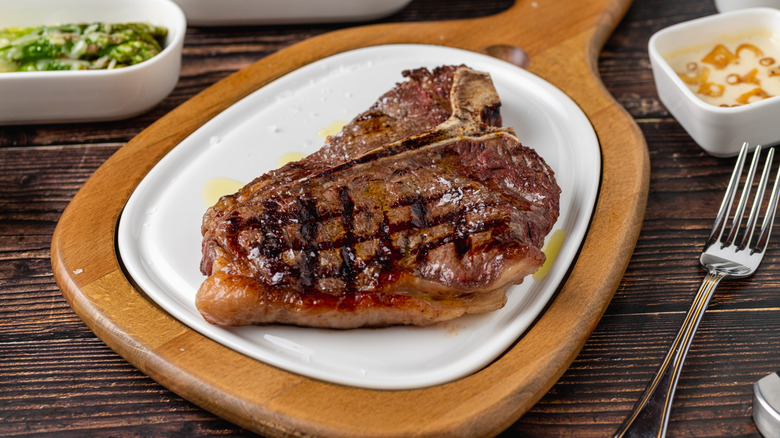
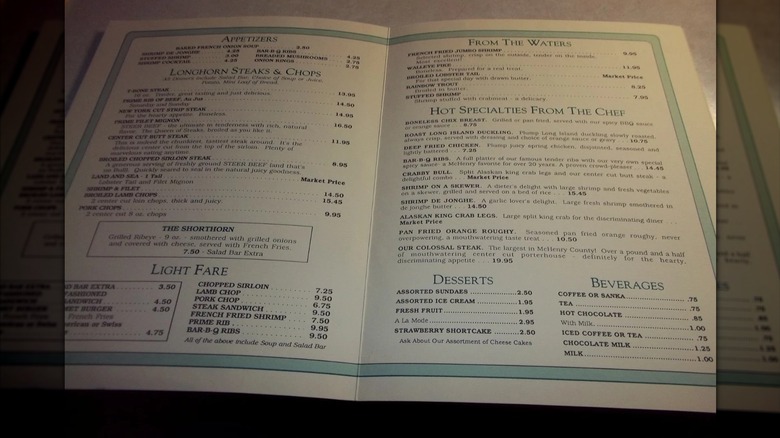
According to a 1980s LongHorn Steakhouse menu from a restaurant location in Illinois, a 16-ounce T-bone steak was priced at $13.95. The meal included soup, a potato, a mini loaf of bread, and access to the salad bar. Currently, at a LongHorn Steakhouse location in New York, the Fire-Grilled T-bone steak costs $34.49. The slab of meat clocks in slightly bigger at 18 ounces, and the meal comes with a choice of two side dishes. At first glance, it may seem like a staggering markup, but there's a reason for the price difference – and it isn't as steep a leap as it looks.
According to data from the Bureau of Labor Statistics' Consumer Price Index (CPI), $1 in 1981 has the purchasing power of about $3.67 today. No matter how you spin it, a dollar simply doesn't stretch as far as it used to. However, adjusted for inflation, that $13.95 T-bone that folks were ordering in 1981 would cost about $51 today. But, it doesn't. How can this be? Is LongHorn more affordable than patrons assume?
$14 for a steak dinner in the '80s
The not-so-simple answer is that different items inflate at different rates. Taking into account the actual purchasing power of a dollar over time, milk and eggs are actually both more affordable now than they were in the '80s. Cars, college, and houses, however, are another story entirely — and so is beef.
Even including inflation, U.S. beef prices are at an all time high, skyrocketing by a whopping 51% from February 2020 to September 2025. The selling price of cattle leapt up in 2023 and has held rate ever since, jumping up yet again in late 2025. Meanwhile, unrelentingly high consumer demand is met with the smallest cattle herd population in America in 75 years. Factors like climate-related drought, expensive tariffs on imported beef, and higher operating costs for ranchers for fuel and feed costs remain unresolved. A recent screwworm epidemic impacting cattle across the Southern U.S. is another unsettling reason for the rise in beef prices.
Looking forward, beef may be more expensive for years to come. Experts don't anticipate beef prices to drop until 2028 at the earliest. As production volume continues to decline, consumers should know that T-bone price tags are likely to increase in grocery stores and restaurants. Still, LongHorn's relatively low menu prices compared to the rate of inflation for market beef at large demonstrate commitment to a value concept — which could be a crucial tactic for appealing to modern, budget-conscious consumers. Although, here at Tasting Table, we're ordering multiple other steaks off the LongHorn menu before we would ask for a T-bone; by our count, LongHorn's T-bone isn't bad, it's just outmatched by better menu offerings.