

5 Disadvantages Of Using A Toaster Oven
We may receive a commission on purchases made from links.
Let's not start off with the wrong idea here. There are plenty of things we love about toaster ovens. For an appliance that doesn't require any installation, it can be something of a workhorse in the kitchen. A toaster oven can take on many of the tasks of a full-sized oven, such as roasting and broiling, and can remove the need for a toaster. It's not just quicker to heat, but also more energy efficient, which is particularly useful for cooking and reheating smaller portions of food. Using a toaster oven is even one of the most helpful tips if you're cooking for one.
There are some disadvantages to be aware of, as there will be with any kitchen appliance. And how you weigh them will directly depend on your current kitchen setup. If you're in a small space that doesn't have an oven already installed, then a toaster oven could be exactly the solution you need. If you already have an oven and a toaster and a microwave, consider carefully if a toaster oven is adding to your life or whether it's going to be one appliance too many.
Depending on your cooking style and what you eat, the disadvantages of using a toaster oven might not even come into play, but are worth considering before you spend the cash. You might also want to consider the advantages of a toaster oven versus an air fryer or even a toaster oven versus a microwave.
It can be dangerous
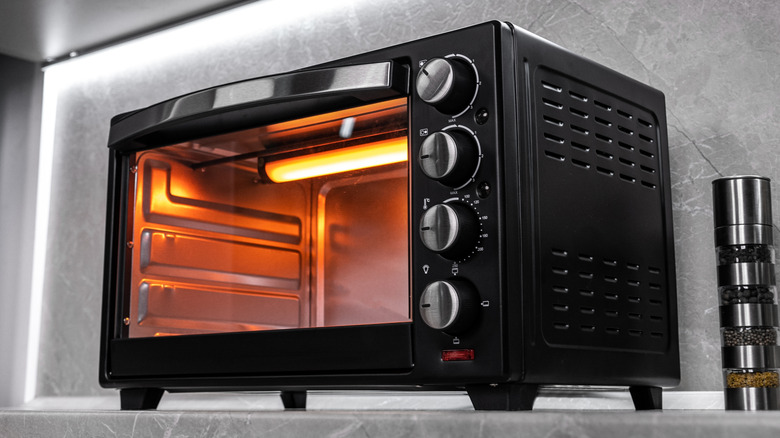
Any electrical appliance has the capacity to be dangerous, and when you add a heating element into the mix, those risks really start to climb.
One of the main problems arises from the appliance's size. Inside the toaster oven, food often sits closer to the heating element than it would in a traditional oven. Fatty or greasy foods can easily catch fire when placed close to a direct heat source; yet, seemingly innocuous foods like breadcrumbs are just as much of a risk if the trays are not cleaned regularly. As well as getting rid of crumbs after each use, consider a regular deep clean of your toaster oven to make sure there's no food residue that can eventually catch fire.
Another aspect that can make toaster ovens dangerous is that the whole appliance is resting on your countertop. While a traditional oven that has thick insulation, a toaster oven does not, and can emit heat on all sides. Countertop limitations will most likely require you to set it under an overhead cabinet. As well as the cabinet material being at risk of damage, this low clearance space can trap heat. You can install protection like Studio 1222's ToasterShield, but even then, it's best not to leave your cooking unattended to avoid kitchen fires.
You're limited to small portions
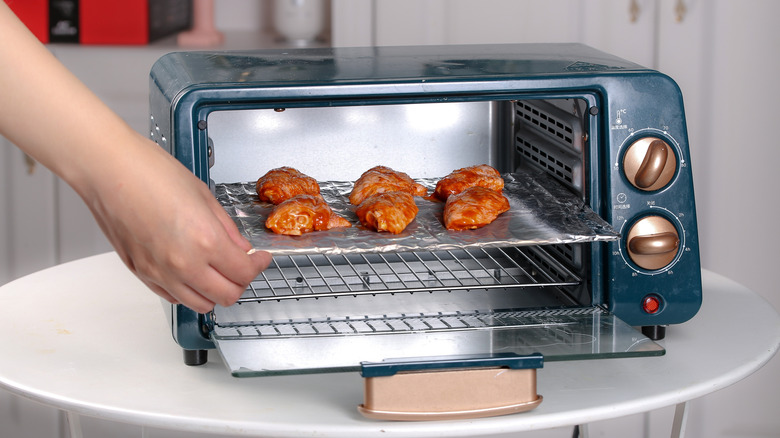
The compact nature of the toaster oven is one of its key advantages. It's quicker to heat, and less wasteful if you're warming up leftovers or cooking for one, when compared to a traditional oven. This small size can be a downside, however, if you want a true alternative to a standard, built-in oven.
Toaster ovens are available in different sizes, but let's consider something like the top rated toaster oven, aka the Hamilton Beach 31156, as an average model. The exterior measures 17.8 inches and inside is wide enough to fit a 9-inch pizza, but nothing larger. There are what's referred to as family-sized models of toaster oven, such as the TOSHIBA 10-in-1 Convection Toaster Oven, which can fit a small chicken for roasting. But, even with this extra-large size, you're not able to fit a large sheet pan or able to do batch cooking.
Anything too tall will also sit close to the heating element, so just because something technically fits, that doesn't mean you should attempt to cook it. If you do want to ensure that your new toaster oven will fit your favorite foods or your existing ovenware, make sure you check the internal dimensions and not just the footprint of the appliance. You'll also need to consider the space between the oven rack and the heating element, and in the case of multi-rack ovens, whether each rack is removable.
It's not suitable for all foods
The toaster oven is often advertised as being multi-functional, replacing the need for other appliances with its capacity to roast, broil, and toast all in one. This is certainly true, but when you break it down to the level of individual foods, you have a few restrictions.
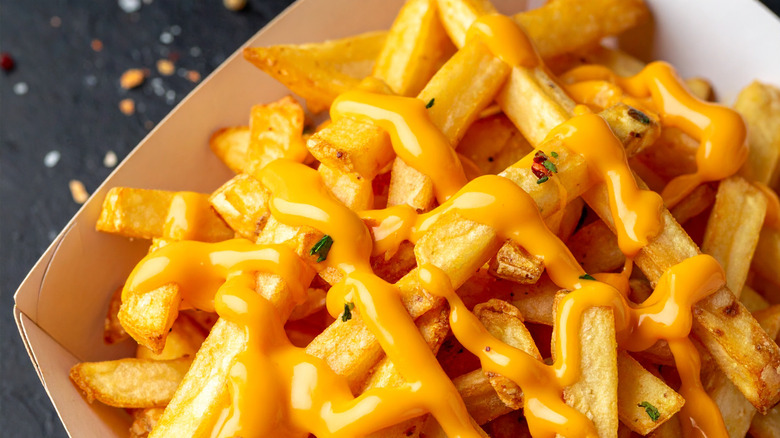
As previously mentioned, some foods pose a higher fire risk. Fatty foods like fries are best kept out of the toaster oven, as they can easily splatter grease on the heating element. While your toaster oven might seem the best place to toast nuts or seeds, again, the proximity to the heating element means they'll burn quickly. The safest option is to toast them in a pan on the stovetop.
Then there are foods that require a different kind of cooking than what a toaster oven can offer. Depending on the model, your appliance oven may have a bottom element, a top element, or both, and this matters more than you might think. If you're attempting to get a crispy base on a pizza with just an overhead heating element, your cheese will be crisp long before the base will. Likewise, anything that needs low and slow cooking (such as a casserole) might burn on the outside before it's cooked through.
With the smaller space you also might strike upon the genius idea of making mini versions of oven foods, like these tiny white pepper quiches. In this case, you'll also need to check that your glass or ceramic bakeware is not just oven safe, but also broiler safe, as it can crack under direct heat.
Food might not cook evenly
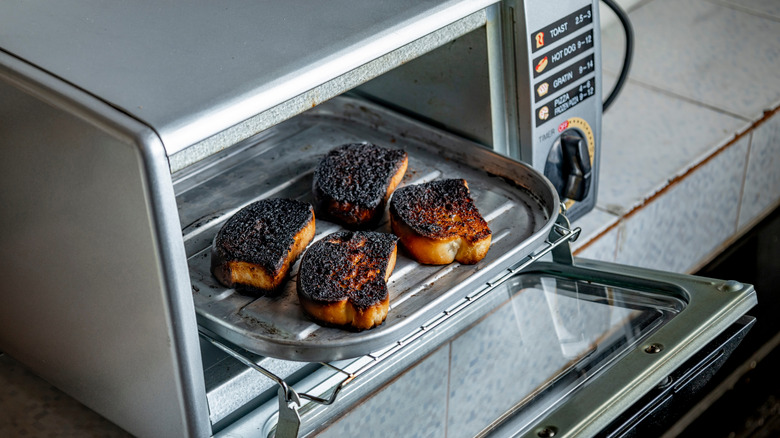
The toaster oven is less of a toaster, and more of a small convection oven. And any oven, regardless of the brand or model, can have hot spots. Even if you never considered it carefully, you'll likely notice that some areas of a baking tray seem to cook more quickly —this is why most recipes tell you to rotate the tray halfway through cooking. The toaster oven is no exception, and its compact size means that these differences in cooking speed are more exacerbated.
Although many are equipped with fans, the toaster oven's smaller space doesn't allow for efficient circulation, resulting primarily in direct heat rather than ambient heat. This shouldn't be a dealbreaker, but it's something you need to be aware of. If you're baking cookies or making toast, you can rotate the tray or pull it out to prevent burning, but in the case of meat it's more dangerous. If you remove a tray of chicken to stop one corner from burning, you might be left with another part that's undercooked.
Knowing which parts of the oven cook more quickly, and by how much, can save you a lot of problems. We like this parchment paper trick for finding hot spots, as it doesn't require you to waste any food. Simply line a baking tray with parchment paper and place in the toaster oven at 400 degrees Fahrenheit. After 10 to 20 minutes, you'll see dark patches forming in some areas, essentially giving you a map of how your oven heats.
It takes up counter space
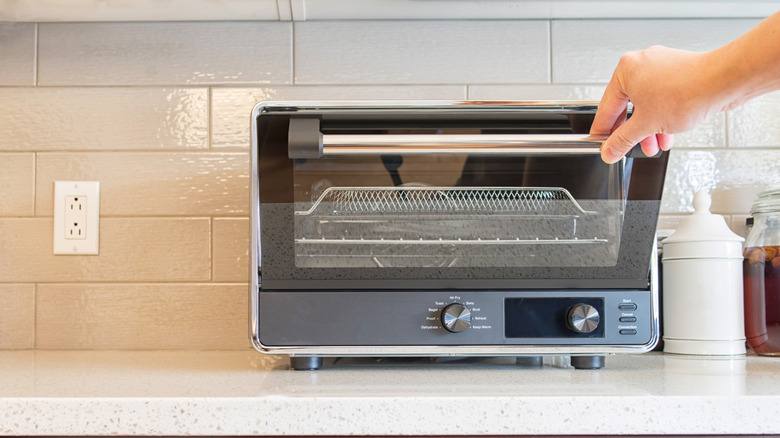
The toaster oven has been positioned as a more compact alternative to a full-size oven, but if you need a space-saving appliance, it's something of a false economy. Under-counter ovens make use of vertical space which, yes, could have been cupboard space, but otherwise keep countertops clear. That said, even the most compact toaster ovens have a sizeable footprint and limitations about where they can be placed — remember how damaging they can be to overhead cabinets.
Likewise, the heat produced by the appliance means you can't use the top of the toaster oven as a shelf to store items that have been displaced from their spot on the counter. If you're really short on counter space but have plenty of storage elsewhere, you could consider just pulling out the toaster oven whenever you need it. This isn't exactly convenient, however, as you'll need to wait until it's completely cool before moving it back to an enclosed storage space. A reduction in countertop space isn't a dealbreaker for everyone, though.
If you use your toaster oven every day, keeping it accessible may be completely worthwhile. You could also consider a combined toaster oven and air fryer, like the Breville Smart Oven Air Fryer Pro. It's more expensive than a basic toaster oven, but with settings for air frying and dehydrating, it's going to cut down on the number of appliances you have taking up space on the counter.