

Bacardi Gold Rum: The Ultimate Bottle Guide
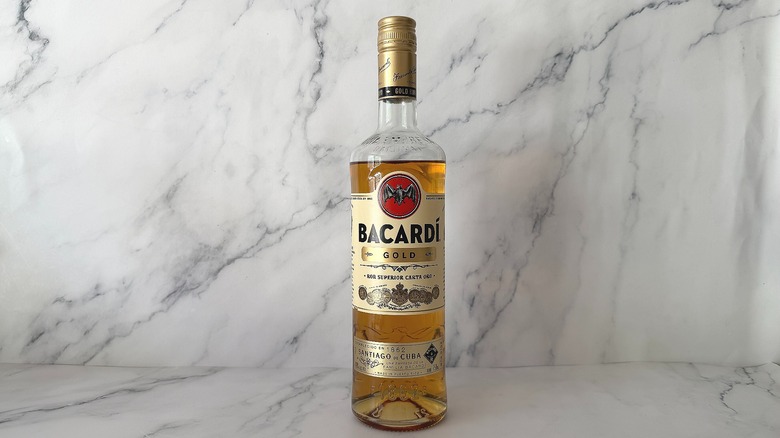
If you're reading this, you're probably a rum fan — and, if you're a rum fan, there's a very decent chance you have a bottle of Bacardi Gold in your collection. It's a very versatile spirit that tastes lovely neat while bringing plenty of character to any rum-based cocktail you could think of. But how much do you really know about the bottle itself?
This 40% ABV rum certainly has longevity on its side. With a history dating back to the mid-1800s, its staying power speaks for itself, especially given that it was the premier spirit used in a timeless cocktail (more on that later). You'll find plenty of deep, malty flavor in this sugarcane-based alcoholic beverage, which has an incredibly expansive modern audience. Want to learn more about the bottle that could certainly be called the king of gold rum? Keep reading for our formal deep-dive into Bacardi Gold.
History of Bacardi Gold
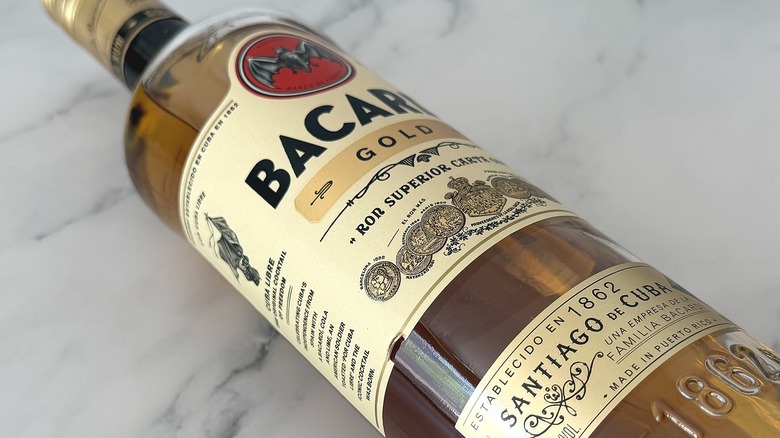
The history of Bacardi Gold is as long and storied as they come, and even a brief overview makes it easy to understand why the rum has persisted over the centuries. This particular spirit dates all the way back to 1862, though it wasn't called Bacardi Gold back then, and comes from Cuba, while it launched a distillery in the 1930s in Puerto Rico which is now considered the world's rum capital.
At its inception, Bacardi Gold was called Bacardi Carta Oro ("Oro" being the Spanish word for "gold"). The bottle was rebranded as Bacardi Gold in 2009, though it has seen some "Carta Oro" releases since. Its modern-day popularity can largely be credited to the Prohibition Era — the company took advantage of the time period by flaunting Cuba as an imbibing, friendly place to travel. This played a big role in the future widespread enjoyment of Bacardi's rums that persists to this day, its Gold bottle included.
What does Bacardi Gold taste like?
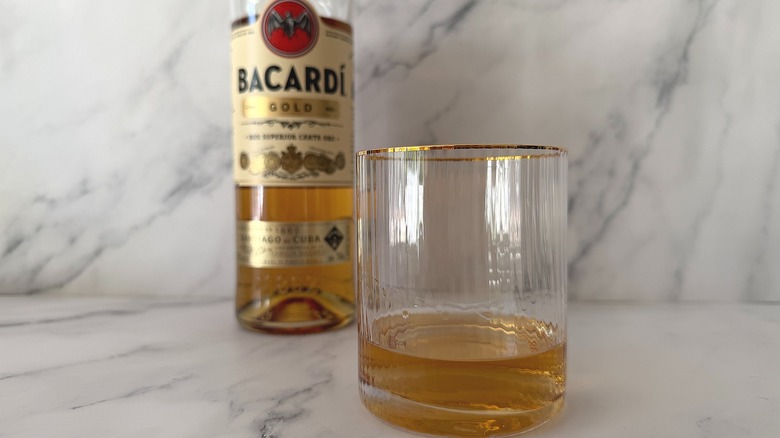
Bacardi Gold is a very accessible bottle that has some more nuance than the brand's Superior expression, another popular bottle. The brand itself touts the bottle as having notes of nuts and butter on the nose, with a rich, toasty palate (showcasing ginger root, vanilla, and toasted almond) and a dry, moderately sweet finish.
When we tried it, we found some sweetness on the nose, while a sip gave way to strong brown sugar notes and some malty character. It has some characteristics similar to whiskey, though it's not as spiced as one would expect from the latter spirit. The medium body gives it some interest if you're enjoying it neat, and we have no doubt that's some consumers' preferred way of drinking it; however, it's also bold enough to bring some interest to cocktails that you'd typically make with white rum. It's a good intermediary between dark rum and white rum.
How is Bacardi Gold made?
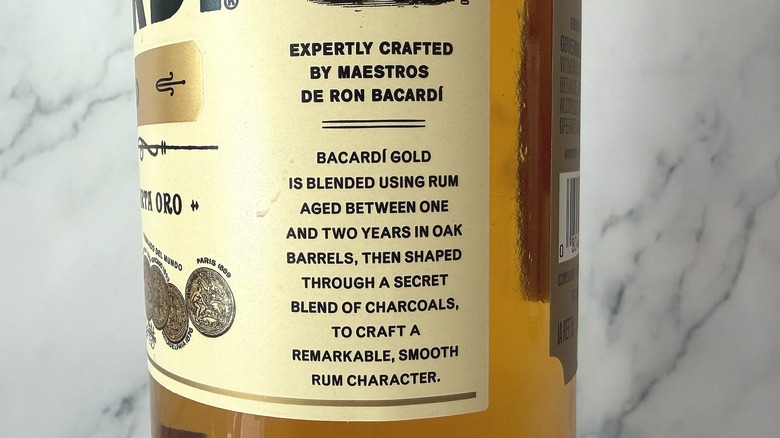
Want to get all the dirty details on how Bacardi Gold is produced? Unfortunately, you'll probably never be able to get into the nitty-gritty of the spirit's making — the blend of charcoals that Bacardi Gold is filtered through is a company secret that's never been divulged, which Bacardi credits for the "unique mellow character" of its Gold bottle.
Other than the super-secret charcoal blend, Bacardi Gold is made from a blend of rums that have been aged between 1 to 2 years. This is on the shorter side for gold rums, which are often aged between 1 to 5 years. The company ages its rums in toasted oak barrels before blending them together to create what ultimately becomes Bacardi Gold.
How to drink Bacardi Gold
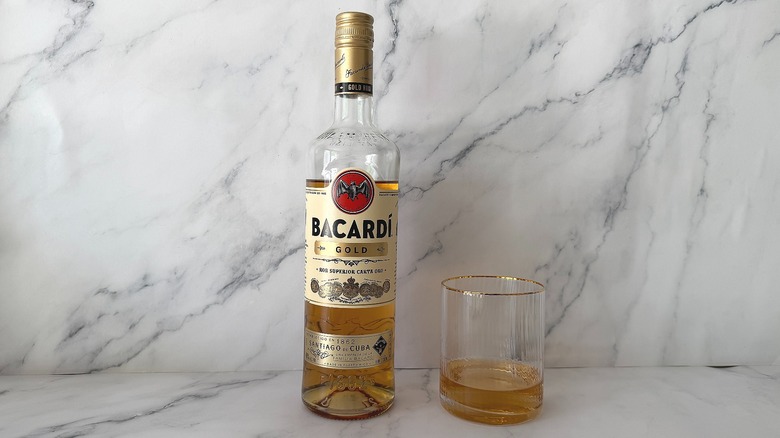
There's one obvious use for Bacardi Gold: It was the signature spirit used in the classic Cuba Libre upon the drink's inception, and is still enjoyed in the drink to this day. But Bacardi Gold doesn't limit itself to just one expression. The spirit, while mellow, is bold enough to make itself known in a variety of cocktails.
Of course, we always recommend enjoying a spirit neat when you first try it, so you can get a full sense of its character. Once you've sipped Bacardi Gold solo, whipping up a Cuba Libre is the natural next step — then, move on to other fairly simple drinks. Bacardi itself recommends a Ginger Snap and a Rum Hot Toddy as particularly good vehicles that allow its Gold expression to shine.
Bacardi Gold was the original spirit used in the Cuba Libre
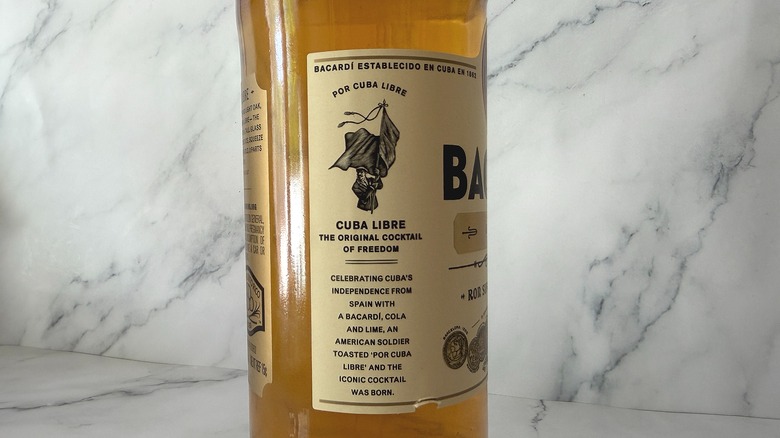
If you want to enjoy Bacardi Gold by paying homage to its lengthy history, you'd have to start by indulging in a Cuba Libre. Though the drink is now more popularly referred to as "rum and Coke," we'd be remiss to forget that it originated as a liberation drink in 1900, and Bacardi Gold was at the heart of it.
During the Spanish-American War, American soldiers brought Coca-Cola down to Cuba. When Cuba was liberated from Spain at the end of the war, raucous celebrations broke out in Havana, upon which someone decided to combine the now-popular Coke with Bacardi Gold and lime juice. The drink spread like wildfire, and its name is symbolic of the occasion on which it was created. Can we petition to start calling the classic rum and Coke the Cuba Libre once again?
The bottle saw a brief redesign on the brand's 153rd birthday
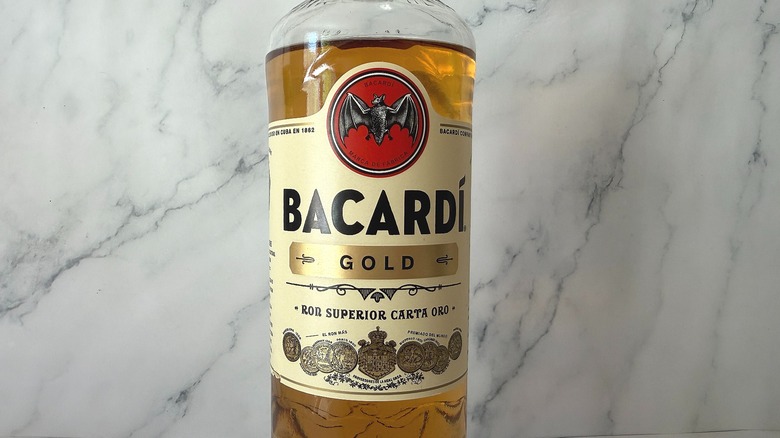
How else should a brand celebrate a birthday than by launching a full redesign of its expressions? That's exactly what Bacardi did to celebrate its 153rd birthday in 2018. First launched to U.K. markets, the new Bacardi bottle designs — Gold included — featured elaborate paper labels that gave some deeper insight into the company's history and each bottle's particular expression.
In addition to relabeling the bottles, some of the bottles also saw a brief return to their original Spanish names. Accordingly, Bacardi Gold was released as "Carta Oro;" Superior was released as "Carta Blanca;" and Black became "Carta Negro." These particular bottles were also created specifically with bartenders in mind, and featured some ergonomic updates to make it easier to practice their crafts.
Bacardi Gold has remained relatively the same over the decades
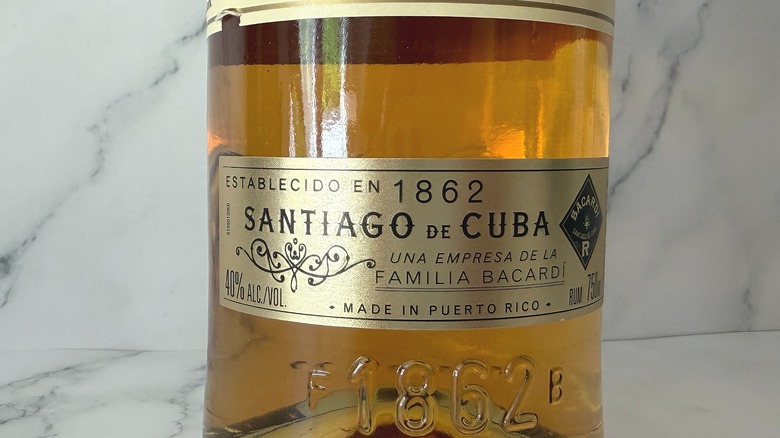
Obviously, the passage of over a century has led to (necessary) changes in the production process of Bacardi Gold. For example, the company expanded its production to Mexico and Puerto Rico in the mid-20th century. However, several key factors that make Bacardi Gold what it is remain unchanged, and contribute to the proven longevity of this expression.
Perhaps the biggest point of continuity is Bacardi's yeast strain — the company still uses the same yeast strain it did when it was founded. Charcoal filtration has also always been part of the process, though it's unclear whether the exact combination of charcoal has been unchanged over the years. It's probably reasonable to assume that the Bacardi Gold of 1862 would at least closely resemble today's bottles, even if they didn't taste identical.