

10 Under-The-Radar Spirits From Around The World Worth Seeking Out
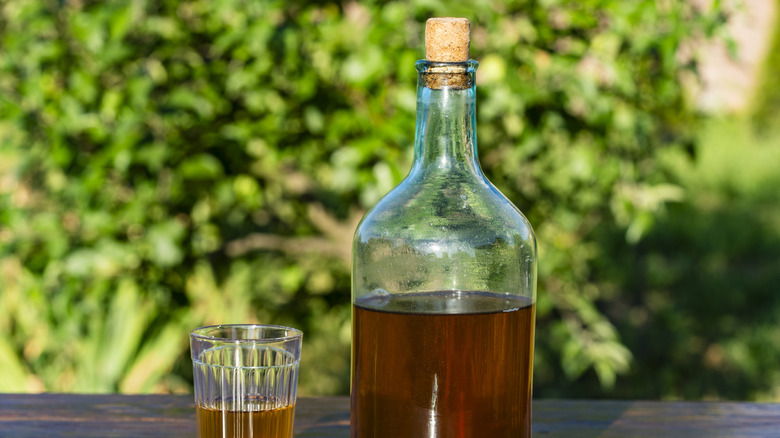
A spirit can tell you quite a bit about the place it comes from. Sometimes that story is in the raw material; sometimes it's in the way a bottle shows up at a wedding, festival, or everyday meal. And sometimes it's in a drinking custom that would look downright strange anywhere else. As a Greek American, I've watched cousins dance around a shot of ouzo on the floor, napkin in hand, before kneeling down and drinking it with their hands tied behind their back. It's a ridiculous-looking ritual unless you understand that alcohol can embody celebration, family, regional identity, and hospitality in ways that go well beyond what's in the glass.
As a spirits writer and former bartender, I'm constantly seeking out culturally significant drinks that are closely tied to their places of origin. Whether through important ingredients, distinctive production traditions, social customs, or complex histories, each of the following under-the-radar spirits offers a glimpse into the places and people behind the bottle. I've also considered how each spirit fits into the larger drinks landscape, making this list useful for bartenders and curious imbibers alike. This isn't a ranking of the world's "best" spirits; it's a collection of spirits that tell us something about where they come from and the people who consume them.
Mekhong: Thailand
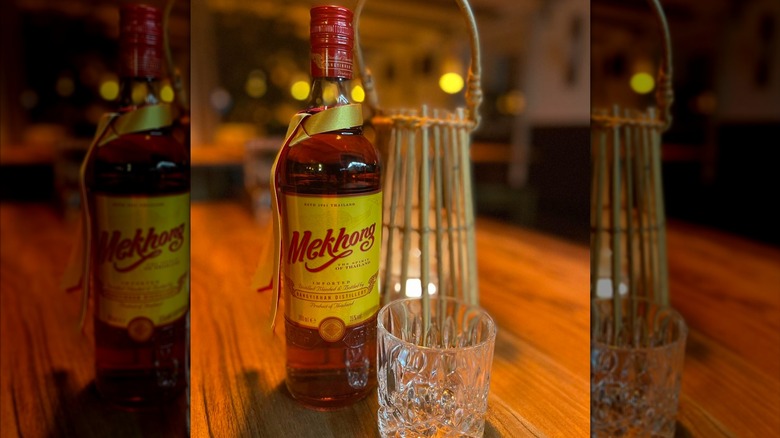
Most Thais call Mekhong a "whiskey," but don't expect it to taste like bourbon or scotch. In fact, "The Spirit of Thailand" is much closer to a spiced rum, as it's made from a fermented mixture of molasses with some rice, which is distilled and blended with herbs and spices. At 35% ABV, it's also lower in alcohol than most whiskeys.
Launched by Bangkok's Bangyikhan Distillery in 1941, Mekhong arrived at a time when Thailand was actively promoting a sense of national identity. Even the name reflects that political climate, inspired by a popular patriotic song associated with Thailand's territorial claims along the Mekong River. Given its notably sharp, medicinal profile, Mekhong is best enjoyed with a mixer or used as a cocktail ingredient. It's the base for the Sabai Sabai, a highball made with lime, Thai basil, sugar, and soda water that gives the spirit a refreshing, herbaceous context that plays to its strengths.
If you've spent years learning your way around rum, whisky, and Southeast Asian spirits, Mekhong is an interesting reminder that those categories don't always travel neatly across borders. Sometimes a bottle simply makes more sense once you stop trying to fit it into a familiar box.
Tsipouro: Greece
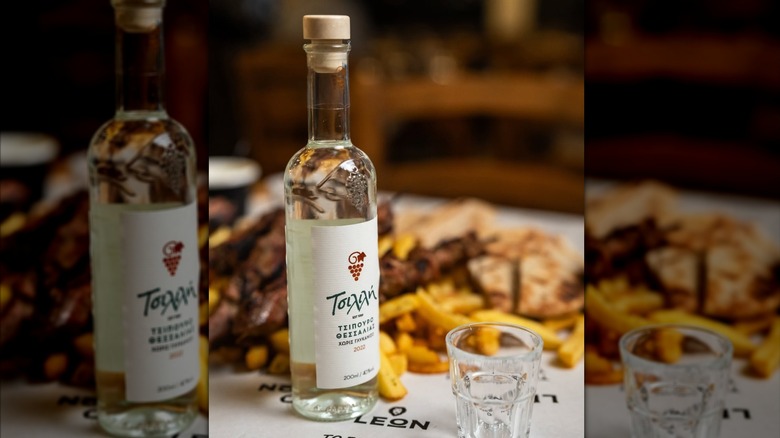
Ouzo is the Greek spirit that most people know, but tsipouro is the bottle worth reaching for when you want to go a little deeper. Made by distilling grape pomace — the skins, seeds, and other solids left over from winemaking — tsipouro is typically clear, potent, and intensely aromatic.
The spirit has a long history in Greece, with its origins often linked to monastic distilling traditions on Mount Athos. Exactly when and where tsipouro came from is hard to pin down, but its connection to small-scale, regional distilling is well established, and that local character is part of tsipouro's enduring appeal. Today, modern protected designations distinguish several styles of tsipouro, while Crete's related spirit, tsikoudia, has its own distinct identity. You'll also find differences in aroma and texture from region to region, with some versions containing anise.
Those regional differences extend beyond the spirit itself. In Volos, for instance, tsipouro is inseparable from the meal and can be found practically everywhere. The port city is famous for its tsipouradikas, specialty restaurants that serve small bottles of tsipouro alongside a steady parade of meze, making the spirit less of a nightcap and more of an excuse to keep eating. And honestly, that's a pretty compelling way to drink.
Sotol: Mexico
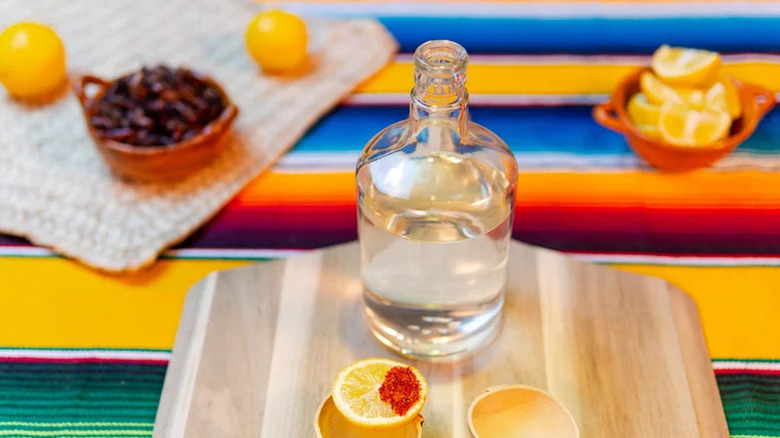
There's more to Mexican spirits than tequila. Sotol is made by fermenting and distilling wild plants, predominantly Dasylirion, which looks somewhat like agave but actually belongs to an entirely different botanical family. That distinction matters because its flavor can be quite different from what you'd expect from tequila or mezcal. Depending on the plant, region, and production method, you might find grassy, vegetal, earthy, mineral, or smoky notes in a glass of sotol.
Dasylirion has a long history among Indigenous peoples in northern Mexico, and it was used to make beer before the discovery of distillation. In the mid-1950s, commercial sotol production was banned in Mexico after gaining a negative reputation as a sort of bootleg "moonshine," but it remained an important part of the country's drinking culture. Fortunately, sotol became legal again in the 1990s, and Chihuahua, Coahuila, and Durango were granted a Denomination of Origin for the spirit in 2002.
The history of sotol gives it a uniquely interesting place in the world of modern spirits. It isn't trying to be Mexico's answer to something else; it's simply a different expression of the country's distilling tradition — one that deserves its own spot on the back bar.
Singani: Bolivia
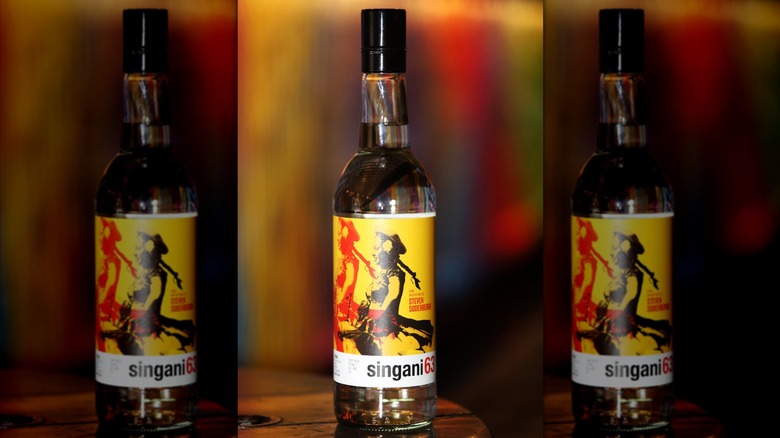
Whenever South American grape-based spirits come up, Pisco gets most of the attention while Bolivia's national spirit is often overlooked. Singani is an aromatic grape brandy with a floral and fruity character, and it's made from Muscat of Alexandria grapes grown at high elevations. Its character comes from a combination of its grape variety, growing conditions, and production methods, resulting in a spirit that can rub shoulders with the best brandies without losing its singular charm.
Singani has been produced in Bolivia since the colonial period and remains closely tied to the country's highland wine regions, particularly Tarija, the heartland of Bolivia's wine industry. But unlike pisco, which is associated with both Peru and Chile and has its own signature cocktail, singani remains relatively obscure outside Bolivia. Fortunately, that may be changing: in 2023, the U.S. Alcohol and Tobacco Tax and Trade Bureau recognized singani as a distinctive product of Bolivia, which could help boost its global profile.
Feni: India
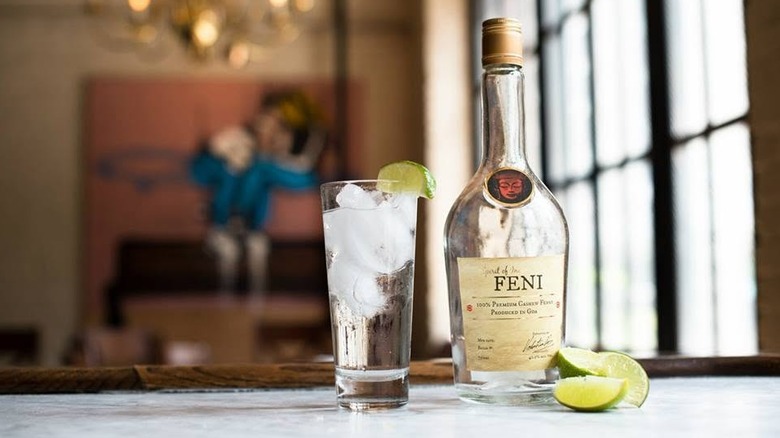
Cashew feni is one of Goa's most distinctive spirits, made from the fruit of cashew trees introduced by Portuguese traders centuries ago. The process starts with cashew apples – the fruit that grows above the cashew nut and is often discarded. Farmers collect the fallen apples, ferment the juice, and distill it in traditional pot stills using methods passed down through generations. Known for its sharp and assertive aroma, cashew feni is fruity, funky, and boasts real heat with a dry, nutty finish. Its sister expression, coconut feni, follows a parallel production process that utilizes fermented palm sap, and is generally considered the smoother and more subtly sweet of the two.
Built for mixing, feni over ice with lime soda is the default Goan serve, and the highball fizz format works wonders to round off the spirit's rough edges. That same instinct also makes the rustic spirit a must-have for cashew-forward tropical cocktails and coconut-feni riffs on classic white rum drinks. It's also a genuine rarity. Although more feni brands have emerged since the spirit received official geographical indication status in 2009, the reality remains that it's largely unexported. Feni may be an acquired taste, but drinking it in Goa is as much about the experience as the spirit itself.
Chacha: Georgia
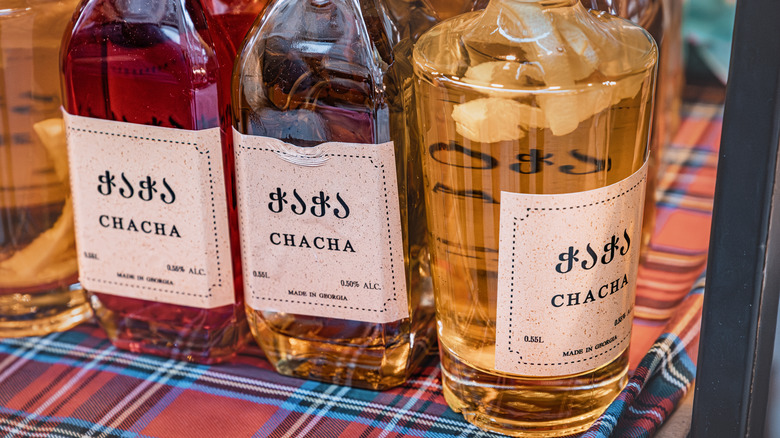
If you're familiar with Georgian wine, you'll know that winemaking is deeply rooted in the country's culture. Chacha is a natural extension of that tradition, made by distilling the skins, seeds, and stems left over from winemaking. This clear, powerful spirit is Georgia's take on the broader family of pomace brandies that includes Italy's grappa.
For generations, chacha was predominantly homemade, often utilizing the byproduct of a family's wine production. That connection to winemaking is about more than simply finding a use for leftovers. Chacha is part of a broader drinking culture built around Georgia's long-standing relationship with wine, including the traditional qvevri method of fermenting wine in large clay vessels buried underground. UNESCO inscribed the qvevri method as Intangible Cultural Heritage in 2013, recognizing its importance to Georgian communities and cultural identity.
Commercial distilling has since given the spirit a more visible place in Georgia's beverage scene, but its flavor can be pretty forceful depending on how it's made. Generally, it showcases grape-derived, earthy fruit flavors with a distinctly oily texture, which makes it work surprisingly well in cocktails that call for vodka or a more neutral brandy. Kicked up with punchy grape flavor, chacha isn't simply Georgia's version of grappa; it's a distinctive expression of the country's deep-rooted wine culture.
Poitín: Ireland
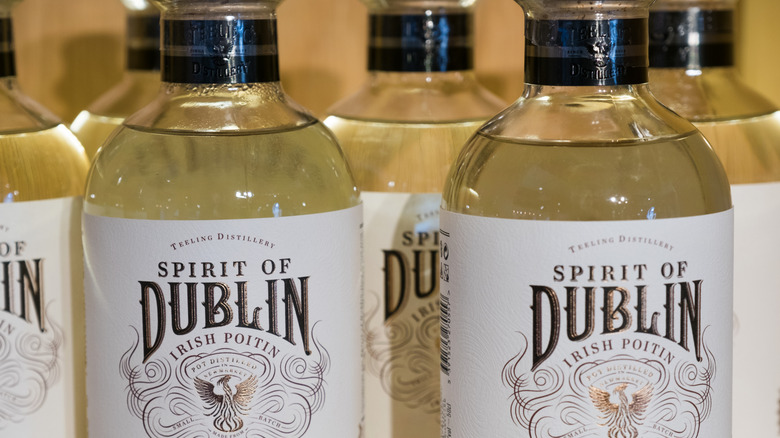
Poitín is an unaged spirit that predates Irish whiskey and has spent much of its history outside the law. Pronounced "puh-cheen," the name comes from the Irish word for a small pot, and it was historically made from a range of agricultural ingredients.
Recipes and production methods varied widely due to its illicit status, and while production for export became legal in 1987, domestic production and sale weren't legalized until 1997. Poitín was awarded Geographical Indication status by the EU in 2008, but there's still no single standardized flavor profile. The mash bill can include a range of base ingredients, such as milk whey, potatoes, grain, sugar beets, and molasses. So, depending on the distillate, poitín can be grainy and malt-forward, fruity and floral, or intensely earthy and pungent. Modern producers are experimenting with different raw materials and maturation techniques, although traditional poitín remains unaged.
In recent years, the spirit has become a highlight of some Irish drinking establishments, such as Dublin's Bar 1661, which has built much of its cocktail program around the drink. The revival is significant because it reframes poitín as something more than a historical curiosity or "Irish moonshine" — it's a distinctly Irish spirit with deep cultural roots.
Pálinka: Hungary
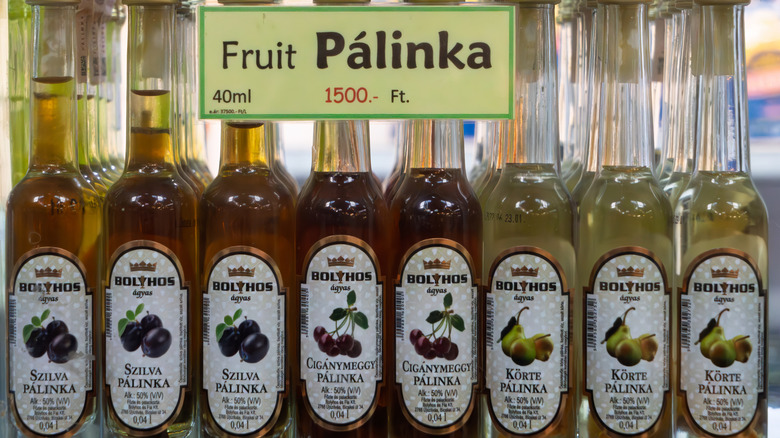
A fixture of Hungarian drinking culture, pálinka is the result of a centuries-old legacy of distilling fruit — a spirit better savored than slammed. It's defined less by a single fruit than by the principle of crafting a truly fruit-forward spirit from locally grown produce. Plums, apricots, pears, apples, and cherries are among the ingredients most commonly used, and the best pálinkas are intensely aromatic with the fruit at the forefront.
Pálinka has been granted EU Geographical Indication status, but it must meet unusually strict production requirements, and the rules for individual protected varieties can be even more specific. Újfehértói sour-cherry pálinka, for example, can only be made from two specific local cherry varieties grown within a defined area, with the finished spirit required to meet specific sensory characteristics, including sour-cherry, citrus, and marzipan notes.
That level of detail makes pálinka especially useful behind the bar, giving bartenders a clear idea of what to expect from each style. While Hungarians traditionally enjoy slowly sipping the spirit neat, its concentrated fruit character can provide acidity, aroma, and intensity to cocktails without needing additional flavoring ingredients. Depending on the variety you're pouring and the drink you're making, pálinka is also a flavorful reminder that there's more to fruit brandy than Cognac and Calvados.
Sodabi: Benin
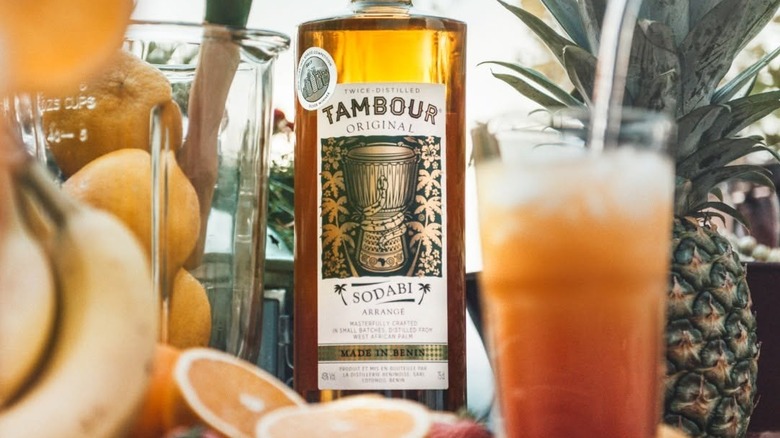
Instead of grapes, grains, or molasses, Sodabi is made from palm sap that's fermented into palm wine, then distilled into a potent spirit. It's been made throughout West Africa for generations, but production hasn't always been straightforward. In Benin, for example, the production, consumption, and sale of sodabi was prohibited by colonial French authorities in 1931, though the ban did little to erase the spirit from existence. Production continued outside formal channels, and sodabi remained a part of both ceremonial traditions and everyday life.
Exactly how much sodabi is produced today is difficult to establish, although one commercial producer, Tambour Original, estimates annual production in Benin at around 2 million liters. While the company has helped establish sodabi as a premium spirit, traditional production has never been standardized. Recipes and flavor profiles vary widely, and related palm spirits appear throughout West Africa under different names, including ogogoro in Nigeria and akpeteshie in Ghana.
That variation is part of what makes sodabi interesting. Commercial producers are now bottling more polished versions, including aged and infused expressions, but the spirit's story doesn't begin with the premium market. It begins with palm wine, local distilling knowledge, and a drinking tradition that long predates its appearance on international shelves.
Awamori: Japan
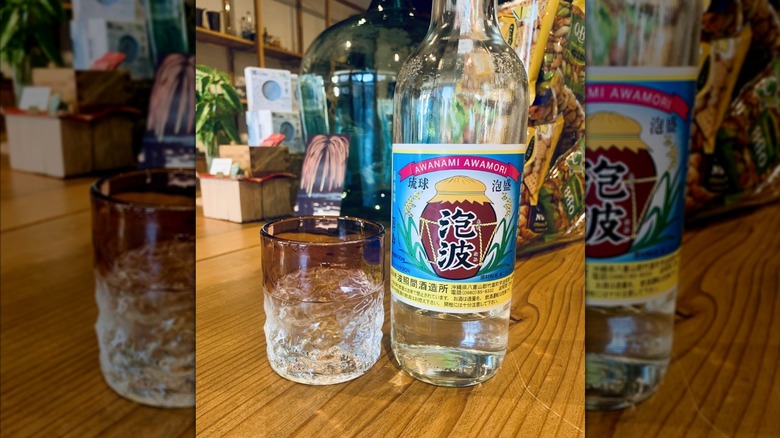
Awamori is one of Japan's oldest spirits, with a distilling tradition in Okinawa that dates back roughly 600 years. While it shares some similarities with shochu, awamori is traditionally made from rice koji and distilled rather than brewed, giving it a distinct identity among Japanese spirits.
The key ingredient is black koji, a mold particularly well suited to Okinawa's hot, humid climate. During fermentation, it produces citric acid that helps protect the mash from spoilage. Awamori's use of black koji is one of the clearest things separating it from many other Japanese rice-based drinks, but what happens after distillation is just as distinctive. Awamori aged for at least three years can be designated kusu, with maturation taking place in clay vessels or bottles. Over time, the spirit develops softer, sweeter, and more layered aromas, with aged examples showing notes of vanilla, caramel, fruit, and spice.
Served throughout Okinawa, awamori is closely tied to the region's food and drinking culture and offers a welcome counterpoint to anyone accustomed to thinking of Japanese drinks primarily in terms of whisky and sake. Awamori shows just how much flavor a rice spirit can carry when koji, distillation, and time — not a barrel — do the heavy lifting.