

10 Mexican Spirits That Aren't Tequila That Deserve A Spot On Your Shelf
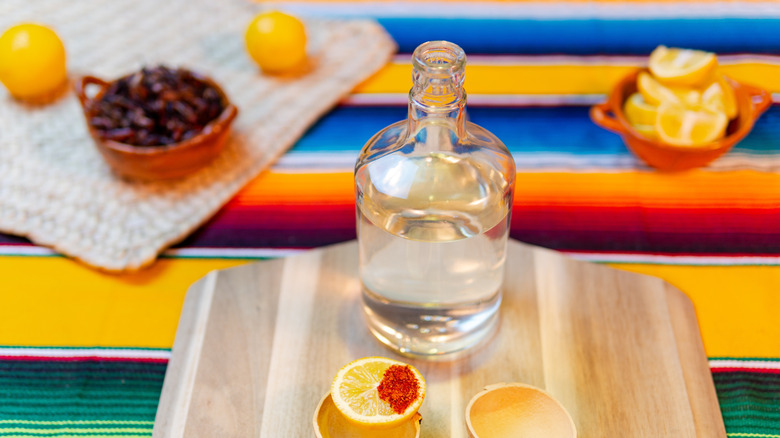
If you still think "Mexican spirits" begins with tequila and ends with mezcal, you're missing where the category is actually headed. The argument for paying attention to everything beyond Mexico's mainstay agave spirits includes a little bit of everything, but this list is for drinkers actively seeking artisanal, place-driven alternatives that offer entirely new flavor profiles.
Agave spirits like tequila and mezcal remain Mexico's dominant category, but niche products have been consistently rising alongside global cultural interest, pushing drinkers toward deeper exploration of non-tequila Mexican spirits. As folks increasingly want small-batch, culturally resonant products, discovery itself has become part of the drinking experience. That shift means categories once considered obscure — like bacanora, raicilla, or sotol — are gaining visibility based on their distinctiveness.
Part and parcel to my lengthy tenure in the hospitality business, I spent years behind the bar, honing the craft under pressure, acquiring a discerning palate, and soaking up all the spirit knowledge I could during the bar's short-lived slow periods. The more I learned about what went into every bottle — the artisanal methods, the raw ingredients, and the proverbial blood, sweat, and tears of the makers themselves — the more that cultural education led to a deeper appreciation of the spirit itself, as well as a greater awareness of the story surrounding each bottle.
By shedding light on the breadth of Mexican spirits beyond tequila, folks who share that sense of appreciation and discovery can perhaps commence their journey toward tasting these little-known Mexican spirits. While they come with a large cultural footprint, some styles are rather niche, while others have the benefit of carrying an established brand. Generally, however, most will be hard to find outside of Mexico.
Sotol
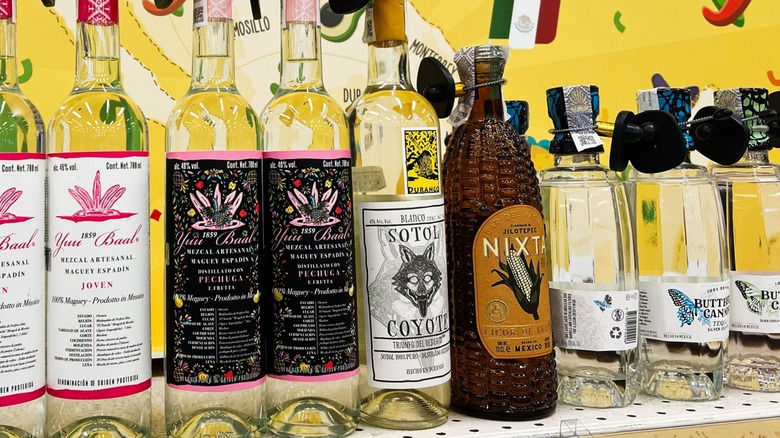
Primarily produced in the state of Chihuahua, sotol is a non-agave-based spirit with geographical and cultural ties to Mexico's northern desert. Sotol's production process mirrors that of mezcal in many ways — from harvesting the plants and cooking the hearts in underground pits to fermenting crushed fibers with wild yeasts and undergoing multiple distillations — but there are key distinctions between the two. Most importantly, sotol is made from a shrub-like plant commonly called Desert Spoon, and when compared to mezcal's profile, it's typically less smoky and more vegetal, with savory, herbal edges and a clean, dry finish.
The styles of sotol are categorized according to aging, but the unaged expressions highlight the wild desert character that makes sotol so enticing to lovers of Mexican spirits. Another reason to love sotol is due to its scarcity and idiosyncrasy. Not only is the sotol plant wild-harvested, but it's also very slow-growing, and since it grows across vast terrain, it's also found in parts of the U.S. Southwest.
Not only does sotol carry a stronger resemblance to mezcal than other cooked agave spirits, but it's more readily available for North American consumers and therefore serves as a potential gateway for drinkers interested in the plant selection and production methods. However, since sotol production extends into the U.S., it's important to read the label on every bottle. Just one of the many factors prompting the Mexican government to establish a Denomination of Origin (DO) for sotol production in 2002, the designation ensures that all products carrying the sotol name are made in accordance with strict geographical and production standards. While regulating quality and consistency, the protection also aims to secure sotol's link between the product and its environment — an important distinguishing factor for a spirit that's both deeply rooted in indigenous culture and a cross-border ecosystem.
Raicilla
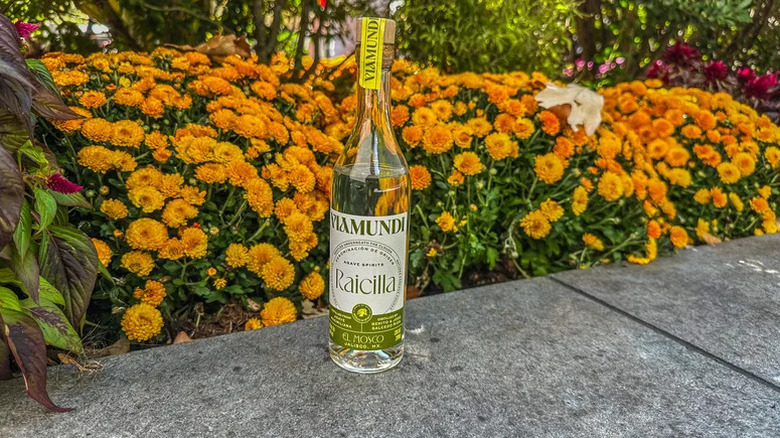
Raicilla boasts a similar flavor profile to sotol — slightly herbal, with bright fruit and subtle smokiness — but, in essence, this Mexican spirit lies closer to mezcal. That's because one of raicilla's defining features is its agave, with the other being geography. Both factors come together to produce a spirit that doesn't taste much like the mezcal most foreigners are familiar with. Unlike tequila and mezcal, raicilla incorporates a wider range of agave species in its production, and the result is a broad spectrum of expressions with two primary subcategories: coastal and mountain.
Lower elevation agave, grown and harvested near the Pacific Ocean, derives its character from the warm and humid climate, producing coastal raicillas that are generally lighter in style, driven by fruity and floral flavors. Conversely, raicilla produced at higher elevations further inland, such as Viamundi Raicilla from the Sierra Madre Occidental mountains in Jalisco, expresses the region's cooler climate and mineral-rich soil through structured profiles with subtle smoke and earthy notes. Raicillas capture biodiversity in a bottle, with unaged expressions showcasing agave and place best, reinforcing raicilla as a must-try Mexican spirit for drinkers in search of a terroir-driven experience.
Raicilla earned its official Denomination of Origin status in 2019, formalizing what had long been an informal regional tradition going back centuries. As of 2026, the DO restricts raicilla production to 16 municipalities in Jalisco and one in Nayarit; it also defines permitted agave species, production methods, and labeling standards – all factors that elevate raicilla from an unofficial local spirit to a protected category.
Charanda
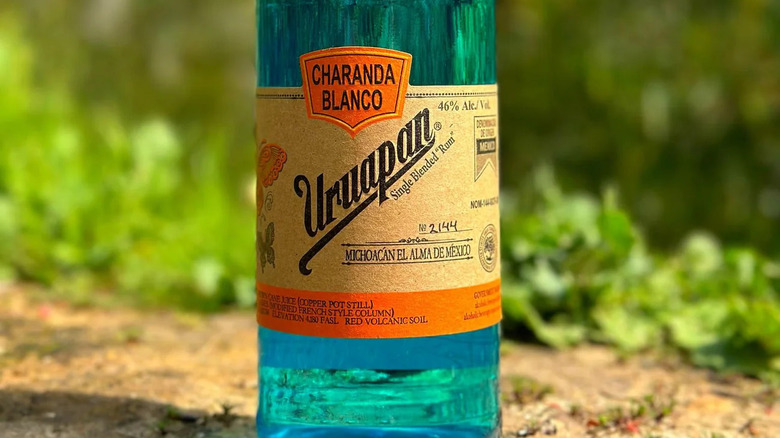
Charanda is a centuries-old Mexican sugarcane spirit produced and distilled in Uruapan, a city in the west-central state of Michoacán. The name comes from the Purépecha language, meaning "red earth" in homage to the region's volcanic red soil and high altitude, all of which lend charanda its unique, terroir-stamped flavor.
Generically classified as a rum, charanda uses fresh-pressed sugarcane juice as opposed to solely molasses. While production methods vary according to producer, the spirit received official Denomination of Origin status in 2003, restricting charanda's production to 16 designated municipalities within Michoacán, where the sugarcane is cultivated. That sense of place — and the raw materials the region produces — is what makes charanda stand out when compared to other rum expressions, and even Mexico's full suite of indigenous spirits.
Like most spirits, charanda comes in a broad range of expressions — blanco, añejo, blended — but common notes typically include aromas of fresh-cut grass, funky tropical fruit, and earthy mineral tones. The result is a high-proof spirit that's more akin to a rhum agricole or Brazilian cachaça than most commercially made rums. For the rum drinker looking to expand their horizons — let's say, all the way to Mexico — charanda is a must-try.
Long consumed locally, authentic charanda production has declined significantly over the last century, and is relatively rare today. However, as interest in artisanal production, terroir-driven spirits, and alternatives to tequila and mezcal continues to rise, Charanda Uruapan, one of the most recognized producers, may not be the only name in the game.
Bacanora
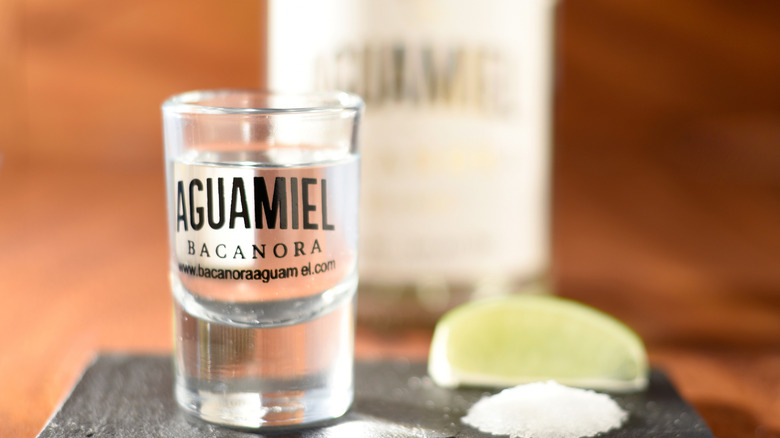
Bacanora, cousin to tequila and mezcal, is an agave-based spirit named after a Sonoran town at the foothills of the Sierra Madre. Its likeness to its sister spirits makes it a perfect gateway to a deeper appreciation for the agave varietal and production processes that shape the spirit. In the early 20th century, the spirit was hit with a production ban that lasted decades. Today, production of the Sonoran-made mezcal continues in dozens of municipalities across the state, all according to its official Denomination of Origin regulations, that is.
Located in northwest Mexico, Sonora is characterized by an arid, high desert climate with extreme fluctuations in temperature and rocky, mineral-rich soils. These conditions produce agave with higher sugar concentration and more intense earthy notes. Unlike raicilla, bacanora is made exclusively from Agave angustifolia, and while production follows a mezcal-like process, the resulting spirit isn't defined by smoke but by herbaceousness.
A mark of regional pride, bacanora still carries its outlaw mythos. For much of the last century, its production was deemed illegal by the Mexican government, effectively driving the spirit into the margins, or should I say, the mesquite. Producers known as "bacanoreros" secretly distilled the spirit for decades under the cover of desert brush until the ban was finally lifted in 1992. DO status followed in 2000, and the distinctly Sonoran agave spirit has been making inroads toward Mexico's main stage ever since.
Pox
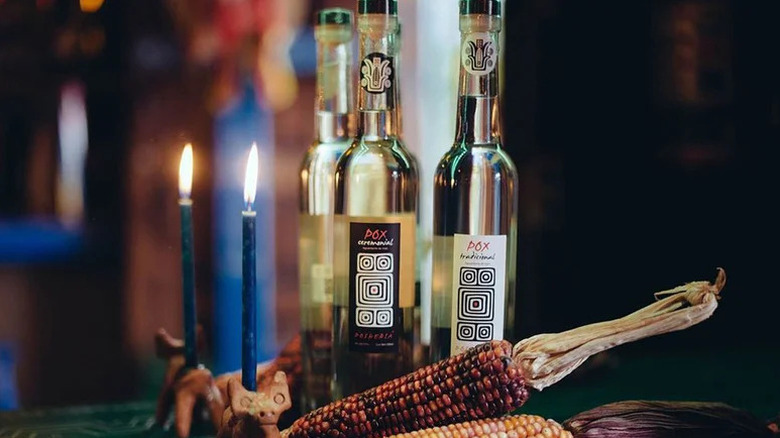
With deep ties to ancient Mayan tradition, pox is one of Mexico's most culturally significant distilled spirits. Pronounced "posh," pox is built from a fermented blend of corn and sugarcane, although some styles also use wheat for added flavor. Whatever the mash bill may be, maize is not only the primary ingredient in pox, it's also a symbol of great weight in Mesoamerican belief systems.
Translated roughly to "medicine," pox was traditionally used in religious ceremonies and healing rituals, placing its purpose much closer to indigenous spiritual systems than to commercial spirits tradition. Indeed, these customs are still in practice, just as their small-scale production still follows an artisanal process. The result is a potent, grain-forward spirit showing aromas of smoke and toasted corn husk, with a sweet finish from the sugarcane. Decidedly not another tequila or mezcal offshoot, pox's corn-driven identity appeals to whiskey fans and bartenders alike — or anyone eager to shake the ancient distillate up in a contemporary cocktail.
Today, pox's production isn't regulated, but Chiapas-based producers like Siglo Cero have helped introduce the spirit into wider cocktail culture. In recent years, pox has dominated craft spirit circles in Mexico City and expanded into the U.S., where its presence is a savory substitute for sugary rum in classic daiquiris or mixed with citrus or coffee flavors.
Comiteco
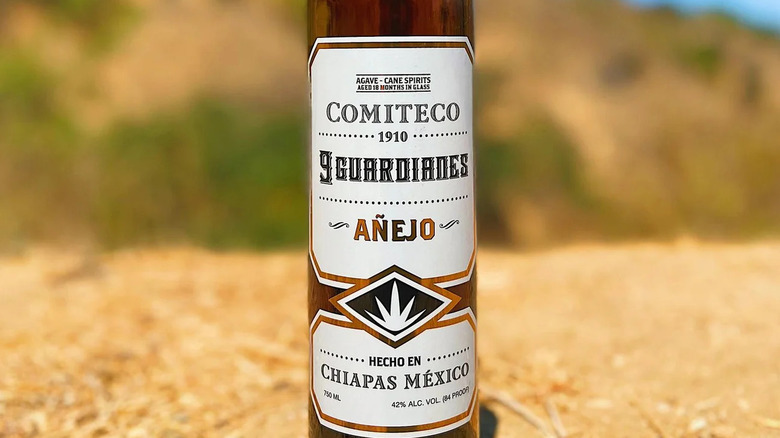
Hailing from the southeastern state of Chiapas, comiteco is considerably different from other agave spirits. Rather than being made from roasted agave hearts like mezcal, comiteco is the product of agave sap. The sap, known as aguamiel, is collected from the hollowed-out heart of the live plant, which is later combined with yeast and sugar for fermentation. After the spirit undergoes distillation, it's aged in glass as opposed to barrels.
Comiteco production uses Agave americana, a native plant of the region that forms thick rosettes of fleshy blue-green leaves meant to hold water, necessary for desert survival. If mezcal is characterized by its ruggedness and bacanora by its desert-driven profile, then comiteco stands apart for its subtlety and delicate aromatics. Indeed, its brandy-like essence has brought comparisons to various eau-de-vie's from other countries, such as grappa and pisco. For a classic feel, comiteco can easily meld with margarita-driven flavors, but it's distinctly appealing as a niche ingredient that can hold up to craft cocktails, inspire a story, and add to your sense of discovery.
Kalani
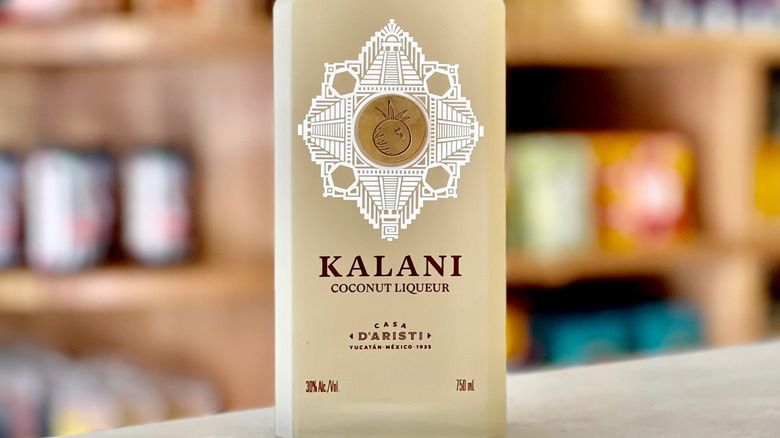
Kalani is one of several Yucatecan liqueurs from the Merida-based producer Casa D'Aristi. Not a distillery in the usual sense, Casa D'Aristi functions as a heritage liqueur house with the mission of modernizing Mayan recipes and ingredients through the production of rum and fruit-based liqueurs. Kalani is the brand's coconut-flavored variety that's built on a sugarcane-derived rum base. However, this is not the usual sunscreen-in-a-bottle type of coconut rum masquerading as an artisanal adult beverage — it's a carefully considered and intensely expressive liqueur made from Mayan dwarf coconuts that are native to the region.
Kalani further distinguishes itself from other like-minded products by fermenting the coconut materials before the blending stage even begins. As the fermentation stage deepens flavor compounds and yields more complex liquids, this extra special step acts like a bridge between the raw ingredient and the finished product. It also signals Kalani as an intentionally, artisanally crafted beverage with provenance to boot — which is to say, Kalani is not a simple, straightforward flavored liqueur; it has cultural significance that resonates across the ages while remaining refreshingly modern. Since it's readily available in the U.S., there's no reason why you should be using Malibu when Kalani brings the whole package: flavor, story, and place.
Xtabentún
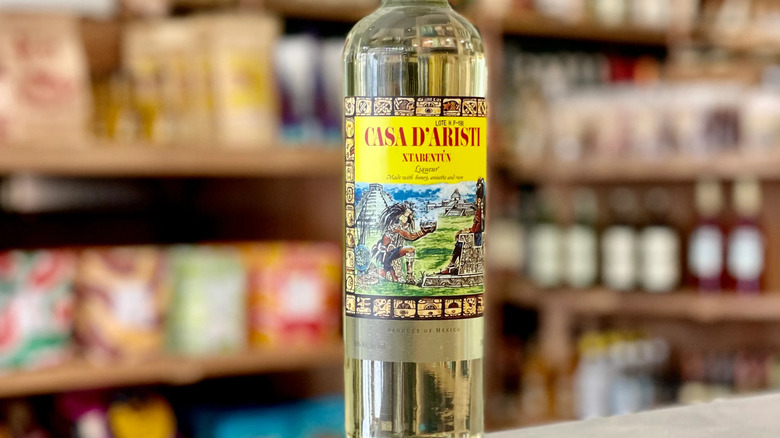
Xtabentún is another Mexican liqueur with deep origins in Mayan culture. It's made with fermented honey, anise seed, and rum. It boasts intense flavors, both honey-sweet and licorice-strong, and a viscous texture that's comparable to sambuca. Today, it's traditionally consumed neat, chilled, or at room temperature, on its own or as a companion to coffee and dessert. Xtabentún is the flagship spirit produced by the Yucatecan heritage liqueur house, Casa D'Aristi, and remains one of Mexico's most distinctive spirits. The drink encapsulates Mayan mythology, beekeeping, and modern distillation techniques.
Xtabentún traces back to the ceremonial Mayan drink, balché, a fermented beverage made from honey and tree bark. Like other pre-Hispanic drinks, xtabentún was reshaped into something resembling a liqueur after the Spanish arrived in present-day Mexico, introducing both distillation techniques and anise. The result is a hybrid artifact built on an indigenous base and refined through colonial modification.
Modern producers such as Casa D'Aristi still follow this hybrid process, resulting in a structured liqueur built on the combination of distilled rum and the low-proof fermented honey base. While the infusion stage introduces xtabentún's dominant aromatic profile — anise — its defining feature is the honey itself. Produced from the nectar of the xtabentún plant, a perennial vine native to the region, the honey provides xtabentún with its depth of flavor, imparting delicate floral notes and intense herbal complexity.
Amargo-Vallet
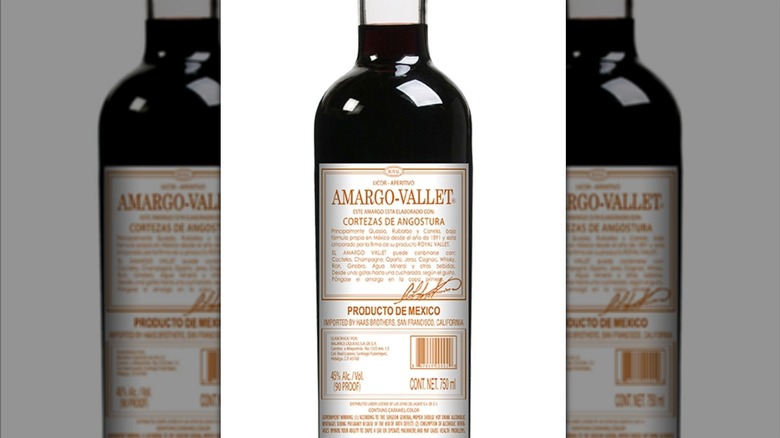
Amargo-Vallet belongs to the very small category of Mexican amaro, and it's one of the clearest examples of European influence in the production of Mexican spirits. Still, there's no confusing this Mexican amaro for one of its Italian counterparts. Produced by Royal Vallet in Texcoco, Mexico, it's built on a sugarcane-based neutral spirit — a distinctly Mexican move when compared to the grape-based versions of different origins. What's not so original is that this amaro boasts a proprietary recipe, but all you really need to know is that Amargo-Vallet is bitter.
Angostura bark lends the liqueur its bitter backbone, while the moderately bitter gentian root imparts a classic amaro essence, and quassia wood delivers a punch of intense bitter flavors amid rhubarb and dried fruit aromas. The result is a very dark, very earthy amaro with a tannic bitterness that's a bartender favorite. That's because Amargo-Vallet is, in essence, the drinkable version of Angostura bitters, and that's precisely why it's such a useful bottle to have on hand, especially if amaro-forward cocktails are your thing. I suggest trying it in a tiki cocktail, where it will impart structure, spice complexity, and well, bitterness — all of which will ground those explosive tropical flavors.
Ancho Reyes
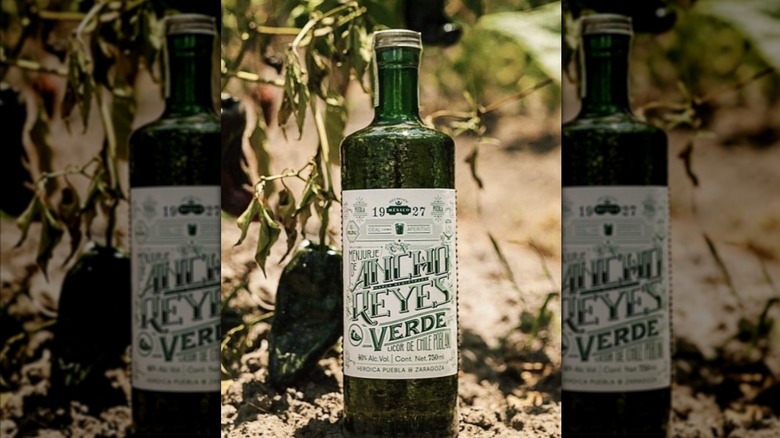
Perhaps the most influential of modern Mexican liqueurs, Ancho Reyes is the contemporary interpretation of a historical Puebla spirit made from sugarcane distillate and dried poblano chiles — aka ancho peppers. The revival liqueur is the result of historical research in order to reconstruct a facsimile of the traditional 1920s recipe. Unlike other spirits, Ancho Reyes production focuses heavily on culinary technique, as maceration imparts flavor from the chile's oils and heat from capsaicin. The process is defined by the quality of ingredients, and only fully-ripened poblano peppers are hand-selected and then sun-dried for 2-3 weeks. The bottled end result captures the dried chile essence in rich layers of deep raisin and spicy chocolate, with a round finish and slight smoke.
Two main categories of Ancho Reyes exist: original (red) and verde (green). The latter forgoes sun-drying and uses early-harvested green poblano, resulting in a brighter liqueur with vegetal notes and sharp heat. Both versions are right at home behind the bar, and Ancho Reyes will lift up classic cocktails from a margarita to an old fashioned. The sweet and spicy craft liqueur sits especially well alongside tequila and mezcal, whiskey, and rum.
Culturally, Ancho Reyes fits within a newer wave of Mexican spirits, less connected to the country's indigenous roots, but tethered to native ingredients and historical tradition. Within broader drink culture, I'd say that Ancho Reyes fills a niche slot in the lineup of flavored liqueurs: sweet but not cloying, spicy but not aggressive; it translates the layered flavors of Mexican cooking into a precise, cocktail-ready ingredient.