

The Oreo Cookie You Know Today Isn't The Same One Your Grandparents Ate
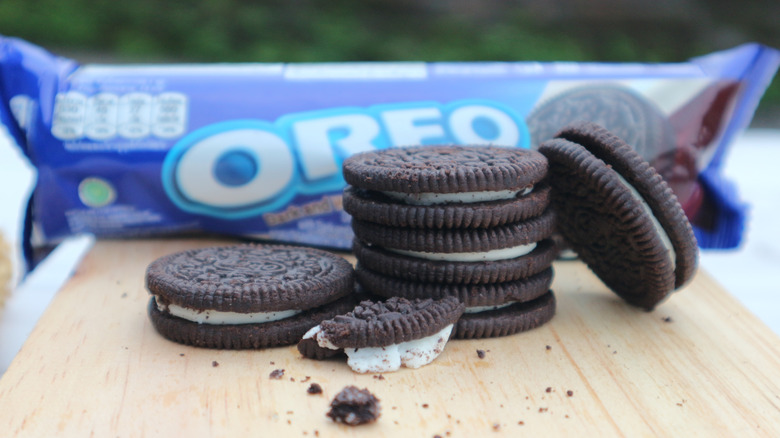
Oreo cookies have been satisfying sweet teeth since they debuted in 1912. However, over the last century, the ubiquitous confections have grown far beyond the cookie your grandparents ate. While they still bear a recognizable outer design, what's on the inside has shifted quite drastically over the years in terms of specific ingredients.
The iconic store-bought food brand has changed its recipe several times. For one, although the original chocolate cookies-and-cream filling combo is the most well-known, the first two flavors of Oreos also included a lemon meringue variety. The original recipe for Oreo cookies also included lard or pork fat, making them inaccessible to those who don't consume pork or animal byproducts. It wasn't until the '90s that the company replaced lard with partially hydrogenated vegetable oil and attained a Kosher certification.
Albeit a largely lauded decision at the time, this ingredient update was called into question in 2006, when concerns over trans fats were at the forefront of public discourse. This led the brand to replace the partially hydrogenated vegetable oil with a blend of palm and canola oil. Additionally, modern ingredients in today's Oreo cookies include high-fructose corn syrup, riboflavin, and thiamine mononitrate, which were not yet available when the world's best-selling cookie made its mark in 1912.
Oreo's many modern innovations
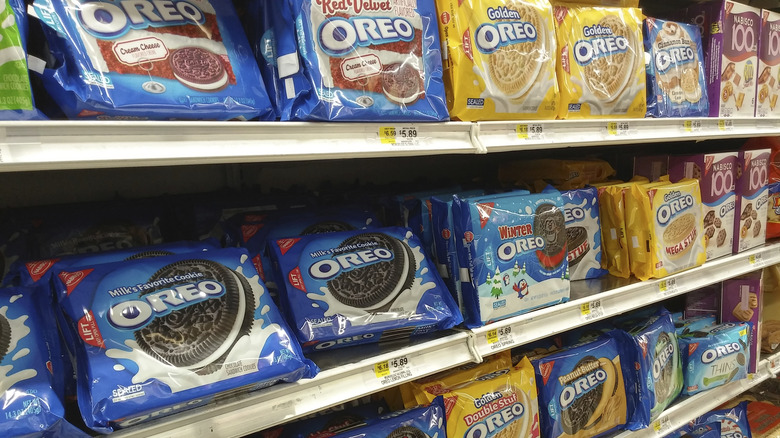
In taste, texture, and ingredients, today's Oreo cookies are certainly nowhere near the same as the ones your grandparents ate. Nonetheless, this sweet treat's enduring legacy as "milk's favorite cookie" continues thanks to the brand's adaptability and consistent innovation, which have allowed Oreo to change with the times and maintain relevance.
The mysterious origin of the name "Oreo" has provided fodder for fan theories throughout the last century, and even the cookies' official name has seen a few tweaks over time. At the time of its 1912 arrival, the cookies were referred to as an Oreo Biscuit. Less than a decade later, the name was updated to Oreo Sandwich. In 1937, this was changed once again to Oreo Creme Sandwich. Finally, in 1974, the cookies were dubbed Oreo Chocolate Sandwich Cookie. Despite variances in its name and ingredients, the delightful dessert remains a mainstay of American popular culture.
Oreo cookies have come a long way from their humble beginnings. Modern varieties of the sandwich cookie include several unique flavors, limited-time offerings, and brand collaborations, including with K-Pop sensations BTS, "Star Wars," and more. These may not be your grandparents' Oreo cookies, but the iconic brand stands a good chance of being around until new generations become grandparents and well beyond.