

What Happens When You Use Hard Water To Brew Coffee
We may receive a commission on purchases made from links.
Even more than the beans, the main ingredient in a cup of coffee is water, and not all types of water are created equal. Take it from this former career barista — one of the most simple but impactful coffee hacks you need to know for a better cup is ditching hard water. It ensures consistently better-tasting coffee, and over time, it can even spare your machine.
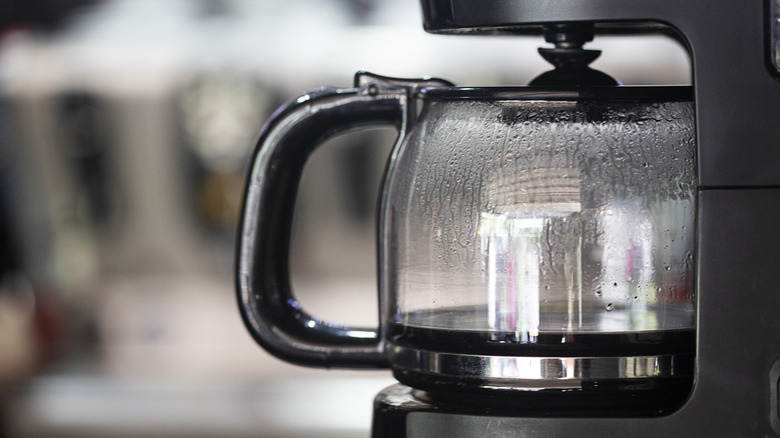
As water travels through underground aquifers, it picks up minerals (commonly calcium and magnesium). These minerals are dissolved in the water that comes out of the tap, but after that water evaporates, they stick around as a chalky residue. Exposed to higher temperatures inside drip coffee makers and carafes, hard water quickly evaporates, leaving behind mineral trace deposits that accumulate as white smudge marks. This is limescale, and it messes with the flavor of your coffee, leaving a flat, bitter, or metallic taste, and gumming up the works inside the machine.
At minimum, brewing with hard water can make your cup of Joe taste "off" as minerals are deposited into the coffee, disrupting the beans' nuanced flavors and impeding the extraction process from solid grounds into liquid coffee. Stamping out these tones with hard water is an especially potent bummer if you've splurged on pricey artisanal beans from your local roaster. With hard water, the dominant flavor in your brew is likely to be "sink drain" (no thanks). More consequentially, brewing coffee with hard water can even shorten the lifespan of your appliance over time, resulting in a frustrating (and totally avoidable) premature demise. Calcium buildup can clog tubes and water lines, and cake onto temperature sensors and heating elements, preventing your brewer from achieving the right heat for your brew. Hope you like lukewarm coffee!
Skip the limescale and brew with filtered water
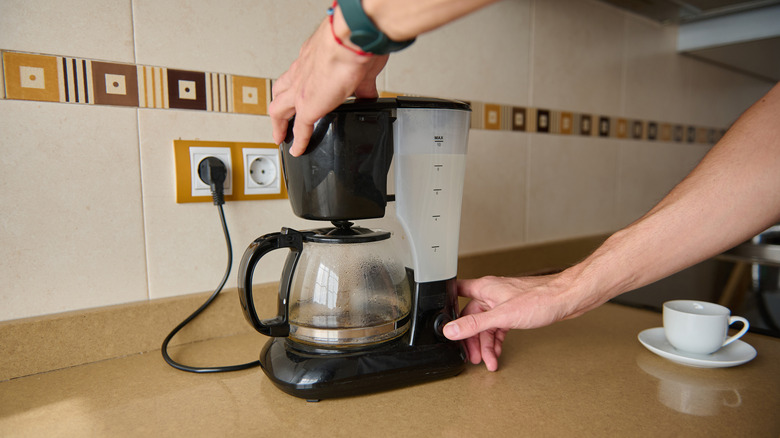
Admittedly, some scale buildup over time is nearly unavoidable. As a general rule, it's a good idea to run a cleaning solution cycle through any drip coffee maker every month or two as part of routine appliance maintenance. But, for a proactive, tastier approach, just avoid brewing with hard water in the first place, though water that's too soft isn't necessarily a better choice than hard water. Always avoid using distilled water to brew coffee (or tea, for that matter). For the best-tasting brew, java-lovers should use water from a Brita Water Filter Pitcher or buy a jug of spring water from the grocery store reserved for brewing coffee. Depending on your household's needs, it might even be worth it to invest in a water softening system. These are installed around the lower exposed piping under your kitchen sink, removing the heavy mineral deposits from your water before it even comes out of the faucet. Many professional coffee shops are equipped with these apparatuses as a cost-effective solution for filtering high volumes of water.
As a happy medium, consider installing a faucet filter attachment (like this PUR Plus Horizontal Faucet Mount Filtration System, currently $32.99 on Amazon). These faucet-mounted fixtures are equipped with filters that remove hard water minerals from your water as it flows, expediting the process by eliminating the pitcher step. Just keep in mind that, if you live in an area with particularly mineral-rich groundwater, the disposable filters may need to be replaced more often than usual.