

Coffee Grounds Can Harm Tomato Plants — Use This Kitchen Scrap Instead
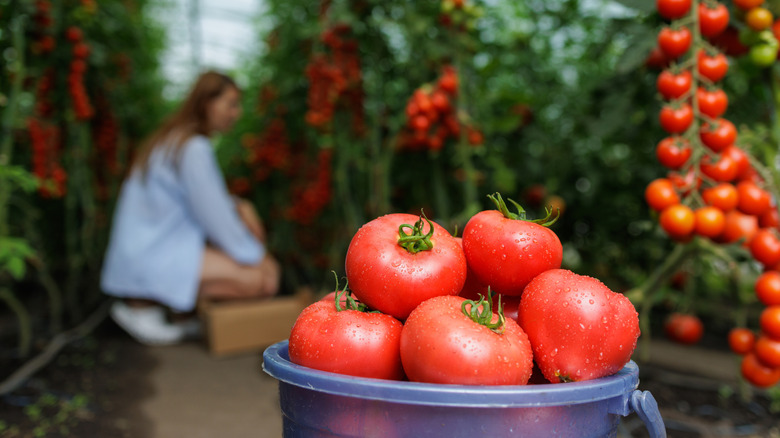
Homegrown produce is worlds better than anything you can buy at the supermarket, and tomatoes are one of the best crops to plant in your garden. They're fruitful, delicious, and fairly easy to grow. But there are some rules and best practices when it comes to growing tomatoes.
While you might have heard coffee grounds work great as fertilizer, don't be so quick to spread them around your tomatoes. There are trace amounts of caffeine left in the grounds that can inhibit tomato plant growth. Don't fret if you're just now realizing you've been using coffee grounds to fertilize your tomato bed, thinking it was doing them good. Coffee grounds are by no means tomato poison, and might even provide some nutrients that tomato plants need. The best way to utilize coffee grounds for tomatoes is with a light hand, mixed with other compost or fertilizer. When applied too thick, coffee grounds can form a shell that prevents soil from absorbing water and limits air penetration. Luckily, there are other kitchen scraps to help your tomato plants thrive.
Composting is one of the best ways to repurpose kitchen scraps like carrot peels. Not only does it prevent food waste, but using leftover carrot peels to fertilize your tomato plants provides many of the nutrients necessary for their healthy growth. Some of the main nutrients that tomatoes crave are magnesium, nitrogen, phosphorus, and potassium, all of which can be found in composted carrots.
How to use carrot peels as a better tomato fertilizer
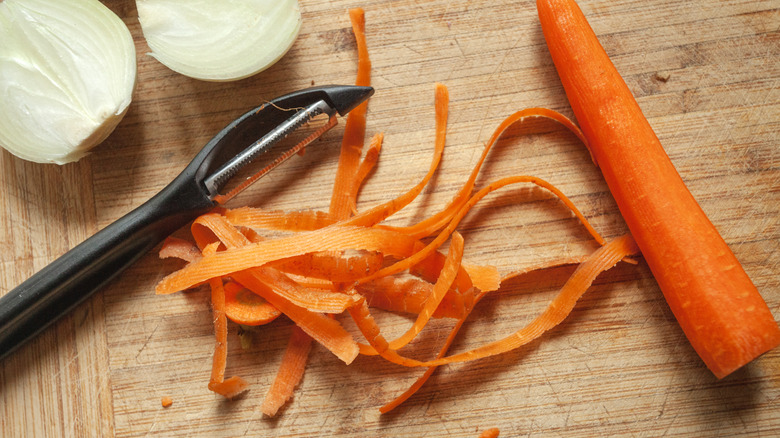
There are two main methods for incorporating carrot peels into your tomato care plan. One way to do it is to soak the carrot peels in water for at least a full day, strain, and then pour the peel-infused water near the roots of the plant. Or, you can skip the prep work and simply bury the carrot peels around your tomato plants, making sure to place them deep enough so they won't easily attract pests. You could even fertilize your tomato plot soil in advance by mixing in carrot peels a few weeks before you plan on planting, creating a cozy and nutritious environment for your new tomato babies. Other veggie scraps can make great natural fertilizer, too, like onion peels, potato skins, herb stems, and more.
All in all, it's important to keep in mind that not all plants love coffee grounds, and they could do more harm than good for your tomato plants. Providing proper nutrients is one of the best ways to ensure a fruitful home harvest, so it may be best to opt for the nutrient-rich carrot peel in your fertilizer instead.