

Quote Of The Day By Julia Child: 'Certainly One Of The Important Requirements For Learning How To Cook Is That...'
We may receive a commission on purchases made from links.
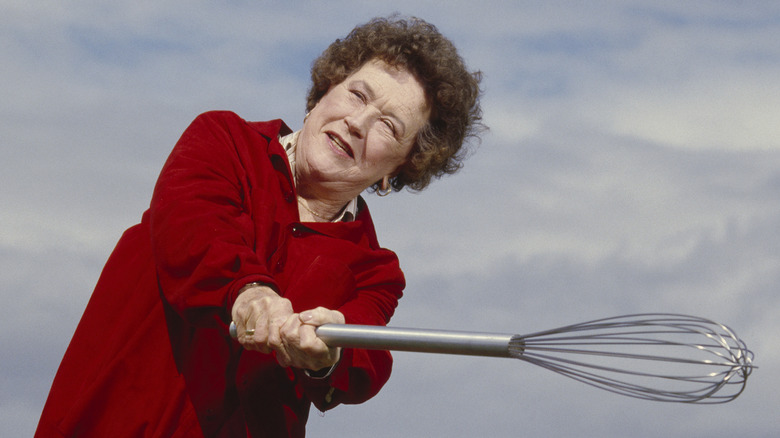
Julia Child introduced French cuisine to American audiences in an approachable, fun way, and taught many home cooks the very basics of cooking. But despite the fact that she is now known as one of the most influential figures of the culinary world, Child didn't always know she was going to fall in love with cooking; her career path began with copywriting, and her big dream was to become a novelist. That is, until she moved to France with her husband and tasted the classic fish dish that sparked her love for French cuisine.
Soon afterwards, she enrolled in the prestigious cookery school, Le Cordon Bleu. Her path there wasn't entirely smooth, as she didn't qualify for the haute cuisine program, and her graduation was slightly delayed because she had to retake the final exam. But by then, Child was firmly determined to pursue a career in cooking. After graduating, she opened a cooking school and began working on her first cookbook.
The book took nine years to complete; finally, at 49 years old, Julia Child launched the life-changing cookbook that still shapes kitchens today. Her award-winning TV show, "The French Chef" debuted shortly after, and Child became a cherished household name — and the source of inspiration for today's quote of the day.
Quote of the Day by Julia Child
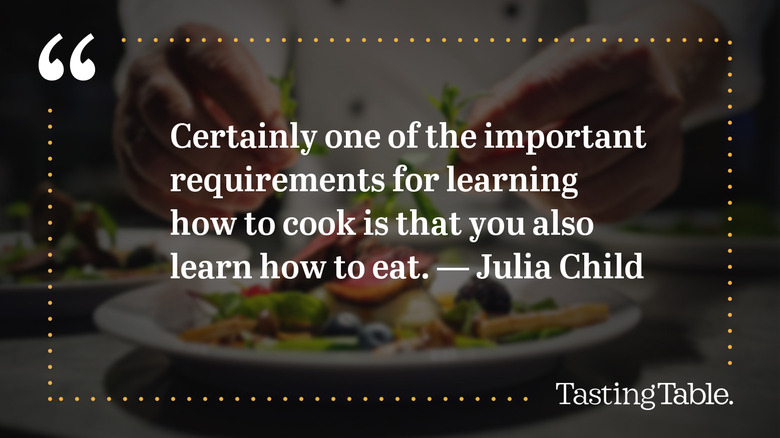
"Certainly one of the important requirements for learning how to cook is that you also learn how to eat. If you don't know how an especially fine dish is supposed to taste, how can you produce it?"
The quote comes from Child's introduction to the 40th anniversary edition of that groundbreaking book, "Mastering the Art of French Cooking." With over 500 recipes and a deep dive into French cuisine, the book is considered a culinary bible to this day. Child explains in the opening pages that, in her opinion, learning French cooking techniques gives one a strong foundation for mastering other cuisines, too.
When Child wrote this particular introduction, she was 89 years old. A lot had changed in the culinary world since the book's original release, and she acknowledged the dietary trends that have become dominant in America since then. Even so, she refused to change the recipes, insisting on keeping their original measurements and ingredients. Instead, she encouraged readers to make their own desired substitutions, mischievously adding, "In my case, for instance, I have been known to substitute a modest teaspoon for the generous tablespoon."
The deeper meaning of Julia Child's quote — train your taste buds well
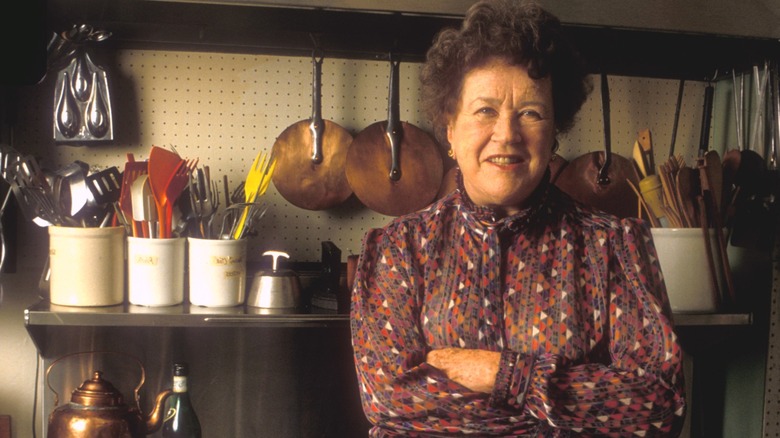
Because Child discovered her passion for cooking through an experience of eating something life-changing, she understood the importance of introducing one's taste buds to good food. This largely means trying cuisines you've never tried before, much like she did in France, and sampling the kind of dishes that might be outside of your flavorful comfort zone. She approached this process almost scientifically, writing in the book's foreword, "You learn about great food by finding the best there is, whether simple or luxurious. Then you savor it, analyze it, and discuss it with your companions, and you compare it with other experiences."
Since it's hard to cook a new dish from scratch without knowing what kind of taste profiles you're chasing, trying out diverse restaurants is a great way to start exposing your taste buds to new horizons. Julia Child herself had several all-time favorite restaurants, and they weren't all fancy — for example, she was known to stop at In-N-Out and munch on burgers. For Child, it was never about fancy cooking, it was always about meticulously prepared tasty cooking. "The pleasures of the table are infinite," as she also says in the book's intro, yet they can only be such if you're not limiting them.
More quotes from Julia Child
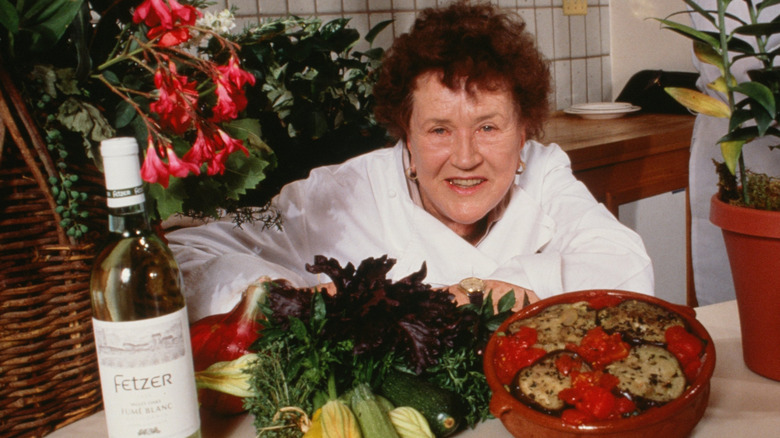
"When I got to France I realized I didn't know very much about food at all. I'd never had a real cake. I'd had those cakes from cake mixes or the ones that have a lot of baking powder in them. A really good French cake doesn't have anything like that in it — it's all egg power." — 1989 interview with Interview Magazine
"I love root vegetables: carrots, parsnips, and turnips. Now that's something, with a lot of taste — turnips. I'm a beet freak. I put them in the pressure cooker. Have you tried that? They're so easy, fifteen minutes and they're done." — 1989 interview with Interview Magazine
"I found that the recipes in most — in all — the books I had were really not adequate. They didn't tell you enough. I won't do anything unless I'm told why I'm doing it. So I felt that we needed fuller explanations so that if you followed one of those recipes, it should turn out exactly right. My feeling is that once you know everything and have digested it, then it becomes part of you." — 1989 interview with NPR
"In France, they're very sensible about saying when things are roughly chopped, it's peasant; and when they're a little better chopped, it's bourgeois; and when it's very, very finely chopped and you've taken a long time over it, it is haute cuisine." — Julia Child on PBS