

This Rare 1960s Pyrex Pattern Went From $6.95 To $200 (It Was Only Produced For One Year)
We may receive a commission on purchases made from links.
The popularity of Pyrex has taken a wild ride over the last hundred or so years. After the commercial release in 1915, 4 million pieces were sold in the first four years alone. The introduction of colored glass and decorative patterns helped bolster the brand's sales for decades, before it almost entirely fell out of favor in the 1980s. Although the glassware is still being produced now, it's the vintage Pyrex pieces that attract the most interest, with collectors trawling thrift stores for a potential goldmine.
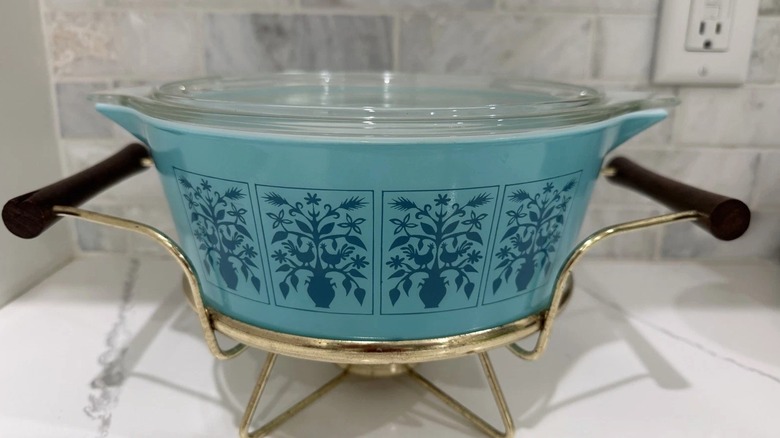
One of the Pyrex patterns you should keep an eye out for is Saxony. The 1960s design has a light blue background with dark blue print of two birds in a potted tree, earning it the unofficial name of the Tree of Life pattern. There's no available information on how many of these pieces were produced, but the production ran only from late 1967 to 1968.
The Saxony pattern was released solely on the 2.75-quart Cinderella casserole dish — which is a very helpful way to know if what you're looking at is the real deal. The dish originally came with a warming cradle, but don't let the absence of one put you off; many of these cradles and even the glass lids will be missing on vintage items.
When it was released in 1967, the Saxony casserole dish retailed for $6.95, which is around $34 when adjusted for inflation. Its value now depends significantly on the condition of the piece as well as fluctuating demand. On eBay, some pieces have an asking price of up to $200 for a dish with lid and warming cradle. Even without these parts, a Saxony dish in decent condition can still sell for upwards of $100.
Why some Pyrex patterns are more collectable than others
Scarcity is a key factor in what makes some Pyrex patterns or individual pieces so valuable, but why are there fewer of some than of others? Along with the brand's standard patterns, which were those mass produced for at least two years, Pyrex also released promotional patterns, along with dinnerware patterns for commercial outlets such as restaurants.
It's the promotional pieces that are often the most sought after, with limited production runs lasting a year or sometimes even just for a one-off event. The Saxony design was one such promotional pattern, though it's not clear if it was released for a special occasion or simply as a seasonal offer.
Patterns from the 1960s tend to be particularly popular with collectors. The rare Blue Dianthus Pyrex design appeared on five different sizes of casserole dish, but few of these remain, resulting in a price tag of around $2,000. The Daisy Pyrex line was produced from 1968 through to 1973, so it certainly wasn't limited, but today, individual pieces are sold for $50-$60, and matching sets reach around $400.
The most valuable vintage Pyrex pattern is widely considered to be Lucky in Love, a casserole dish with a pattern of shamrocks and love hearts. Some say it was just very limited, others claim it was a test print never released to the public, and further stories state that a production fault led to it being pulled. Whatever the truth, any dish you can find could be worth upwards of $5,000.