

10 Viking Foods People Still Eat Today
We're going to hold your hand while we say this, but the Vikings didn't actually wear horned helmets. We know, it was a big shock to us, too. But as it turns out, this is just one of many pervasive myths that surround the Viking era. Here's another fact that might just blow your mind: Vikings weren't all feasting on roasted meat constantly and getting drunk on mead, either. With that said, they certainly did drink mead (and beer, too). But for the most part, they filled their days with humble foods like porridge, vegetables, and rye bread.
Actually, our modern way of eating has quite a lot in common with the diet of the Viking era. Here, with the help of Daniel Serra, a culinary archaeologist and expert on Viking food, we take a look at some of the Viking foods and drinks that people still consume today. But before we get started, here's another important fact: Vikings weren't all warriors. So here, when we talk about Vikings, we're actually talking about the Scandinavian people of the Viking Age, which ran from around 800 to 1050 AD.
Beer
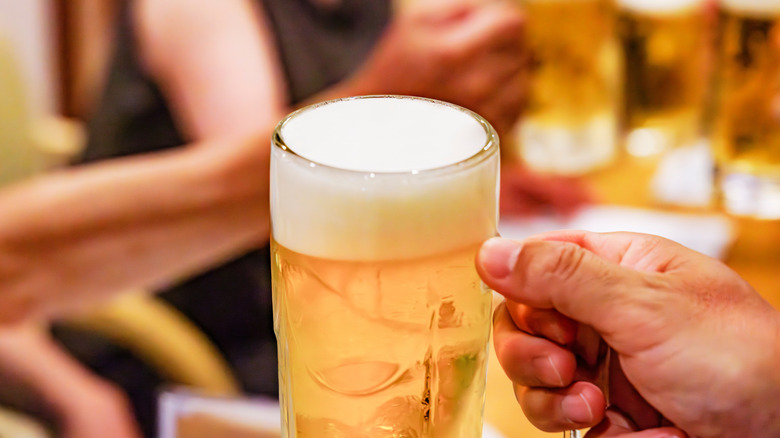
Today, beer is a big part of American culture. Per YouGov, more than 60% of U.S. adults like to drink beer when they're socializing with friends, and for nearly a third of adults, beer is their specific tipple of choice. Hanging out and drinking beer at the bar, or in front of the game on the TV at home, is, of course, a modern hobby. But drinking beer, full stop? That's a very, very old activity. The Vikings actually drank beer regularly (and even made their own).
According to Daniel Serra, beer was a "liquid staple" for Scandinavian communities during the Viking Age. In fact, often, people would treat weak beer as a kind of snack, he explains. Fun fact: Viking women would usually brew the beer, and some experts believe that children likely drank it, too. But don't worry — it was pretty weak stuff.
In fact, in many cases, beer was safer for consumption than water, which was more likely to have been contaminated by harmful bacteria at this time. Unfortunately, bottled, filtered water as we know it today wasn't really a thing in Viking-age Scandinavia. Go figure? Serra notes that other popular Viking drinks were sour milk, wine, and mead.
Porridge
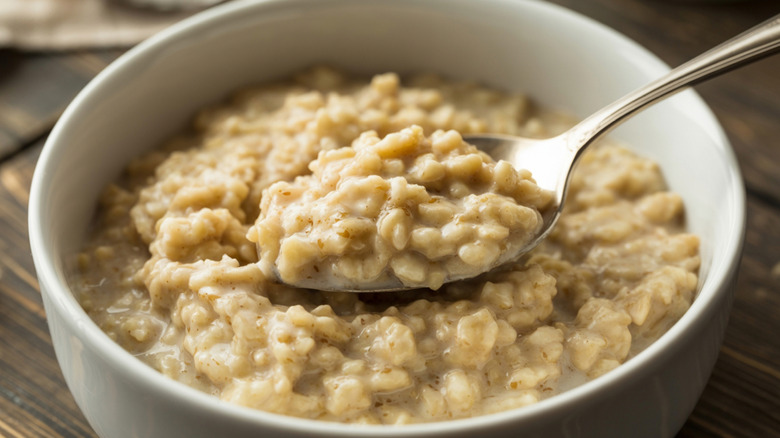
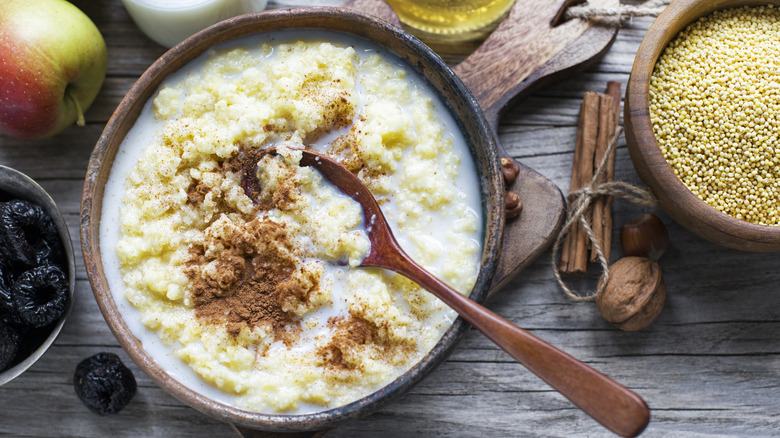
Porridge is timeless. It has been eaten around the world for, quite literally, thousands of years. In fact, there is evidence to suggest that people were making and eating porridge as far back as the Stone Age. As for the Vikings, they lived in the 8th century, roughly 3,000 years after the Stone Age ended, but they also consumed porridge as a staple. Yep, from the Stone Age to the Vikings to today, porridge has endured, probably because it is nutritious, affordable, and easy to make. And if you're thinking to yourself, "But I don't eat it," consider this fun fact: Oatmeal and grits are both types of porridge. You have more in common with a Viking than you thought.
However, Serra clarifies that Viking porridge was usually savory, not sweet. So if they were around today, you probably wouldn't catch a Viking drizzling maple syrup or chocolate sauce over their overnight oats. And they wouldn't eat them in the morning, either. "The major meals would have been the midday meal and the evening meal," he says. "Though one [was] advised to have an early meal before setting off on a journey, there aren't really any references to breakfasts."
Roast chicken
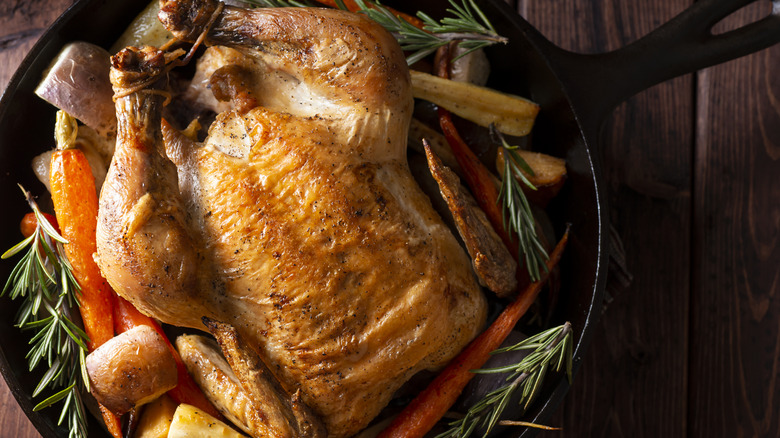
Scandinavian society was pretty complex during the Viking era. It followed a social structure, with chieftains and warlords at the top. Below them were free men, many of whom were farmers, warriors, or merchants, and then there were enslaved people at the bottom. And this structure also influenced what Vikings ate, with the wealthiest members oftentimes indulging in chicken and other roasted meats. According to Serra, they would feast on roasted chicken or game, which they would eat alongside bread, wine, mead, and honey.
Roast chicken with a glass of wine is still popular today (especially if you find yourself in the U.K. on a Sunday), although it's not limited to warlords, of course. However, this is probably where the similarities with many Westerners end. Serra says that many Vikings also ate hearts and horse meat, too. In fact, horse meat was a staple during religious festivals (and not just for the rich).
Bread
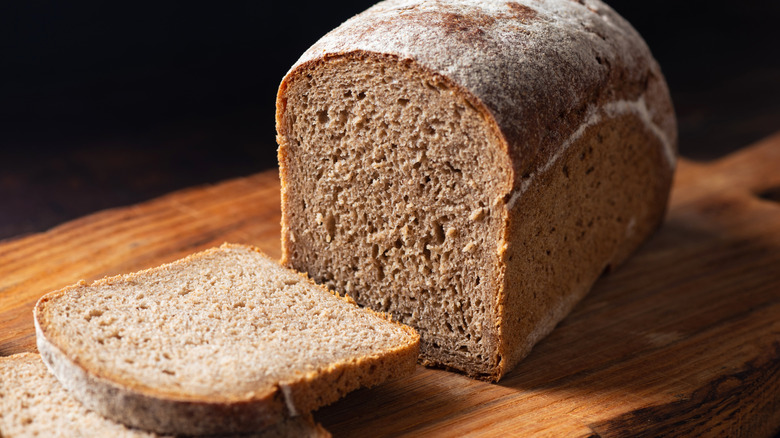
Let's be honest, most of the best things in life involve bread. A bread basket at the start of a meal. Buttered toast. New York-style bagels slathered in cream cheese. A juicy burger and fries. See? We modern-day humans aren't unique. In fact, for much of human history, people have eaten bread in some form. Even ancient communities, including the Babylonians and the Assyrians, had their own ways of making this doughy staple. And you guessed it — the Vikings enjoyed bread, too.
According to Serra, sagas from the time suggest that Scandinavian communities would often indulge in a light evening meal, and often, it would include a piece of bread. The staple wasn't just reserved for evening meals, though; it was eaten with everything, from porridge to roasted meats to fish and everything in between.
You might assume that Viking bread probably wouldn't taste anything like the kind you'd find on grocery store shelves today. But actually, that's not entirely true. If you've ever tasted rye bread, which you can grab from most stores, you're not far off. Rye was one of the Vikings' main crops, and they used it to make a heck of a lot of bread.
Honey
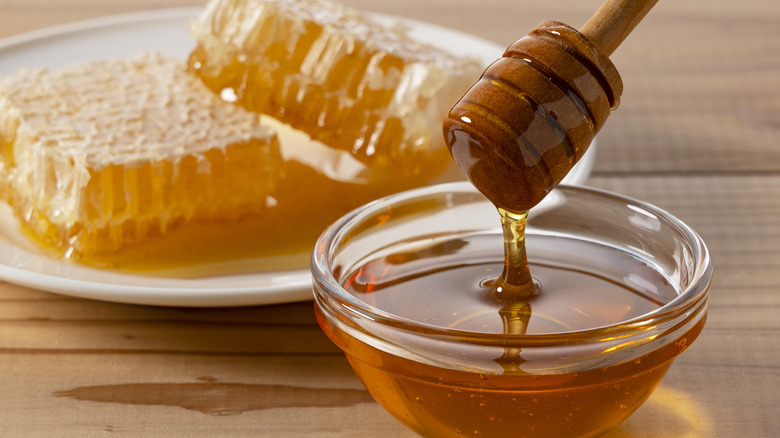
Honey is a centuries-old classic natural sweetener. The Egyptians were likely the first to actually organize beekeeping for honey production, but even before this, humans had been taking the sticky, sweet, gooey substance from wild beehives and eating it for themselves. (Sorry, bees.) The Vikings, too, enjoyed honey, and they consumed it in a lot of different ways. Though it's worth noting that because honey was expensive, this was a treat probably reserved for the rich.
While today, you might enjoy drizzling honey over your pancakes or mixing it with chili to make hot honey, the most common way that Vikings consumed this bee-made substance was in mead. For the uninitiated, mead is literally created by fermenting honey with water. But Vikings didn't just drink their honey; they ate it, too. In fact, Serra explains that one of his favorite dishes from this era is "spit-roasted honeyed heart."
We don't know that the Vikings ate honeyed hearts because they wrote any cookbooks ("no written recipes have survived," says Serra), but rather because they referenced the dish in their writings. These include the Poetic Edda (a collection of Old Norse poems), the Völsunga saga (a legendary saga about the Völsung clan), and Sigurd (an epic tragedy). Usually, honeyed hearts (which is exactly what it sounds like: a heart cooked in honey) would be reserved for the most powerful guest at any banquet, like the warlord or the king, for example.
Dried fish
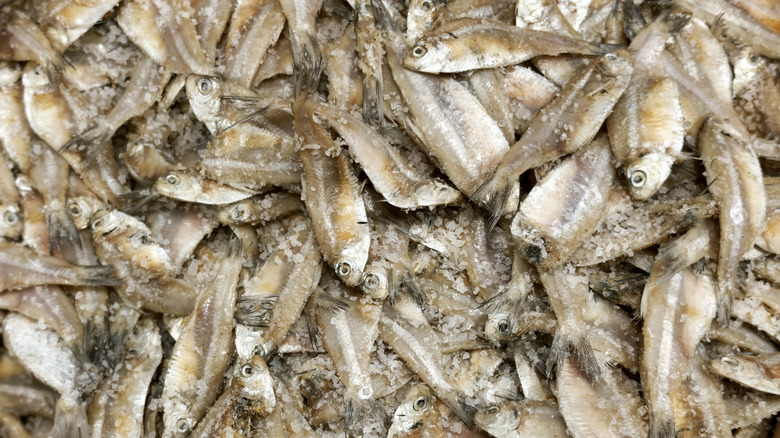
Today, dried fish is pretty popular. In fact, the fish jerky market was valued at more than $1.4 billion in 2025, largely because people are seeking out nutritious, low-fat, high-protein snacks, per Future Data Stats. And back in Viking-era Scandinavia, people in the north often also ate dried fish. For them, however, it was because this food was accessible and could be stored for long periods of time. In fact, if dried well, dried fish can last up to a year. "It [was] a larder economy," Serra explains. "Everything, with some exceptions, was made to last. So it was dried, smoked, stored in whey, soured and occasionally salted."
The Vikings ate all kinds of dried fish, including cod, halibut, and herring. But they didn't just survive on dried fish; they made money out of it, too. In fact, according to research published in the journal PNAS, there is some evidence to suggest that the Vikings transported dried fish from Norway to Haithabu, a settlement in northern Germany.
Cheese
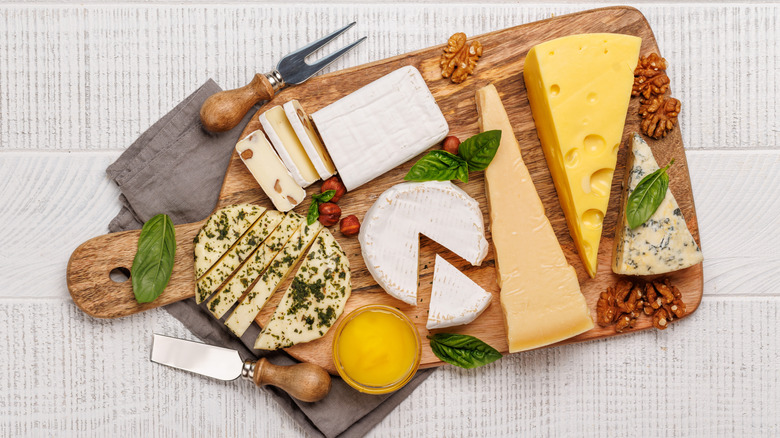
Of course, cheese is still hugely popular today. For the most part, people opt for varieties like cheddar, mozzarella, or Parmesan, and enjoy it in classics like pizza, pasta, or grilled cheese sandwiches. But things were a little different in the cheese department during the Viking era. If you were enjoying a light evening meal back then, there was a good chance it would involve bread, smoked meat, and some "stale old cheese," as Serra says. Delicious.
During the Viking era, people ate cheeses like gamalost, which was, quite frankly, pretty old and stale back then. In fact, it was particularly useful for long journeys, because it could last such a long time without refrigeration. This cheese is, let's say, unique. It has a slightly rough texture, because the mold used to cultivate it grows hair, which is then literally rubbed into the cheese. We did say it was unique.
Another Viking cheese, though, may sound a little more palatable to the average mozzarella-loving Joe. It's called skyr, and it's basically a simple, soft, soured yogurt-like cheese made with whole milk. Skyr is still eaten widely in Iceland, where it's often enjoyed for breakfast or dessert with sugar and fruit.
Kale
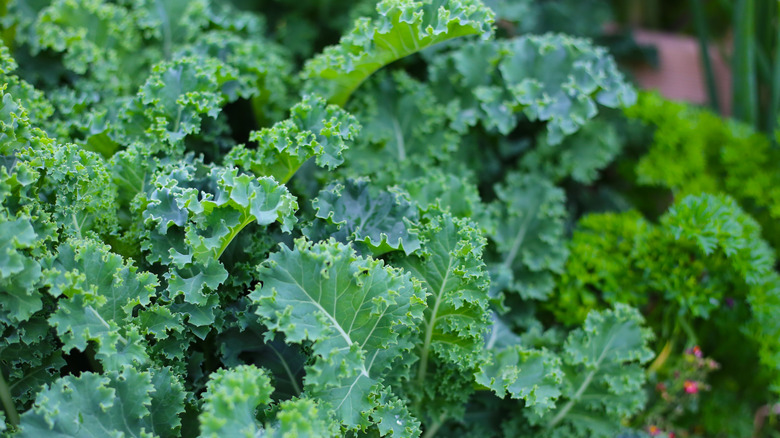
Vegetables were a key part of most people's diets during the Viking Age. In fact, they ate many of the same plants that we eat today, including cabbage, onions, and even kale. Lots and lots of kale, actually. In fact, if you're partial to a green smoothie or some crispy kale, you'd probably fit right in during the Viking era.
The fact that Vikings ate so much of this particular vegetable makes perfect sense: Kale is resilient and hardy, and it can withstand very cold temperatures. This was essential for the people of Scandinavia during this time, as winters were long and harsh. Per Serra, Vikings also ate a lot of white goosefoot, which is another hardy, leafy green that some still eat today in salads, smoothies, and pesto.
The Vikings weren't partial to smoothies or salads, of course. Instead, they ate their leafy greens with their porridge, sometimes adding smoked fish as well.
Turnips
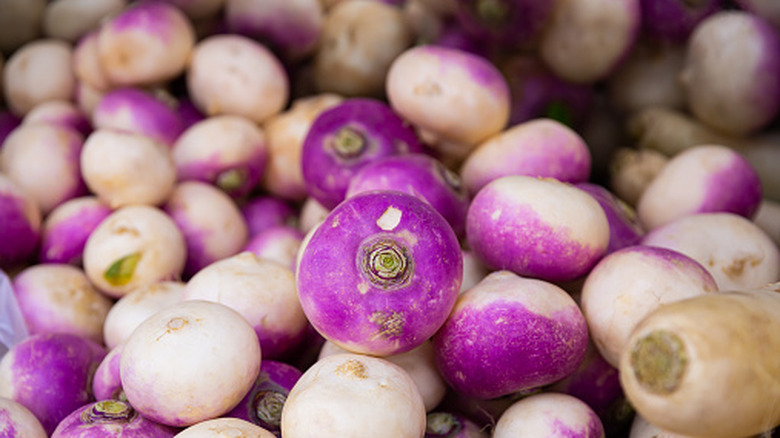
Turnips actually have a pretty long history. They were first domesticated up to 6,000 years ago in modern-day Afghanistan, and since then, they have fed everyone from the ancient Romans to the Victorians. As you might have guessed, the Vikings were pretty big fans as well.
In fact, one of Serra's favorite recipes from the Viking Age, inspired by the sagas, is ember-baked turnips. As the name suggests, this is just turnips roasted in the embers of a fire, but, according to Serra, this basic dish doesn't really need much more adding to it. "[It's] simple and [tastes] much better than one can expect," he explains. "It seems likely to have been something that could have been cooked in a simple [household]."
People still eat turnips today, of course, but they're hardly, well, fashionable. In fact, they are actually one of the most disliked vegetables in America. Is it time for a turnip renaissance? We say make like the Vikings and give them a go; they're particularly good when roasted with herbs or tossed in a summer salad.
Beans
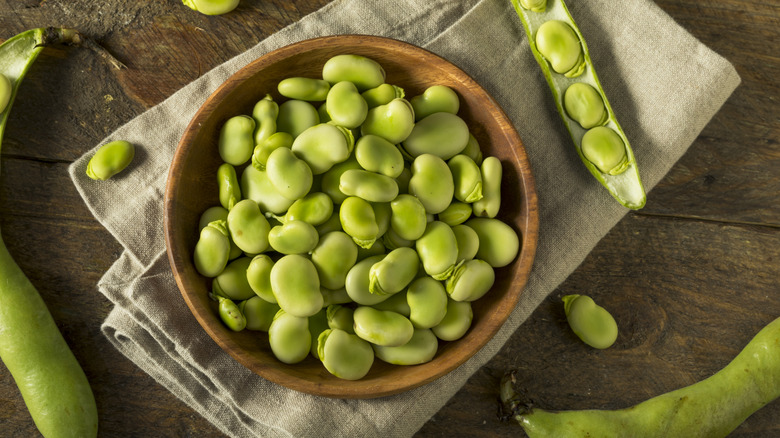
Beans are one of the simplest foods on planet Earth, but they are also one of the most nutritious and versatile. It makes sense, then, that they appear in traditional dishes from all over the world, including Viking food. In fact, the Vikings ate beans as a regular staple, says Serra.
Some of the oldest paleo-botanical remains of legumes have been found in the capital of Oslo, and dated to the 11th century, at the end of the Viking era. This evidence indicates that many Vikings cultivated and consumed fava beans, specifically. Again, it's not surprising that the Vikings relied on these beans as a key food source: Fava beans are an incredibly hardy crop. They can survive rough winter conditions, including harsh frosts and snowfall.
There aren't any surviving fava bean recipes from the Viking era. However, it's likely that, like many other Medieval people across Europe, they would have mixed them into broths or porridges.