

How Much It Cost To Feed A Cowboy In The American West
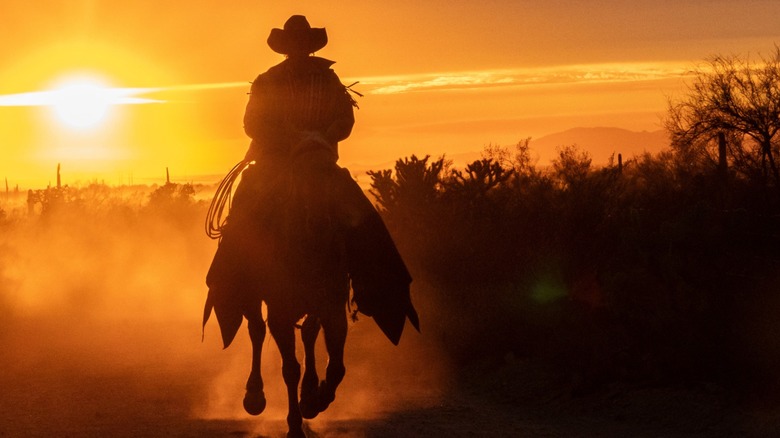
While sticker shock is on heavy rotation at grocery stores, fans of the Old West may wish to take refuge in the good ol' days, taking a look back at food prices during the time of the chuckwagon. So, how much did it take to feed a cowboy back in the days of the American West? About $1 weekly.
Riding, roping, and exploring out on the open range surely worked up an appetite and wasn't for the faint of heart (or stomach). Cowboys needed to fuel up for a hard day's work that didn't end at sundown because they took shifts watching over sleeping cattle — aka night-herding — to prevent escapes or the herd being startled and starting a stampede in the dark of night. In 1889, cowboys could sustain themselves day in and day out, as they rounded up thousands of heads of cattle and drove them across the country, on just a dollar's worth of food — for a whole week! To put things in perspective, that's roughly 14.3 cents a day or less than 5 cents per meal. Ouch! That makes the cost of a Big Mac meal in 2026 even more painful.
What were they getting for their $1-a-week budget? Somebody else cooking their meals, for one. A cook (often called Cookie) ran the chuckwagon on the drive and it was his job to keep the cowboys fueled, fired-up, and ready to ride, serving 3 square meals each day. Plenty of hearty, stick-to-your-ribs chow such as chili would be served in the sweltering heat (often 110+ degrees Fahrenheit) on those dusty trails. Other common foods included salt-pork, beans, biscuits, coffee, and sometimes dried beef and dried fruit. Occasionally, they'd get the bounty of fresh beef that was a head of injured cattle.
Save money eating like a cowboy
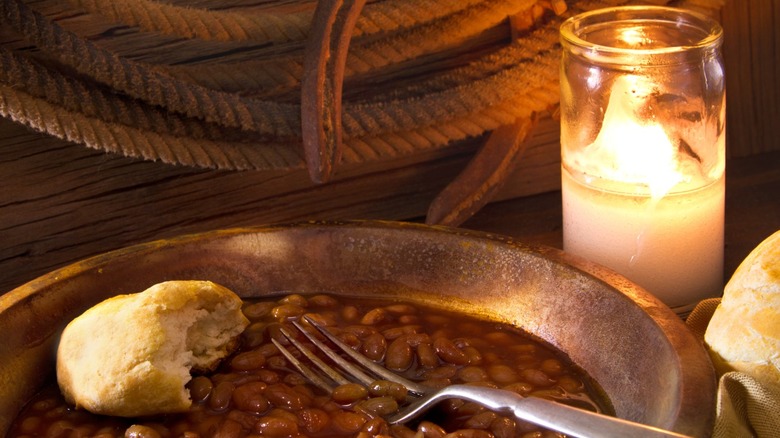
That dollar-a-week meal budget would be worth about $36.43 today, which is roughly a 3,500% hike from 1889 to the present. Planning a full week's worth of meals for a picky family on under $40 may be even more challenging than feeding ravenous cowboys. Take a lesson or two from Cookie and make a classic cowboy meal to sustain your brood, drawing on the simplicity of slow-cooked chuckwagon beans.
In the Wild West, meat was hard to keep, so a little went a long way. And meat is still expensive today, so filling up on beans makes sense. Going meatless or utilising meat wisely (buying cheap cuts and using less) was a no-brainer. Nutrient dense beans are filled with fiber and protein. But they need maximum flavor. Saving scraps or bones from recent meals, such as a ham hock, leftover bits of fat or meat, or throwing in a fistful of ground meat all help pump up the flavor. Good bean recipe starting points include frijoles charros (cowboy beans) made with pintos, onions, garlic, and bacon. But there's always good 'ol baked beans and franks, spicy chili, or saucy cannellini bean or other white bean recipes, too. Bean recipes stretch your meat budget while filling bellies with top-notch nutrition and a sense of satiety. Add homemade biscuits or cornbread, and it's 100% cowboy-approved.
Take further money-saving inspiration from the Old West by embracing another bean — the coffee bean, a staple of life on the frontier. In 1870, coffee cost 12 cents per pound. In 2026, the average cost is over $9 per pound. Modern coffee drinkers often buy cups out, or zhuzh it up with flavored creamers, syrups, and powders. Instead, take your coffee like the cow poke: Brew it yourself and drink it steaming hot and black — nothing fussy.