

The Better Way To Fertilize Leafy Greens Has Nothing To Do With Coffee Grounds
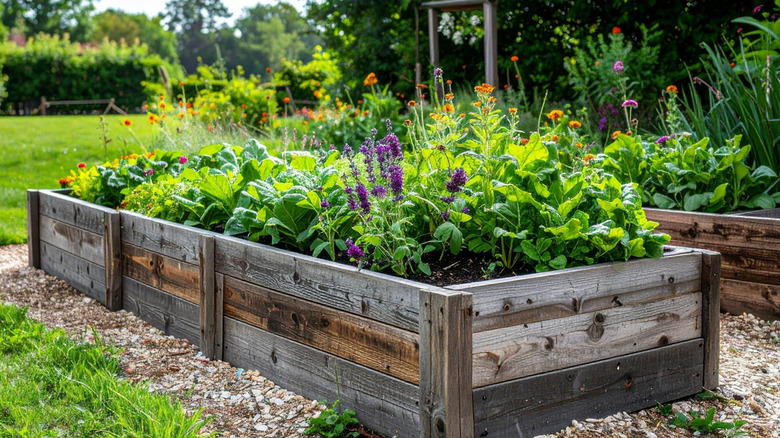
Many home gardeners love the idea of turning yesterday's coffee into tomorrow's tomatoes. It's frugal and satisfying to put household waste to good use, but coffee grounds aren't the only place you can find free, nutrient-dense materials to amend your soil. One of the best homemade fertilizers for your leafy greens might be that patch of weeds growing in the neglected corner of your yard. Stinging nettles have been harvested for centuries as a mineral-rich spring vegetable and medicinal herb, cooked into soups, blended into pesto, and brewed into a warm, caffeine-free tea or a cold, refreshing drink. The same plant chemistry that makes them so healthy to eat is what makes them such great fertilizer.
Stinging nettles are what botanists and gardeners call dynamic nutrient accumulators. As they grow, they pull unusually large amounts of nitrogen, magnesium, potassium, and other minerals from the soil, and store them in their leaves. That's why you'll often find them growing vigorously in disturbed ground, along compost edges, old farm sites, and other places that are naturally high in nitrogen.
Nitrogen is especially valuable for leafy greens, like kale, spinach, lettuce, cabbage, and Swiss chard, because it's an essential component of chlorophyll, amino acids, and proteins. Plants need nitrogen to produce bountiful, healthy, verdant leaves, and with those particular vegetables, that's the part of the plant we're harvesting. Feeding them nitrogen is like giving a sports car high-octane fuel, but this fuel is as simple to make as pouring water over some chopped-up weeds.
Tea time for greens
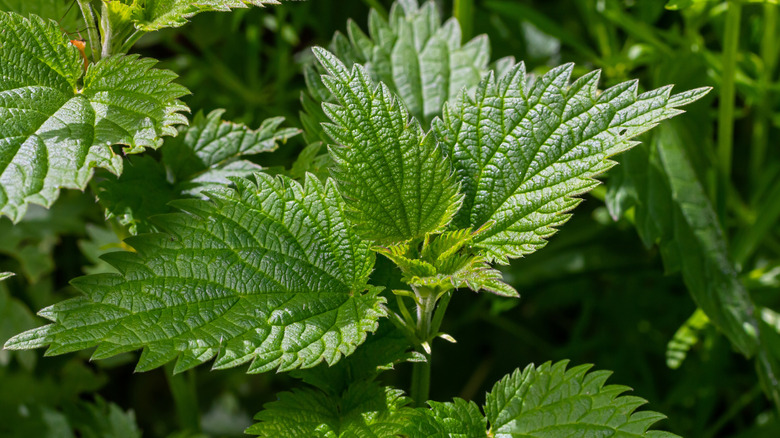
Harvest the nettles wearing gloves and long sleeves to avoid their famous sting (don't worry too much if you do get stung — it'll fade in a few hours). You can harvest the plants at any stage of growth; early spring makes sense because it's probably when your garden is getting started, but the mature plants will have more concentrated nutrients in their leaves.
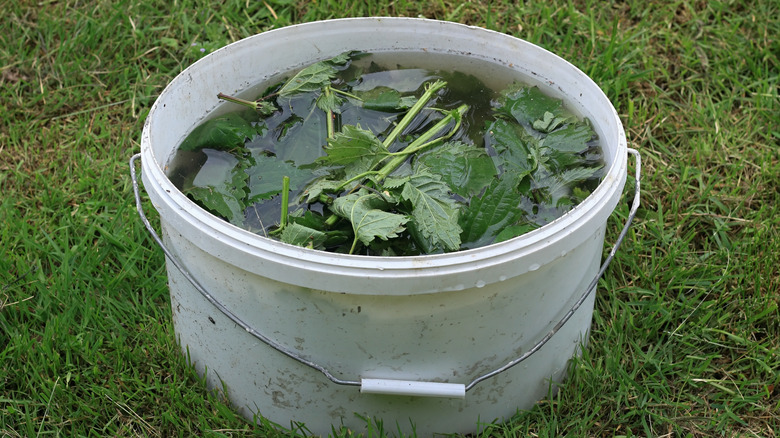
Making nettle tea fertilizer is a bit of a DIY science experiment in controlled decomposition. Make sure to use a plastic bucket, wooden barrel, or other non-metal vessel. This process involves fermentation, which creates acids, potentially reacting with metal over time. A loose-fitting lid is also useful, allowing produced gases to escape without inviting every neighborhood mosquito into the bucket, or allowing too much evaporation. Once you've harvested a good amount of nettles, use kitchen or herb scissors, or garden shears, to chop them up roughly, and pack the plant material into a bucket and cover it completely with water. Over the next week or two, naturally occurring microbes will break down the plant tissue, releasing the stored nutrients into the water.
Once fermentation slows, and the liquid has darkened, strain out the solids and dilute the concentrate before using it — gardeners recommend roughly one part nettle tea to anywhere from 10 to 20 parts water for watering the soil around the plants. As a fair warning, because you're macerating a bucket of rotting plant slop, the brew smells pretty ... spectacular. It's best left to ferment outdoors, if possible. Once strained and diluted, the liquid is a powerful fertilizer, ready to water into the soil around your leafy crops.
Leaf it be
The finished liquid fertilizer definitely needs to be diluted, because concentrated fertilizer solutions throw off the concentration of salt in the soil. Instead of helping the plant absorb water, an overly strong solution can do the opposite, and stress or scorch tender plant tissues, causing fertilizer burn or osmotic stress.
Nettle tea fertilizer works best when it's intentionally matched to the plant's life stage. Leafy vegetables flourish with extra nitrogen, but the same nutrient can be counterproductive elsewhere. Plants grown primarily for flowers or fruit eventually need to shift their energy away from producing foliage and toward producing blossoms and growing fruits; think of the berries, tomatoes and peppers, squash and beans of the garden. Continuing to supply large amounts of nitrogen throughout the season will encourage luxuriant foliage, when the plant should be investing in blossoms and developing fruits. This means that nettle tea is a fertilizer best used in the early parts of the growing season, or on crops where the leaves are the harvest.
The tea isn't the only way gardeners can put nettles to work. Their unusually high nitrogen content also makes them an excellent compost fortifier and activator. Mixed into the compost pile alongside the drier, carbon-rich materials like fallen leaves or cardboard, it will help the pile heat up as it decomposes and accelerate further microbial activity and decomposition. You can pour leftover tea right on your compost pile, or use a shovel to mix in the plant material you strain off the slurry. Some gardeners also use cut nettles as mulch around established shrubs, where the plants naturally break down and return their nutrients to the soil over time. In each application, you're taking advantage of the chemistry of a plant that has already done the work of concentrating minerals.