

What's The Lifespan Of A Classic Cast Iron Skillet?
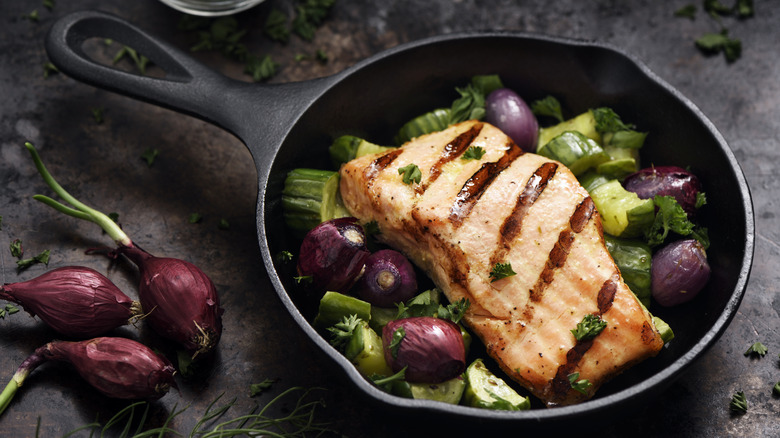
Keeping your kitchen well-stocked with the latest gadgets is fun for the novelty, but little beats a classic cast iron skillet. These useful kitchen tools are typically in the "buy it for life" category and for good reason. With proper care and seasoning, the lifespan of your cast iron skillet can be upwards of 50 years, making it ideal for passing down through the generations.
Cooking with cast iron tools can come with somewhat of a learning curve, but once you get the hang of it, you'll be a devotee. Between the pan's natural nonstick surface, capacity for even heating, and excellent heat retention, the benefits are nearly endless. The cardinal rules of using a classic cast iron skillet include keeping your pan clean, well-seasoned, and stored in a cool and dry place, all of which will ensure its long lifespan.
The biggest benefit to a cast iron skillet is its longevity; however, there are some tell-tale signs to look out for that would indicate you need a new cast iron skillet. Visible warping, cracking, or holes will mean you need to replace your pan. Aside from that, the classic kitchenware is impressively durable. Even rust can't stop a cast iron skillet.
Maintaining a cast iron skillet
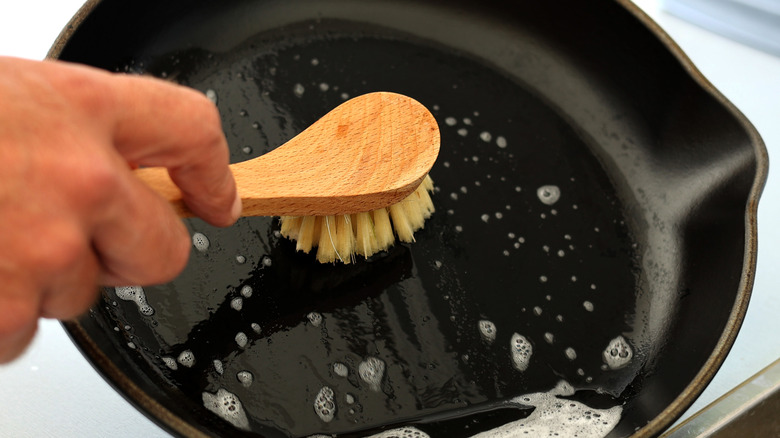
When caring for a cast iron skillet, the two-word problem every vintage cookware owner should know is "thermal shock." One of the biggest risks to a classic cast iron pan is a quick shift in temperature from extreme cold to heat or vice versa, which can cause warping or cracking. Luckily, this can be avoided with proper heating. For example, don't run a hot pan under cold water or crank your heat up too high with an empty cast iron skillet on the stovetop.
Aside from being mindful of temperature changes to prevent thermal shock, you'll also want to use the right oil to season your cast iron pan, which will help prevent rusting. After gently washing your pan with warm soapy water and drying it fully, rub it all over with oil and then put the pan in a hot oven to let the coating set, repeating at least a few more times to build up the coating. The more you use your cast iron skillet, the better seasoned it will become, thanks to any and all cooking fats placed into the pan.
If you do see rust on your pan, don't fret. This, too, is easily remedied. Use a food-safe rust remover or a vinegar solution to lift the residue from your pan and use steel wool or similar to scrub the rusted areas. Once your pan is clean and dry, remember to re-season it to restore its nonstick surface. From there, it's a matter of continued maintenance and use to keep your classic cast iron skillet going for years.