

The 2-Word Problem Every Vintage Cookware Owner Should Know
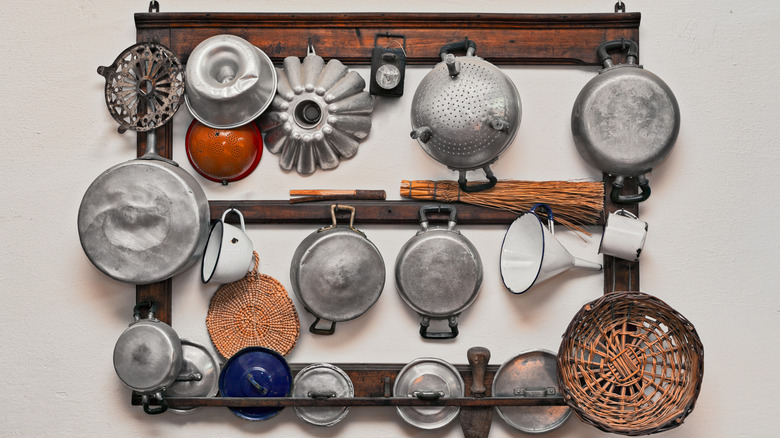
Every vintage cookware owner should count themselves lucky. Not only are older pots and pans aesthetically pleasing, they're also incredibly durable and often of a far superior quality than what's being made today. However, you do need to be a little careful with them — and if there's one thing you need to watch out for, it's this two-word problem: thermal shock.
Thermal shock is a phenomenon that occurs when an item is suddenly exposed to an extreme change in temperature. Most pieces of cookware are designed to expand and contract evenly to deal with fluctuations in temperature, but when they're exposed too quickly, they can crack or shatter under the sudden strain. Thermal shock is a particular concern with older cookware, according to trained chef and cooking instructor Fred Decker.
When discussing the mistakes everyone makes with vintage kitchen items, Decker said that "some materials deal with [temperature changes] better than others." While lab-grade borosilicate glass (used to make vintage Pyrex dishes) can more effectively withstand fluctuations, he shared that older ceramic items can be much more sensitive. This is especially true of ceramic baking dishes and serving pieces.
How to prevent thermal shock in vintage cookware
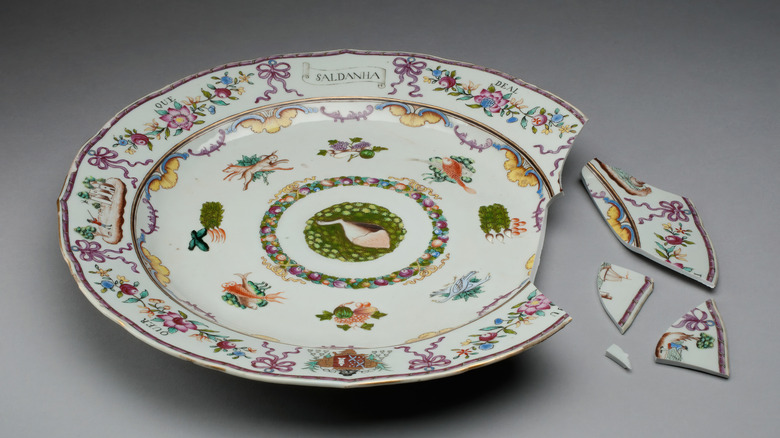
The most common way in which thermal shock occurs is when you place something very hot on top of something cold, or vice versa. For example, when you move a dish directly from the oven to a cold countertop or pour cold running water into a pot right off the stove. To avoid it, you just need to move a little slower and take some extra precautions.
Decker said, "Before you take any vintage glass or ceramic items from the oven or the burner, be sure to set out a heatproof trivet for it to sit on, rather than just putting it on the counter." Likewise, it's best to wait until an item is cool before washing it. Additionally, don't place your vintage cookware directly on a high-heat setting.
You also want to be careful with any items that are stored in a colder area. Decker said, "With dishes and serving pieces, don't take them from a cool cupboard and immediately pile them with hot food. Instead, warm them gently by running medium-hot tap water over them and then drying them before adding the food." Finally, don't put any cold or frozen food into hot dishes or pans and never move cookware directly from the fridge to the oven or stove. Seeing as some vintage cookware sets are worth a fortune today, it's worth taking the extra time.