

Sauvignon Blanc Vs Chenin Blanc: What's The Actual Difference
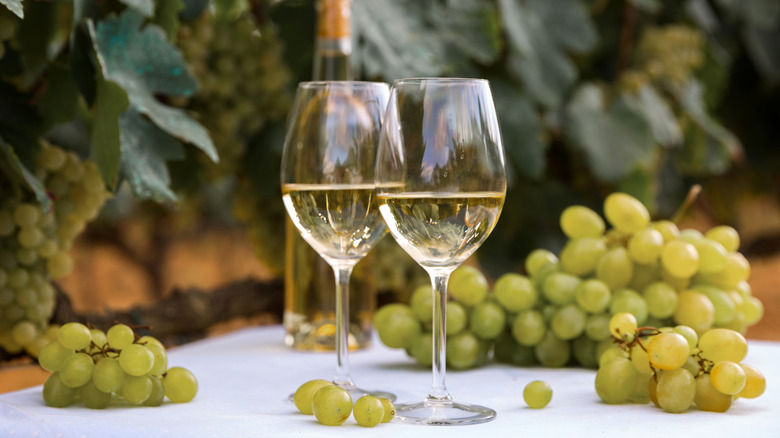
Looking to switch up your go-to dinner party bottle? Wine aficionados might pass over well-known sauvignon blanc for the similarly named chenin blanc. In your local wine shop, these bottles are often neighbors — which, considering their origin, is right where they belong. Both sauvignon blanc and chenin blanc hail from France's Loire Valley, each markedly crisp, vibrantly acidic, and full of zesty personality. From here, however, these aromatic wines diverge.
The most immediately obvious difference lies in their comparative sweetness levels. Sauvignon blanc is traditionally categorized as a dry wine, offering a bracing acidity that's generally perceived as being drier than chenin blanc. Chenin blanc grapes, by contrast, are known for their versatility and a wide range of styles. Depending on how and where it is produced, the wine can be bone dry or dessert-level sweet, sparkling or still. Thanks to this spectrum of expressions, bubbly chenin blanc can be enjoyed solo as an aperitif, or served on the dinner table alongside an entree in its off-dry, still form. Sauv blanc lacks this greater potential for sweeter expressivity and effervescence.
On the palate, sauvignon blanc is crunchy where chenin blanc arrives rounded and velvety. Chenin blanc leans comparatively richer in both texture and tasting profile, showcasing a strong bouquet of yellow apple, hay, quince, and lush honey. Sauvignon blanc shares chenin blanc's capacity for a wide range of tasting notes. On the whole, however, discerning sippers can expect to discover herbaceous flavors (think: green bell pepper, grapefruit, lemongrass, flinty minerality) from a glass of sauv blanc. Chenin blanc is also visibly darker — pale yellow to gold in color versus straw-toned sauv — further extending the subjective illusion of a bigger, deeper presence across the palate.
Chenin blanc is rounder, fuller-bodied, and can range from bone dry to syrupy sweet
Chenin blanc gets its name from the French winemaking region of Mont Chenin in Touraine. The grapes are still commonly grown here today, as well as in the city of Angers to the west. Beyond France, the grapes are also grown in California and in South Africa (currently, the largest chenin blanc-producing region in the world by acreage, where the wine is also called Steen). Since grapes naturally ripen quicker and more fully in the sun, warmer climates are known for producing off-dry and sweet chenin blanc. Cooler climates cause the grapes to ripen more slowly, consequently maintaining an acidity that's better suited for dry, sparkling expressions. As a thrifty industrial bonus, because chenin blanc grapes are notoriously susceptible to millerandage — a condition in which the bunches ripen unevenly, producing smaller and larger grapes in the same cluster — these grapes in different developmental stages can be used to produce different styles of wine.
Regardless of expression (i.e. still or sparkling), the chenin blanc category is characterized by signature tasting notes of hay, bruised yellow apple, chamomile, quince, wet stone, and a subtle woolen gaminess. From this central point, different iterations of the wine can diverge considerably. Sweet chenin blanc wines offer earthy and floral notes of saffron, honeycomb, and marmalade. On the drier side, sparkling chenin blancs tend to be light and crisp with featherweight flavors of citrus, honeysuckle, apricot, pear, and beeswax. This wine is all about sophistication and body.
Sauvignon blanc leans cool, crunchy, and potentially a lot drier
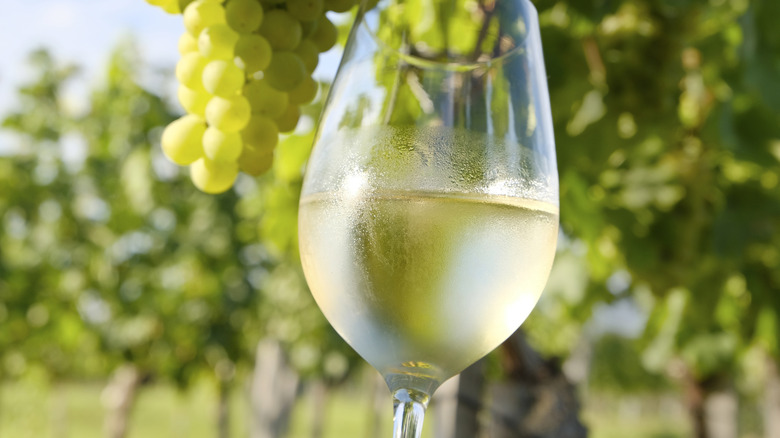
Distinctively herbaceous and refreshingly acidic, sauvignon blanc offers a comparatively more complex nose than chenin blanc. The wine's dominant "green" flavors come from the grapes' naturally high level of the compound pyrazine, yielding enticing tones of green apple, green bell pepper, and freshly cut grass. From this jumping-off point, sauv blanc's dynamic secondary tasting notes can range from grapefruit to wet concrete to herbaceous tarragon.
Not unlike chenin blanc, terroir plays a major role in steering the unique flavor profile from one bottle of sauvignon blanc to the next. Coastal or continental climate offerings from Chile or the Loire Valley, respectively, emphasize cooler nuances of salinity and flinty minerality, while Mediterranean climates like Marlborough and the Napa Valley produce sauv blancs with more pronounced notes of tropical fruits like guava, passion fruit, and papaya. What this wine is not, however, is sweet — a marked difference from some chenin blancs.
When it comes to food pairings, both white wines accomplish many of the same purposes; their zippy acidity can artfully cut through richer dishes. As a general rule, the richness of a wine should match the richness of the food. Consequently, lighter-bodied sauvignon blanc fares well with lighter grilled white meats like poultry and fish. It can highlight herbaceous dishes like pesto pasta and asparagus risotto, and complement the floral bouquet of Thai and Vietnamese cuisines. Sweeter expressions of chenin blanc make a better fit for heavy pastas in cream sauce, buttery seared scallops, and robust pork chops with applesauce. Thanks to its strong body, honeyed chenin blanc is even a classic pairing for foie gras.