

Is Sauvignon Blanc Dry Or Sweet? What Wine Newbies Should Know
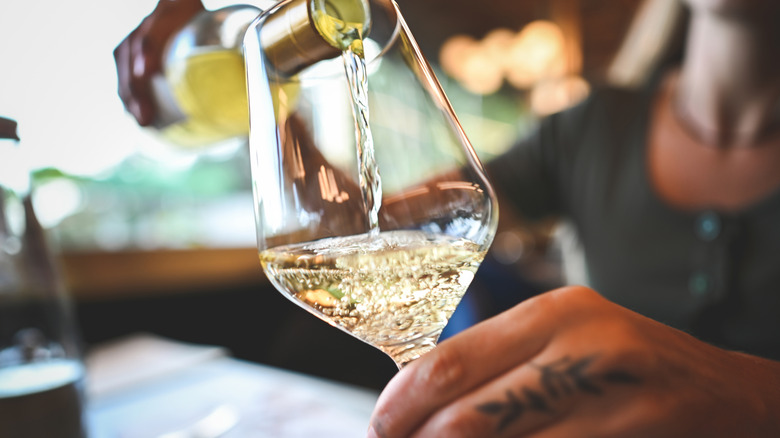
In many ways, it would be far more accurate to describe sauvignon blanc as "crisp and bright" rather than "sweet" or "dry." On the palate, the wine's most distinctive note is its vibrant acidity — which can itself emphasize the perception of dryness on the palate. The subjective impression of sweetness or lack thereof as it pertains to specific tasting notes can make this dimensional, middle-of-the-road white wine tricky to authoritatively classify. But, as a general rule, sauvignon blanc arrives herbaceous and vegetal with a ripple of bright citrus. Common tasting notes include savory green bell pepper, green grass, and green apple, which come from the natural chemical compound pyrazine.
Tertiary tones kick in with graphite, shale, white flower, pink grapefruit, melon, and salinity — neither dessert-like nor bone dry, and endlessly expressive. Sauv blanc is traditionally labelled as a dry wine, but on the palate, it tends to arrive semi-dry. Comparatively, it's roughly on par with the dryness of grüner veltliner, chenin blanc, or (as a red equivalent) a cool-climate cabernet franc.
This wide tasting range is due to the sauvignon blanc grape variety's versatility. The crop is adaptable to myriad climates, elevations, and soil conditions, making it an oft-chosen varietal for winemakers around the globe. In fact, sauvignon blanc grapes are the eighth most popular type of viticultural grape in the world. Subsequently, this Earth-circling crop yields bottles with wildly different tasting nuances from pole to pole.
Sauvignon Blanc is traditionally dry, but it's not that simple
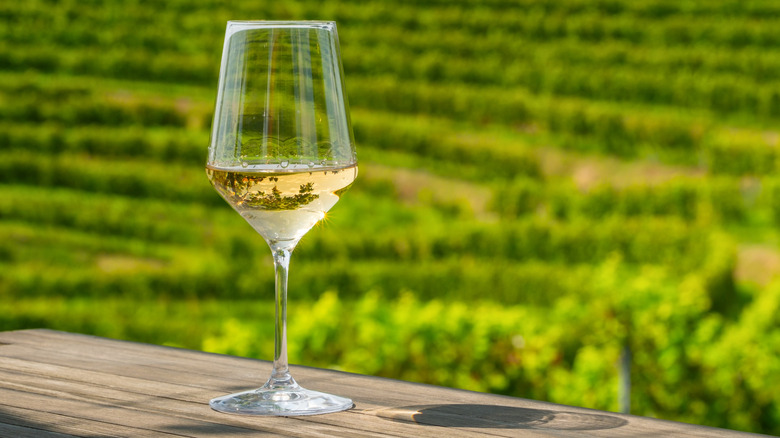
Even within the Sauvignon Blanc category, every bottle is unique. Due to proprietary manufacturing processes and distinctive local terroirs, a Sauv Blanc produced in California will taste different from one made in France, and unlike a glass from New Zealand. Maritime climates offer more pronounced fruity tones like passionfruit and guava, thus creating the impression of a sweeter sip. Meanwhile, a Sauv Blanc from a colder climate like France's Loire Valley will lean flinty and salinity-forward. Some New Zealand and California winemakers even keep a few grams of residual sugar for a more balanced flavor.
Still, regardless of the precise region, the constant variable when it comes to sauvignon blanc is its vibrant acidity and expressive minerality. That zesty acidity also creates the impression of lightness on the mouthfeel, even as sauv blanc clocks in at a light to medium body. Oak barrel aging can also be used to give this wine a rounder, deeper, fuller profile.
Since sauvignon blanc leans neither particularly sweet nor especially dry, it makes a fabulous and versatile pairing for a kaleidoscope of dishes at your next dinner party. Goat cheese, shellfish, and herbaceous entrees like asparagus risotto or pesto pasta make particularly complementary candidates. The wine's acidity can cut through these richer dishes while its mild yet dimensional bouquet keeps things interesting without overpowering the meal.