

8 Wine 'Rules' That Are Actually Myths
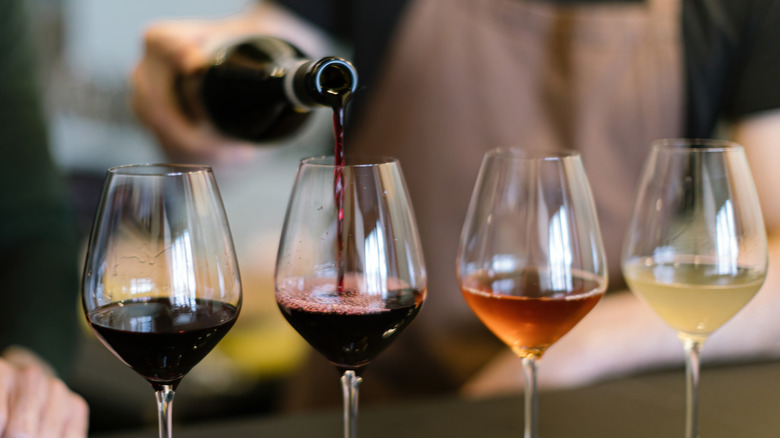
At its core, wine is just fermented grape juice. Yet it can take on a mythical status when people hold certain dogmas too firmly. If you're just a casual wine drinker, chances are you've heard all sorts of rules about how wine should be consumed, including service temperature, food pairings, and even the bottles you should buy. However, a lot of this information is outdated or simply untrue, and only serves to make wine seem far more intimidating than it really is.
To better understand which wine rules hold up — and which don't — I spoke with several wine experts about some of the most common assumptions surrounding wine. Natalie MacLean is a wine writer, reviewer, and course instructor who has spent years helping wine drinkers separate fact from fiction. Similarly, Alessandra Esteves, co-founder and Director of Wine Education at Florida Wine Academy in Miami, shared her insights into some of the wine world's most enduring beliefs. Finally, Gabriel Miller, Head Winemaker at Noboleis Vineyards, and John Osborne, Head Sommelier at Le Pavillon, Centurion NY, and SUMMIT Events, helped cut through some of wine's most persistent misconceptions. My own education as a Certified Specialist of Wine and WSET Level 3 holder also helped inform these points.
Together, these perspectives show that many of wine's most firmly held beliefs deserve a second look. Read on to discover the wine rules that are really just myths.
1. Red wine with meat, white wine with fish
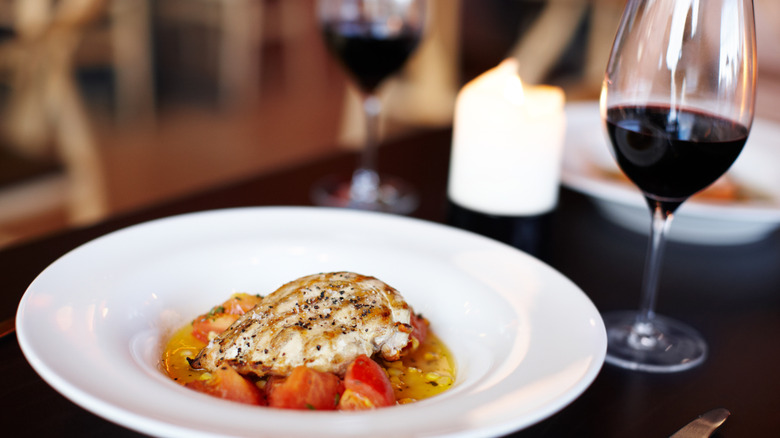
The idea that red wine should only be served with meat and white wine with fish is one of the most common food and wine pairing rules you'll hear. But if you stick to it, you could be overlooking some delicious pairings.
Gabriel Miller also disagrees with the outdated concept: "Strict adherence to this rule will limit your ability to creatively pair foods and wines." Natalie MacLean says that sticking to this formula doesn't account for how the dish is prepared. In her opinion, the sauce is often the most important indicator of what wine should go with the food, since its weight, acidity, and richness can all vary significantly. "A meaty grilled salmon loves a chilled pinot noir," for example, "while chicken in a rich cream sauce calls for a full-bodied chardonnay over most reds."
Meanwhile, Alessandra Esteves points out that while some people are open to serving red wine with fish, they often think it's only suited to salmon or tuna. She suggests trying light reds that can be served chilled, such as a Cru Beaujolais or a cabernet franc from France's Loire Valley. For sushi, she highlights Oregon pinot noir or an Italian red from South Tyrol.
2. A screw cap indicates cheap wine
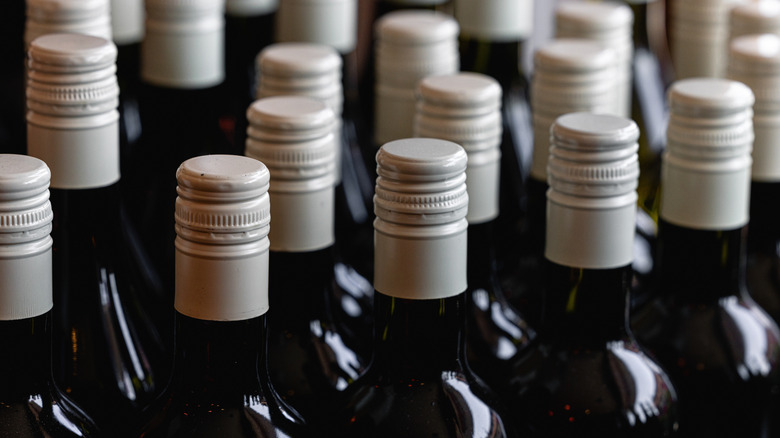
If you're someone who turns their nose up at bottles with a screw cap, you're probably missing out on some excellent wines. Gabriel Miller points out that it really comes down to the type of wine you're purchasing — a young, fruit-forward wine that's meant to be enjoyed relatively soon after bottling is actually better suited to a screw cap than a cork.
Although European countries have been slow to adopt screw caps for quality wines, they have been the default in Australia and New Zealand for a couple of decades. In 2000, winemakers in the Clare Valley, Australia, started using screw caps for their top-tier wines. The next year, New Zealand launched the Screw Cap Wine Seal Initiative, which focused on researching this type of closure and ensuring it was used to benefit the wines.
Natalie MacLean explains that screw caps leave the wine tasting much as it did when it was bottled. Cork, on the other hand, allows oxygen to slowly enter the wine, causing it to evolve over time. While this can be beneficial for certain high-tannin wines, the majority of wines on the market are meant to be consumed within a year of purchase. Not to mention, using cork can backfire. "Cork taint can ruin roughly one in every 20 bottles sealed with natural cork," MacLean notes. While there's no reason to avoid cork entirely, just know that screw caps aren't an indicator of a low-quality wine.
3. Older wine is always better
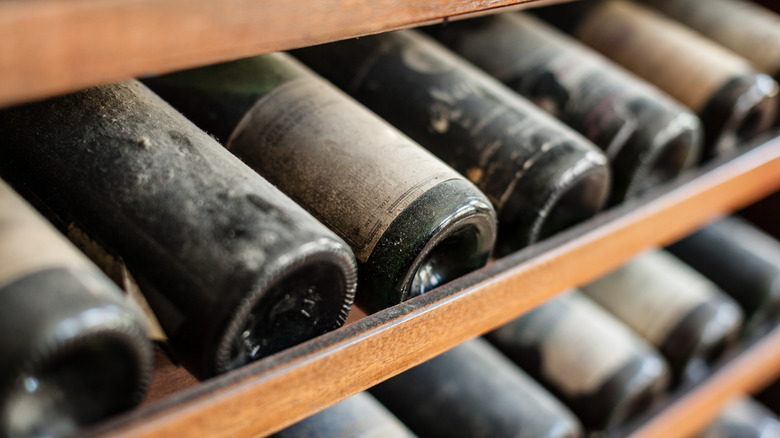
There's a common misconception that the older the wine, the better it's going to be. Perhaps it's because older bottles are considered rarer and typically have a price tag to match, or maybe it's the idealized notion of storing wine to drink decades from now. Either way, as previously mentioned, the vast majority of wine is intended to be consumed within a year or two of release.
"Most bottles don't improve in your basement," explains Natalie MacLean, "they just fade." Unfortunately, this myth means many people end up drinking bottles too late because they believe wine always improves with age. "Unless you've bought a structured red or a top-tier riesling built for the long haul, that special bottle you're saving for a milestone is likely past its best," MacLean cautions. Wines that age well tend to have high tannins, acidity, alcohol, or sweetness, which help preserve them over time. Most wines lack that structure and are at their best while their fruit and freshness are still intact. If you're debating whether to open a bottle you've been saving, avoid missing it at its peak. "Open it tonight and make the occasion," MacLean recommends.
4. You should never chill red wine
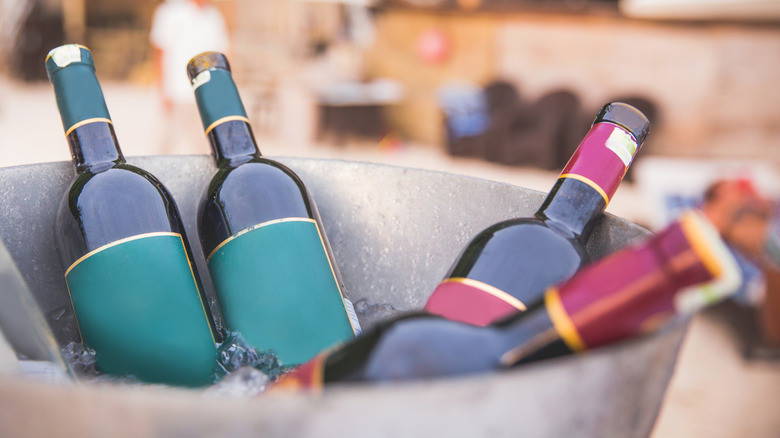
The idea that red wine should always be served at room temperature is one of wine's most persistent myths. John Osborne says this notion is outdated, stemming from a time of stone castles. "Unless your dining room features a literal moat and ambient air hovering at a crisp 60 [degrees Fahrenheit], modern room temperature is actually a death sentence for good wine," he notes. Nowadays, room temperature is roughly 10 degrees higher. "At 72 degrees, the alcohol volatilizes instantly, turning a beautiful vintage into a hot, flabby, soup-like mess where the alcohol overwhelms the aromas," Osborne explains.
Natalie MacLean agrees and notes that a quick 20 minutes in the fridge can help brighten a red wine, making the fruit more prominent and the aromas more focused. She particularly recommends giving lighter red varieties — like gamay and pinot noir — this treatment. Conversely, Gabriel Miller explains that certain white wines are better served at slightly warmer temperatures. "It's okay to let a white wine warm up a bit and it's perfectly fine to slightly chill a red wine," he says. This is also worth keeping in mind if you feel a white wine is lacking flavor or the alcohol in a red wine is taking over the palate — it might just be a question of serving temperature.
5. The more expensive the wine, the better it is
Like many products we buy, people often assume that price is directly correlated with quality. But when it comes to wine, there's a lot more at play. "Price reflects scarcity, real estate, and marketing as much as what's in the glass," Natalie MacLean explains. In fact, she says that even wine experts struggle to reliably judge the price of a bottle in blind taste tests. Her advice when you're looking for the best deal? "The sweet spot for quality and value is often in the $15 to $25 range, especially [wine] from less famous regions."
Gabriel Miller agrees with MacLean when it comes to the weak correlation between cost and quality. He notes that he's tried budget bottles that he would absolutely buy again, and very pricey wines that he hated. Studies also indicate that casual wine drinkers typically prefer cheaper wines in blind taste tests. However, if they are told a wine is expensive, they're likely to rank it higher — even if it's actually cheaper. This suggests that, for many people, it's just a matter of perception. According to MacLean, "The best wine is the one you enjoy, at a price that lets you open it on a Tuesday."
6. Pair sweet wine with dessert
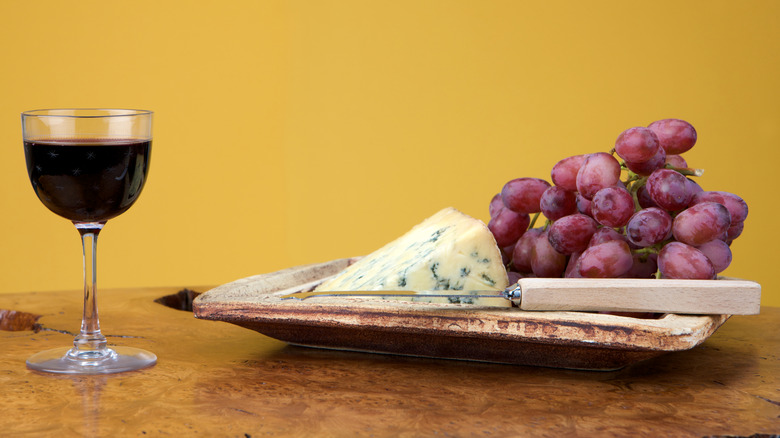
Sweet wine is often treated as something that's meant for the end of a meal. Whether it's a late-harvest wine, a richly concentrated Sauternes, or a fortified wine like Port, many drinkers either skip sweet wines entirely or assume they only belong alongside dessert. But limiting sweet wines to dessert means missing out on some of their most interesting food pairings.
Alessandra Esteves loves thinking outside the box when it comes to matching food with sweet wines. When you pair them with desserts, she notes that they'll often taste even sweeter, which may cause some people to skip them in favor of something more balanced like a bitter amaro or a coffee. "Instead, I like pairing them with salty cheeses like Parmesan," recommends Esteves, "or even savory dishes like foie gras." She also suggests pairing Port with blue cheese and Sauternes with Brie. A sweet-and-salty combination is a tried-and-true classic that can make both the wine and the food taste more complex and balanced.
7. You should never add ice to wine
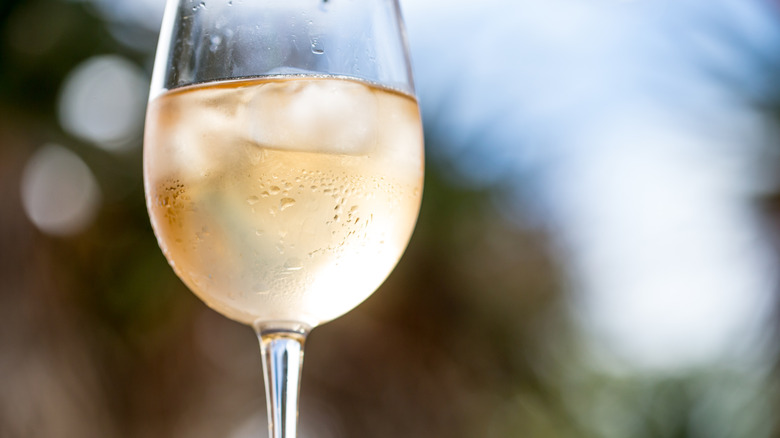
The idea that you should never add ice to wine is one of the more rigid rules in the wine world. While chilling a bottle properly is usually the better approach, there are situations where adding an ice cube can help bring a wine down to the right temperature without ruining the experience. Alessandra Esteves notes that white, rosé, and sparkling wines should typically be chilled on ice rather than served with ice, but she points to several products on the market that are specifically made as an "ice" version. These are designed to be served with ice cubes or mixed into cocktails.
But you don't have to save the ice for those specialized wines. "I have also added a cube of ice to a dark, flavorful rosé during a hot summer day in Miami," shares Esteves. "No shame on that!" Why suffer while drinking warm rosé when you can quickly cool it down with an ice cube? A more concentrated rosé will stand up better to the addition of an ice cube, but if you're drinking a light rosé that needs an extra chill, just try not to sip it too slowly so that it doesn't become excessively diluted. Meanwhile, you may want to avoid this trick when drinking sparkling wine, since it will cause the bubbles to dissipate.
8. You need to be an expert to enjoy wine

The wine world is filled with possibilities for education and countless facts to learn, from the thousands of grape varieties to the countless wine-growing regions around the world. And while exploring wine through resources like podcasts and other educational tools can help you learn more, there's absolutely no rule that says you have to be a wine expert to consume it. "One of the biggest disservices the wine industry commits is trying to portray wine as a scholarly endeavor where you must be educated about it to enjoy it," says Gabriel Miller.
This misconception causes many casual wine drinkers to hesitate when making their selection, and they're more likely to default to what the "experts" recommend. But Miller suggests sampling a wide variety of wines in order to learn what you do and don't like. This is especially important because personal taste will largely dictate the kinds of bottles you prefer over others. And if anyone makes you think otherwise? "At its base level, wine is decomposed, old grape juice and people don't need to be so pretentious about it."