

Screw Cap Vs Cork: Does Style Matter When You Buy Wine?

Grab a bottle of wine and the routine practically runs itself: peel the foil, find the corkscrew, coax out the stopper. Cork has sealed wine bottles for centuries — cheap table pours, and four-figure Burgundies alike — and the muscle memory around it runs just as deep. But one of these days, you may come across a bottle sealed with a metal screw cap instead of a cork. Just twist it off like a bottle of sparkling water or a flask of whiskey — no corkscrew required.
That's a screw cap, and despite its workaday reputation, it's become a legitimate — and in some markets, dominant — type of closure for wine. In Australia, screw caps now top around 99% of wines produced. The numbers aren't far behind next door in New Zealand, either. The question for those of us shopping in the U.S., where cork still rules the shelf, is a practical one: when you do encounter a screw cap, does it mean something? And if you have a choice between the two, does the closure actually matter?
The short answer: sometimes. How long are you keeping it? What are you drinking? Does the sound of a cork coming out of a bottle matter to you? Those three questions will get you pretty far in resolving this unexpected dilemma in the wine aisle.
The case for cork
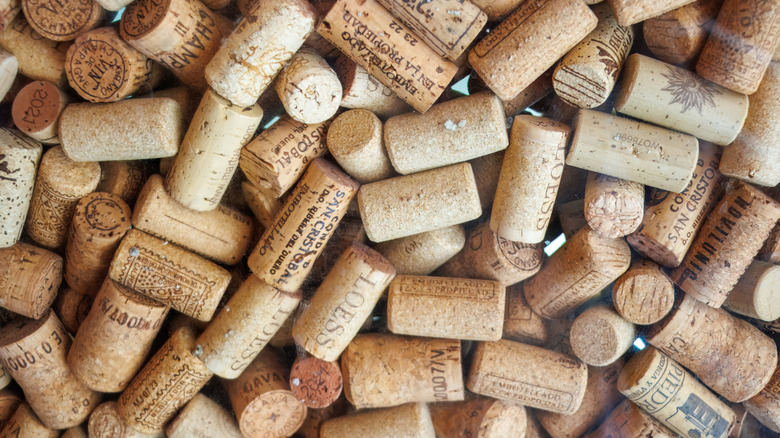
Wine corks are made from the bark of the cork oak, a tree that grows across southern Europe and parts of North Africa. Harvesters strip the outer skin from the trunk every nine years, then stamp individual corks out of the thick slabs of bark. Because this doesn't harm the tree, cork is renewable. So, in addition to being cheap, it's no surprise that many parts of the wine-producing world remain faithful to this type of closure, even long after alternatives arrived.
Economics aside, there's a practical side to the argument for cork, as well. Cork is porous, which allows oxygen to slowly transfer into the wine over time — a feature that can soften young tannins and develop more complex characteristics as the wine ages. That slow, controlled interaction with air is what allows a serious Cabernet Sauvignon or Barolo to evolve in the bottle over years or even decades. Screw caps, by contrast, are typically made from aluminum with an insert that provides a tighter seal — keeping oxygen out far more thoroughly than cork does.
Cork isn't without its downsides, though. Being a natural material, cork varies from stopper to stopper — some seal cleanly, others don't, and a dry or crumbly cork can let in enough oxygen to age a wine well past its prime before it ever reaches your glass. Worse is cork taint, a musty, wet-cardboard smell produced by a compound called TCA that develops when mold interacts with natural bark. It affects about 5% of bottles — which sounds minor until you accidentally buy a corked bottle.
The case for screw caps (and what to do with both)

Screw caps showed up on wine bottles for the first time in 1959, born out of necessity rather than cost-cutting — Australian winemakers were losing bottles to cork taint, and a French manufacturer built them a solution. The reputation for cheap wine that followed was never really the screw cap's fault. Unlike cork, a screw cap won't taint a bottle, doesn't vary from one to the next, requires no tools to open, and can be resealed after the first glass is poured.
A study in the Australian Journal of Grape and Wine Research tested identical wines under both closures and found that screw-capped bottles were far more consistent in overall quality — one of the screw cap's strongest selling points. That said, screw caps aren't completely airtight. The Australian Wine Research Institute found they allow trace oxygen in, just at a much lower rate than cork. Low enough that the slow development age-worthy wines depend on largely doesn't happen.
When it comes to choosing between the two, here's the simplest way to go about it: if you plan on drinking the bottle shortly after opening, a screw cap is fine and often preferable. But if you're cellaring your wine for years, cork is still the safer bet, assuming you get a clean one. Beyond that, the closure doesn't really matter in the grand scheme of things. A great wine under a screw cap is still a great wine.