

10 Classic '70s Cookout Dishes That Were Beloved By Boomers
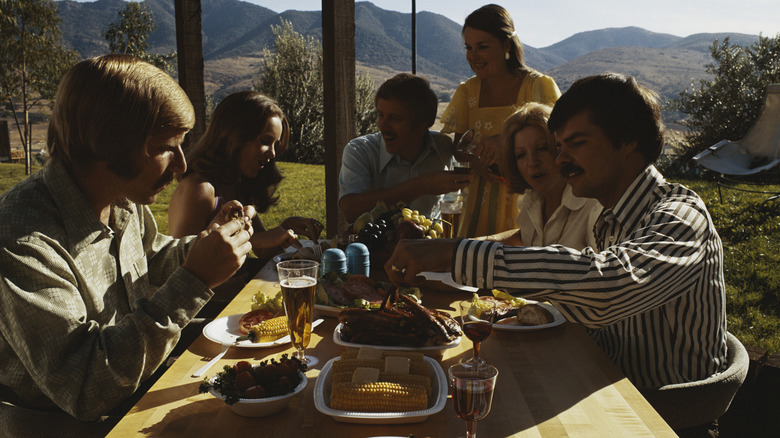
Humans have been grilling food in some form for millions of years. But the beginning of cookouts as we know them today coincided with the start of the United States itself. Cookouts are often closely associated with patriotic holidays, of course, though it also just makes sense to prepare and eat food outdoors when it's warmer outside. Now, the modern version of summer grilling especially took off in the early-to-mid 20th century, so it stands to reason that the 1970s are seen as the golden age of cookouts for many Boomers.
What did Boomers most enjoy cooking in backyards, parks, and beaches in the '70s? It's a pretty interesting mix of their childhood favorites, creative spins on those favorites, and entirely new dishes. Affordability was typically a factor, as the U.S. economy wasn't exactly booming during that decade, meaning people had to make their dollars stretch as far as possible.
A lot of '70s cookout meals involved creative ways to transform cheap ingredients into family-feeding dishes. The flamboyance and flair of the decade also played a part, with dishes that were deliberately colorful and visually interesting. Some of these have proved to be timeless, while others now feel as dated as polyester leisure suits. Keep reading to discover which classic cookout dishes Boomers loved most from the 1970s.
Watergate Salad
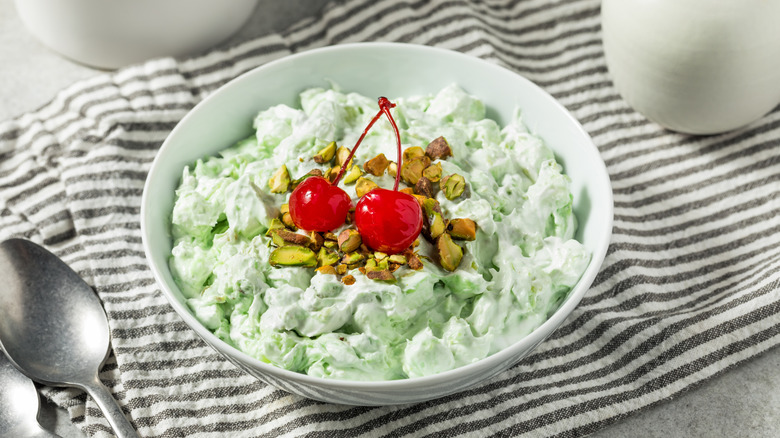
The 1950s gave rise to cookbooks with shortcut recipes that didn't require making every component from scratch. Instant gelatins and puddings were a popular ingredient in such recipes, particularly when it came to dessert salads. Even prestige cookbooks like "The Joy of Cooking" in 1964 proudly featured gelatin recipes. Jell-O also got in on the action, creating recipes built around its specific gelatin and pudding flavors. Fast forward to 1975 and the introduction of the now-classic Watergate salad, which was created to help sell Jell-O's then-new pistachio pudding flavor, and became a cookout staple for Boomers.
It's worth noting that Jell-O initially called the dessert pineapple pistachio delight. Additionally, the history on who named it the Watergate Salad and why is extremely contentious. But what is known is how popular it was in 1970s cookouts and potlucks, no matter what it was called. Typically utilizing just five ingredients — Jell-O pistachio pudding mix, marshmallows, canned pineapple, chopped pecans, and whipped topping — it was both quick and cheap to prepare. Its bright green color stood out on a cookout table full of other sides, and made for a cool treat on a hot summer day.
Deviled Eggs
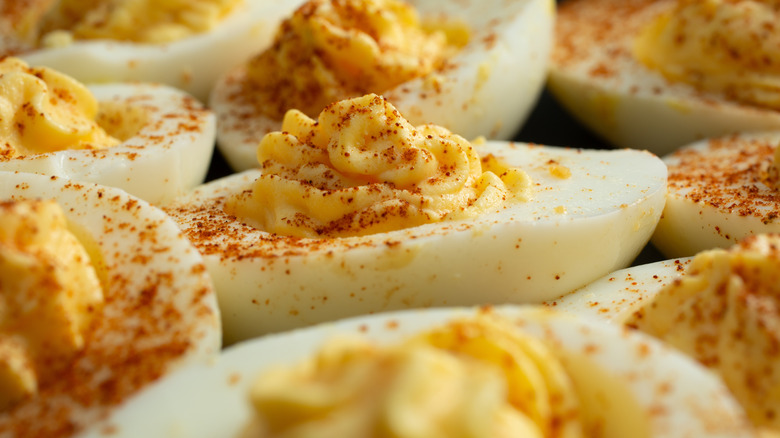
As mentioned, outdoor food gatherings in the '70s often had to keep economics in mind. More specifically, hosts had to decide how to feed as many people as possible for as cheaply as possible, while still providing sufficiently hearty and tasty dishes. Given the fact you could get a couple dozen eggs for about a buck in the 1970s, eggs were an appealing ingredient in making an impressive cookout dish. Which is exactly why deviled eggs were so commonly found on cookout tables that decade.
There are deviled egg recipes for every kind of gathering. Plus, they can be put out as either an appetizer, a side dish to the main meal, or simply a snack that people can grab and munch on all afternoon. Their versatility was as crucial to their place in Boomer cookouts as their cost. The '70s also marked a period where the method of displaying deviled eggs on the table began to shift from fine china and glassware platters to more casual plastic trays, further cementing deviled eggs' move to more relaxed and fun outdoor parties.
Cheaper cuts of steak
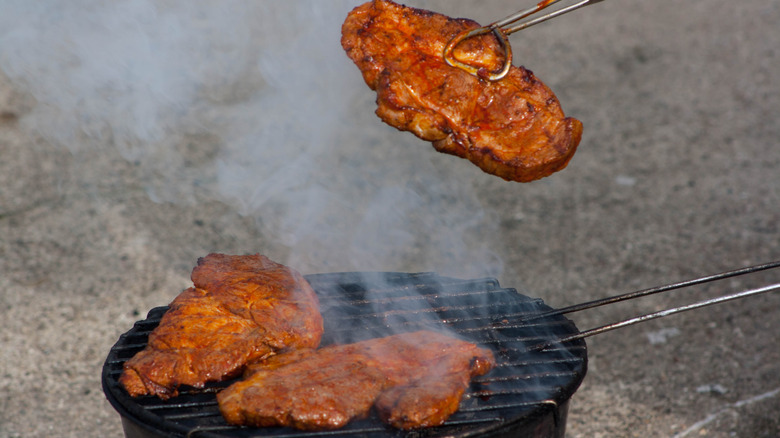
The centerpiece of most cookouts is the protein, and in both the 1970s and 2020s, that protein is most often hot dogs and/or hamburgers. Once again, it's a matter of trying to feed large groups as quickly and efficiently as possible, so a grill top full of burgers and wieners is the most reliable way to do that. Of course, those who want to take the cookout up a notch will sometimes offer grilled steaks, as well, which was something Boomers often enjoyed during the '70s.
Now, cost reared its ugly head yet again in this department, so most backyard barbecues weren't offering up ribeyes or filet mignons. Beef chuck is a reliably cheap cut for steak, and as such, it was frequently recommended for people planning cookouts in the '70s. It was also common to get a large cut of a cheaper steak like a top round, large enough for multiple people, that allowed for more efficient cookout as you could prepare the main course for three or four people at once without needing to babysit several separate steaks.
To that end, sometimes '70s grilling hosts would go ahead and slice the steak into bite size pieces as it was plated. This allowed for even more portion control, ensuring the meat fed as many people as possible.
Cheese Ball
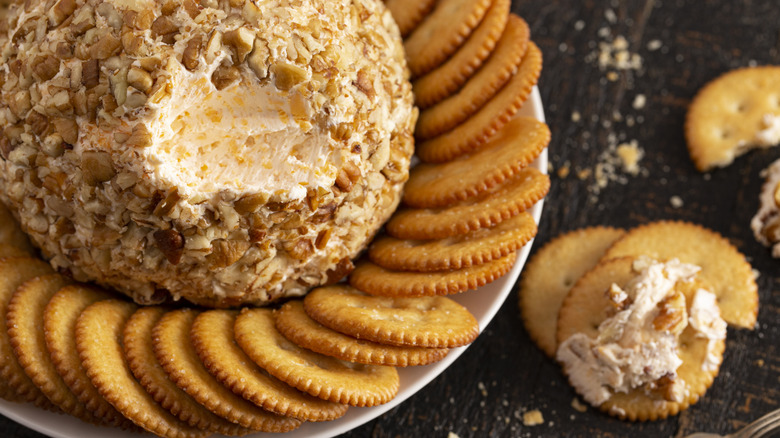
Thus far, every item on this list has been fairly timeless, and just so happened to have been popular with Boomers during the '70s. Now we get to a dish that's very much of that decade. While cheese balls didn't necessarily start in the '70s, that was most certainly its heyday. While it's been written off at times as the type of thing from that era that's best left in the past, Boomers just seemed to love fun takes on the idea of dips at cookouts — and cheese balls really speak to that.
Whether you think cheese balls are an embarrassing relic of the past or an underrated nostalgic delicacy, they were most certainly a staple at many a backyard gathering in the '70s. It had the quirky visual appeal that was all the rage in '70s food gatherings. Cream cheese would be blended with a shredded cheese of the cook's choosing, seasoned as they saw fit, and then shaped it into a large ball coated in chopped nuts.
The cheese ball was then surrounded with crackers, and the idea is that you'd either stick the cracker directly into the ball or you'd carve some off and spread it onto your cracker. It offered a similar sort of community dipping experience as fondue pots (another era favorite).
Kabobs
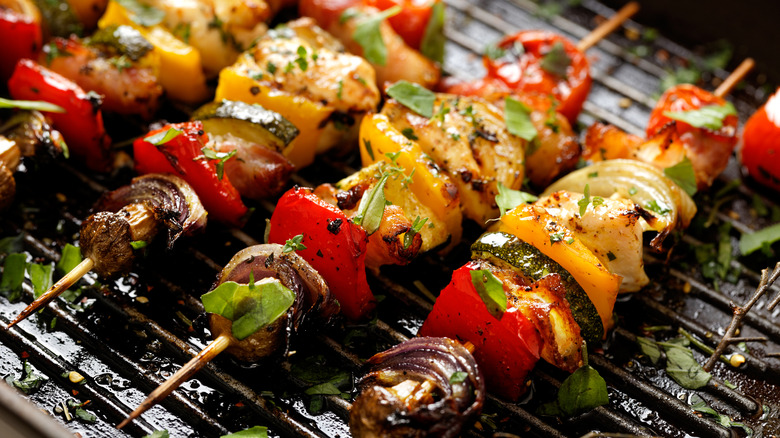
The '70s were a time when middle America began to get more adventurous with its food choices, as well as a decade that saw an explosion of interest in tiki parties. Those two trends converged to make shish kabobs a beloved grilled dish for many Boomers during '70s outdoor gatherings, even ones that weren't designed to replicate a luau.
Once again, we have a combination of affordable, easy-to-prepare ingredients with a bright and colorful presentation. Long wooden skewers would be stuck with either chicken or steak and then various fruits and veggies, finishing with seasonings and, very often, a teriyaki glaze. One uniquely '70s touch was to use maraschino cherries as one of the components of a kebab, which gave them a vibrant pop of color during the decade when maraschino cherries seemingly peaked.
Kebabs have certainly lived on beyond the 1970s, and been beloved by Boomers as well as people from other generations. Of course, you'd be hard pressed to find one that includes cherries in the 21st century.
Ambrosia Salad
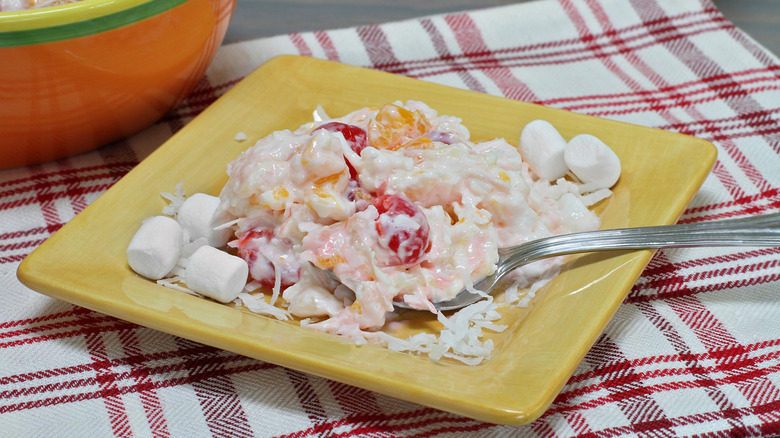
Cookouts in the '70s were all about fluffy and colorful sides and dessert salads, so it wasn't unusual to find ambrosia salad on a wooden picnic table next to Watergate salad. In fact, the two are so often mentioned alongside one another that people sometimes find themselves wondering what the difference is between them. Ambrosia salad has the fruit, marshmallows, and Cool Whip that were a common base for '70s dessert salads, but what made it unique is the mixed-in sour cream, creating a dish widely enjoyed by Boomers.
That sour cream component made ambrosia salad a bit denser and more savory than similar dishes often seen at cookouts and outdoor parties in the '70s. But it also tempered the sweetness of the other ingredients with that sour cream tartness. Ambrosia salad was also typically made and topped with maraschino cherries, another use of that Boomer cookout staple ingredient that really ties the dish to its original era. It would seem that a jar of maraschino cherries really got put to use when prepping the spread for a '70s cookout, and not just for cocktails and ice cream sundaes (which they're most commonly used for these days).
Corn on the Cob
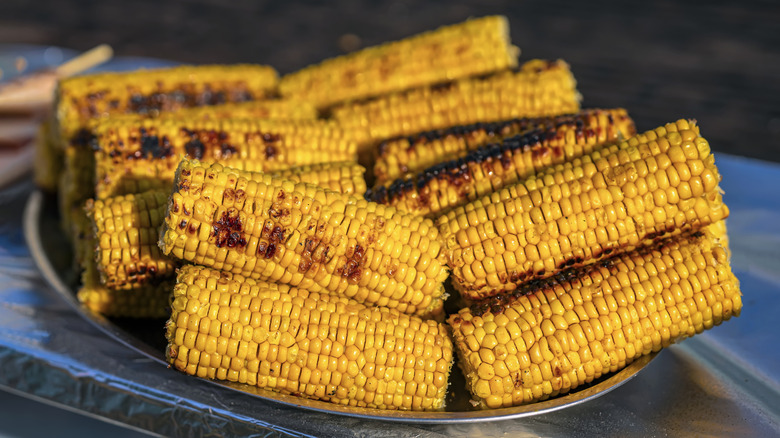
Corn on the cob is obviously a timeless side, and throwing some on a grill to give it a bit of a char is a longtime cookout favorite. But there's a specific way of eating corn on the cob that has a uniquely '70s feel — those iconic corn cob holders still beloved by Boomers.
You know the ones: they're shaped like miniature corn cobs, with spokes to stick into the ends of the cob so that you can eat it without burning your fingers, or getting them covered in butter. After all, if you can pick up a piece of corn on the cob and not have your hands absolutely coated in butter, you don't have enough butter on it.
Corn on the cob was so ubiquitous at '70s cookouts that a new corkscrew method of inserting corn holders into cobs was invented and patented during the decade. You know a lot of people are eating a food a certain way when it inspires people to try to innovate the experience. New varieties of sweet corn were also introduced during the decade, offering an even greater variety of corn on the cob, and quickly became the stars of many gatherings.
Macaroni Salad
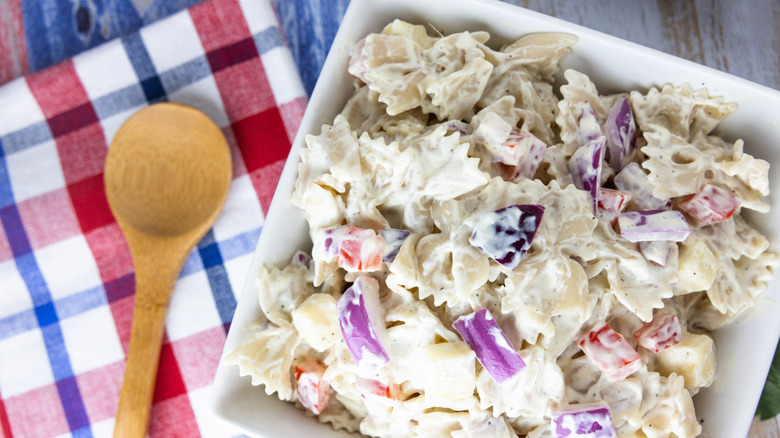
Companies that offered inexpensive food options capitalized on the economic downturn in the '70s by specifically advertising their products as being great for families on a budget. Kraft jumped in on this by promoting their iconic boxed macaroni and cheese as a cheap way to feed the whole family while also giving them a hearty dish they already loved. Indeed, boxed mac and cheese and other types of boxed pasta meals became ubiquitous in the decade as an incredibly affordable component in various dishes, including Boomers' backyard barbecue side favorite: macaroni salad.
Many recipes published during the '70s led with boxed pastas — often Kraft macaroni and cheese specifically — as the key ingredient for light, creamy summer salads. Virtually everyone had their own twist on a macaroni salad, but most of them used mayonnaise or Miracle Whip as the base, and then mixed it all in with whatever chopped up veggies and garnishes suit their fancy. Again, it being the '70s, presentation was important. So there was often a point made to pick the most colorful components possible so your macaroni salad would pop among the other dishes at the cookout.
Bacon-Wrapped Water Chestnuts
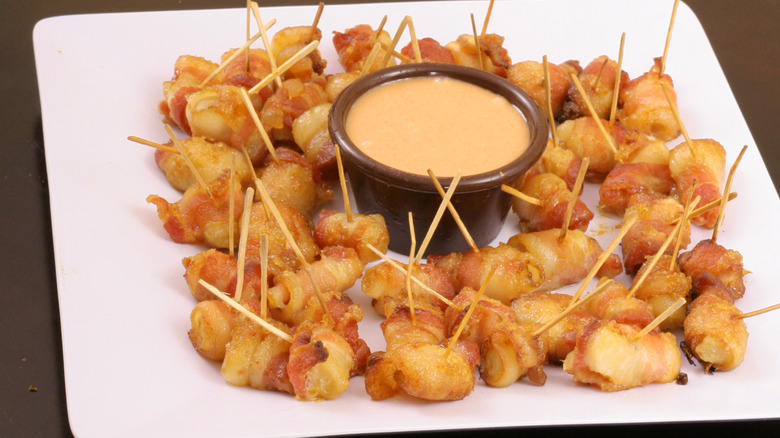
There are a number of foods to wrap in bacon for an easy appetizer. While the '70s saw the price of a pound of bacon pass the $1 mark for the first time ever, it was still a fairly inexpensive meat at the time. Definitely one that was affordable enough to make bacon-wrapped chestnuts a popular appetizer for '70s cookouts, and any other occasion where Boomers wanted tasty finger foods they could grab and munch on all day long.
As anyone who loves bacon knows, bacon basically holds up on its own. So there really wasn't much else you needed to do to make for delicious bacon-wrapped water chestnuts other than to cook the bacon, envelop the water chestnut in it, and impale it with a toothpick. That said, there are various recipes from the '70s that people used to make their bacon-wrapped water chestnuts a little more interesting.
Coating them in barbecue sauce appears to have been one of the more popular choices. Also, those having slightly more upscale '70s cookouts, like those that included fondue pots (perhaps one of the most '70s foods there is), would often have it set up to dip the bacon-wrapped water chestnuts in a cheese fondue.
Potato Salad
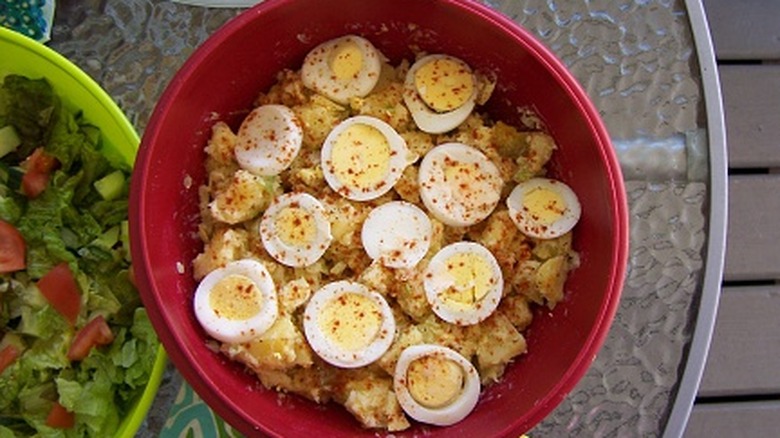
Potato salads existed before the1970s, and have certainly lived on well beyond the decade. But that doesn't preclude it from being included among '70s cookout staples beloved by Boomers. Potato salad includes many of the key components we've been discussing throughout this feature, from extremely cheap ingredients that can be stretched a long way — potatoes were, on average, only 15 cents per pound in the middle of the decade — to a colorful, visually appealing presentation.
That being said, there are a few things that Boomers, and the children of Boomers, remember about the potato salad they ate in the '70s. Slices of hard boiled egg adorning the top of a potato salad bowl was a common sight, which was done both for visual spectacle, while also adding a little protein boost that helps to make bellies feel full.
Making the top of the batch look nice seemed to be crucial, too, with people adding things like sliced cherry tomatoes and a sprig or two of parsley to make everything look pretty. Because if you were hosting a cookout in the '70s, it wasn't just about making your dishes taste good — they were expected to look good, too.