

What Does Walt Disney World Do With Leftover Food? The Zero-Waste Model, Explained

Walt Disney World describes itself as the most magical place on earth. From exciting rides at the theme parks to full-fledged adventures with your favorite characters, live entertainment, and other fantastical experiences, it's a dream destination for kids all around the world (and a fair number of adults too). As it turns out, the magic extends behind the scenes as well.
Walt Disney World in Florida has over 400 dining options that feed nearly 50 million hungry visitors every year. From cafes, churro stands, and full-blown fine-dining restaurants to character-based dining experiences, food and drink options are seemingly limitless (here are 25 of the most popular restaurants in Disney World, ranked). You'd think this kind of scale would come with a ridiculous amount of wastage, but Disney actually runs a complex operation to ensure as little food — whether that's excess or waste — reaches the landfill. The efforts span the entire spectrum from thoughtful menu planning to extensive recycling, while also contributing in a big way to America's fight against food insecurity.
"Across Disney Parks, we are committed to reducing food waste with a goal of zero waste to landfill," Chef Michael Gonsalves of Disney World Resorts told World of Walt in 2021. "Pushing the bar on food quality and innovation is one thing, but most important is the consideration of our carbon footprint and its impacts on our world." In the real world, this means the food's journey does not just go from farm to table, but extends well beyond that.
Fight against food insecurity
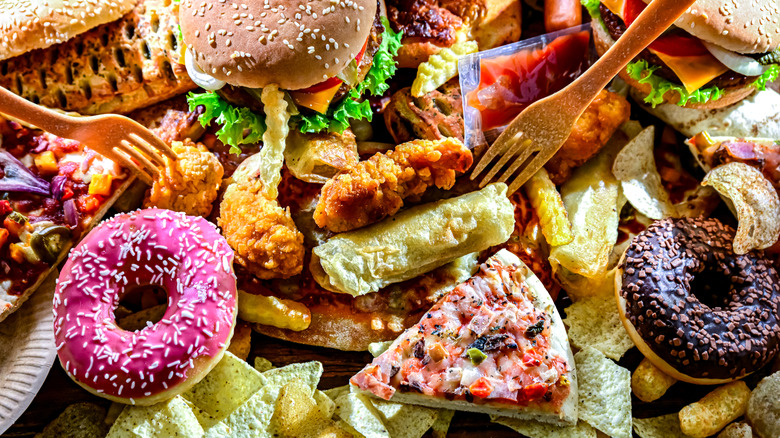
Walt Disney's fight against food waste is significant, considering how big a problem it is in America (according to the Environmental Protection Agency, an average American family wastes food worth hundreds of dollars every month). This wastage is criminal considering over 44 million American families faced food insecurity, according to a 2022 study. One of the major components of Walt Disney World's zero-waste model is its contribution to this fight against food insecurity. "Access to safe, healthy and affordable food is a critical need facing the Central Florida community," Tajiana Ancora-Brown, Director of External Affairs at Disney World, told disneyexperiences.com.
Disney World has collected excess food and donated it to local nonprofits under the Disney Harvest program, which is a collaboration with the Second Harvest Food Bank of Central Florida that has been running since 1991. Disney Harvest collects food from over 400 locations, and distributes the food through nine Central Florida-based nonprofits. In 2021, Disney World donated 550,000 pounds of excess prepared food via Disney Harvest. In 2024, Disney Harvest contributed over 600,000 meals through the program, while it also donated $450,000 via grants to nonprofits addressing hunger problems over 2024 and 2025.
Zero waste to landfill by 2030
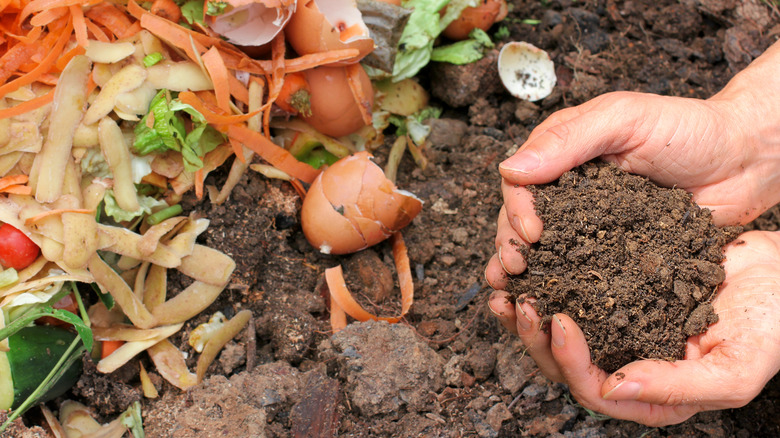
While excess food is collected by Disney Harvest, the food waste from the organic bins around the park goes on a separate journey. The Walt Disney Company's stated goal is to hit zero waste to landfill by 2030 (defined as 90% operational waste diversion from its wholly owned and operated parks, resorts, and cruise line). While distributing excess food plays a big part in cutting what goes to the landfill, there's a lot more that Disney World does behind the scenes. This starts with planning each day's menu based on expected footfalls, as well as harvesting and using ingredients grown on its properties at some restaurants.
Younger guests are educated about segregation in a way only Disney can — by using entertainment to deliver its message, with Disney's favorite characters educating and encouraging kids to sort and discard food scraps in designated bins. Scraps that qualify are used to make feed for farm animals, while the rest is sent to an off-site commercial composting facility. In 2021, Disney World turned 15 million pounds of food waste into compost. In 2022, it doubled that, generating 30 million pounds of composted food waste. This nutrient-rich material is used as fertilizer on farms, both at Walt Disney World and outside. The efforts are paying off: waste diverted away from landfills has gone from 49% in 2015 to 60% in 2025.
The good news is that Disney World is not alone in this fight. In 2015, the Environmental Protection Agency set a goal for America to cut its food waste by 50% by 2030, and as part of these efforts, many states are using landfill-bound food to fight climate change and hunger.