

Use The 2-2-1 Method For Baby Back Ribs With The Perfect Bite
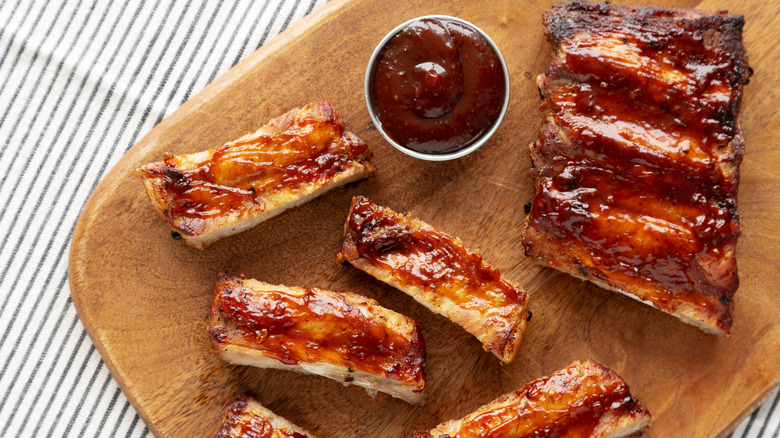
Cooking is a science, and if you start researching expert tips on how to barbecue ribs, you'll likely come across endless debate about wood choices, internal temperatures, humidity levels, and spritzing schedules. While these are all great things to take into account when you want to level up your barbecue game, it can be a little overwhelming when you just want to know the best way to cook baby back ribs.
If that's what you're looking for, the answer is surprisingly simple: you need to remember the 2-2-1 formula. This means two hours smoked unwrapped, two hours wrapped, and a final hour glazed and unwrapped. The first two hours are where the ribs take on all that smoky barbecue flavor and start to develop a nice bark. Wrapping the ribs then speeds up the cooking process and locks in moisture, allowing them to braise until tender. The final stage adds the finishing touches to the exterior, with the glaze developing a caramelized taste and texture.
This method of timing might sound familiar — a version known as the 3-2-1 method is popular for cooking spare ribs or St. Louis ribs. It's essentially the same, but these heftier cuts are given three hours to smoke in the first phase to cook all the way through. Baby back ribs are smaller overall and have less meat on the bone, so reducing the smoking phase to two hours avoids overcooking and helps retain that perfect bite.
Perfecting your baby back ribs
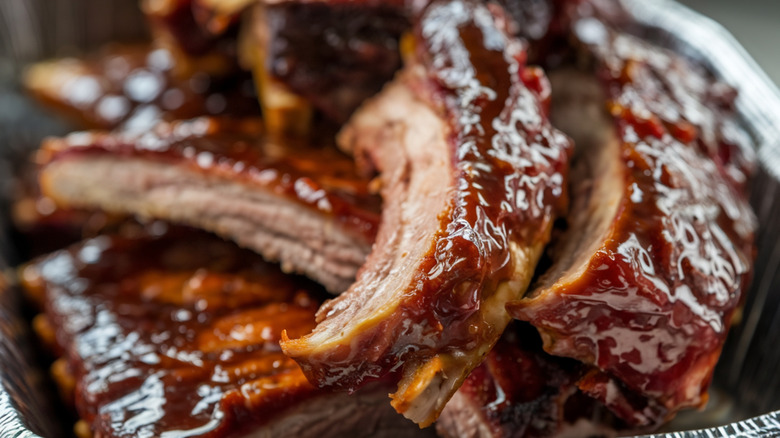
Cooking ribs with the 2-2-1 method should be seen more as a jumping-off point rather than a strict recipe. It's a good guideline for when to check for doneness, and for how long the whole process should take, which can be very useful if you're entertaining.
If you're cooking ribs on the regular, you'll likely end up making tweaks to suit your tastes and the cut of meat that you have. The dry rub for the baby back ribs, glaze, and the type of braising liquid you use (if any) will impact the final flavor, while the temperature and the cut of meat will most affect the texture.
On a subReddit dedicated to smoking, users say they get the best results when they use the times as a guideline and their own experience for knowing when the ribs are done. As one user explained, "I usually base their doneness off a combo of assessing bone pullback, crust development, temp, and the bend test."
The internal temperature for ribs should reach 185 degrees Fahrenheit for competition-style ribs (which still have some bite to them), or 205 degrees Fahrenheit for meat that's really falling off the bone. Alternatively, you can opt for the bend test, which is pretty much what it sounds like. When the meat is tender, you should be able to bend the rack easily into a U-shape. If it's stiff, your ribs will need more time.