

This Beautiful Flowering Tree Rewards Gardeners With An Overlooked Delicious Berry
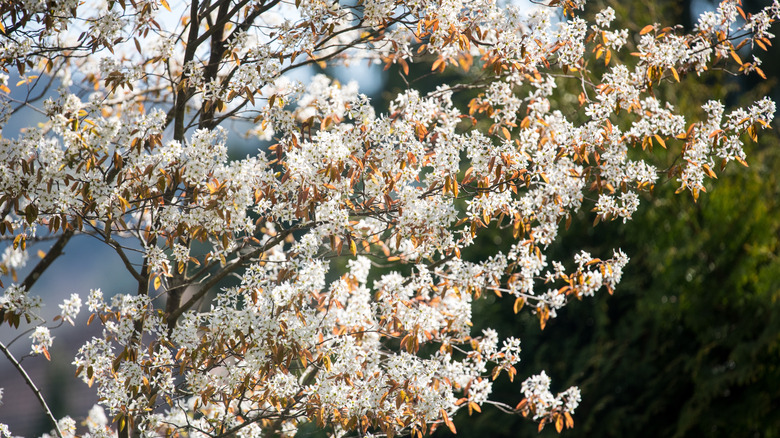
With the wide range of produce you have access to all year at the grocery store, it's easy to forget about the fruits that don't make it to supermarket shelves. Some of these can be wild-foraged, or even found in your own backyard. Among these is the serviceberry tree, which is not an uncommon sight in public parks and gardens, but what's not so commonly known is that you can eat the fruit it produces.
This tree (or rather family of trees and shrubs) is often planted for its ornamental appeal. In spring, the trees bloom with an abundance of white blossoms, and in fall they offer a dramatic display of color. They're also a favorite of wildlife lovers — planting these trees will attract hummingbirds, cedar waxwings, and bluebirds. In the early summer months, the trees will be covered in plump berries, which is why they're also known as juneberries.
Although serviceberries have traditionally been harvested to make jams and pies, they're sweet and flavorful enough to enjoy fresh. The taste is usually described as a cross between a blueberry and a cherry, with notes of almond, apple, or strawberry. Serviceberries can be eaten straight off the tree, as a good substitute for blueberries in both cooked and fresh dishes, or even as a garnish to add to spring cocktails.
Growing and harvesting serviceberries
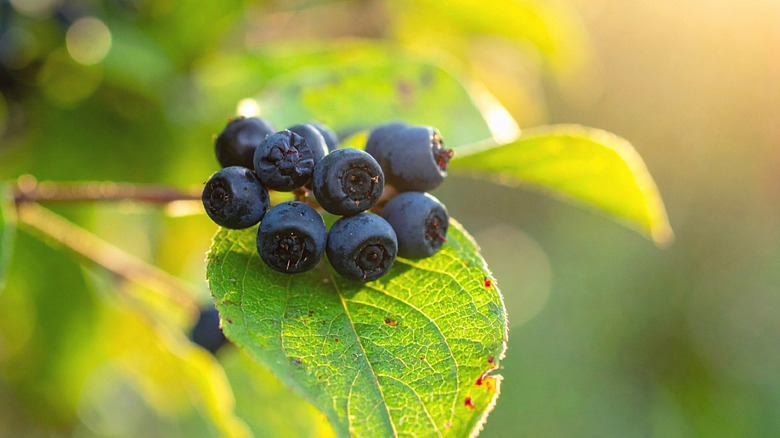
Serviceberry is the common name for any one of around 20 species of trees or shrubs in the Amelanchier genus. The majority of these are native to North America, including several natural hybrids, with just a few originally hailing from Europe and Asia. Across the serviceberry family, the trees are capable of growing in zones two to nine, but it varies from species to species, and even by cultivar. Size is another consideration too.
Serviceberry trees can grow as tall as 25 feet, but smaller shrub cultivars are generally preferred for domestic gardens, with a height around 6 feet. If you're choosing purely for the fruit, the saskatoon serviceberry (Amelanchier alnifolia) cultivar is considered to have some of the most flavorful berries. The Allegany serviceberry (Amelanchier laevis) also produces fruit that's notably sweet and juicy.
The ideal growing environment for serviceberries is full sun in slightly sandy, well-draining soil, but they are tolerant of most soils apart from hard clay. It's recommended that you start with a sapling from a nursery rather than growing serviceberries from seed or cuttings, as these don't always grow true to type. It also speeds up the time required for the first fruit. Serviceberries are not among the fastest-growing fruit trees, needing a few years to flower and up to eight years for a full harvest when grown from seed.
Once the trees are established, you'll find the wait is worth it. All they need is pruning and fertilizing once a year, and serviceberry trees will bear fruit for around 20 years, with some cultivars producing up to 10 pounds of berries each summer.