

15 Edible Shrubs Hummingbirds Will Enjoy As Much As You
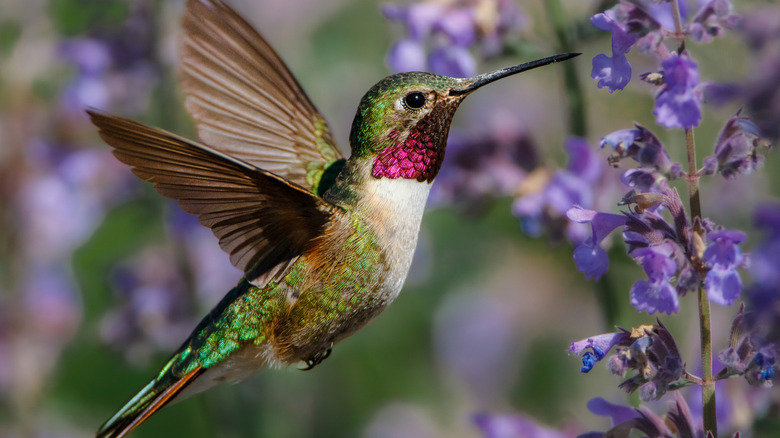
There is something delightfully whimsical about a hummingbird that makes them so enticing to watch. They are remarkably tiny, impressively quick, and so artistically colorful they almost seem unreal. It's really no wonder many of us try to lure them into our garden spaces simply to watch them bob from flower to flower, perhaps never fully considering that these mighty little birds are offering us much more than just flashy flights of fancy. And these incredible little beings are also only available to us in the Western Hemisphere, from Chile to Alaska, which makes their sightings even more special.
Interestingly enough, there is scientific speculation that suggests certain plants would not survive if it weren't for the pollinating powerhouses. While being the smallest birds on the planet, it is thought that they can carry the full burden of pollination in areas insects find difficult to inhabit. And different species of hummingbird (the U.S. sees about 26 of the over 300) are specifically shaped in bill and body and attracted to distinct flower variations, so there isn't too much overlap in pollination.
If you are seeking to spy hummingbirds in your backyard, it's important to be creative. Thankfully, humans and hummingbirds have quite a few plants that appeal to us both in sight and sustenance. Check out these flowering shrub varieties that both you and your hummingbird friends can enjoy having in your garden, and get to planning and planting right away.
Highbush Blueberries (Vaccinium corymbosum)
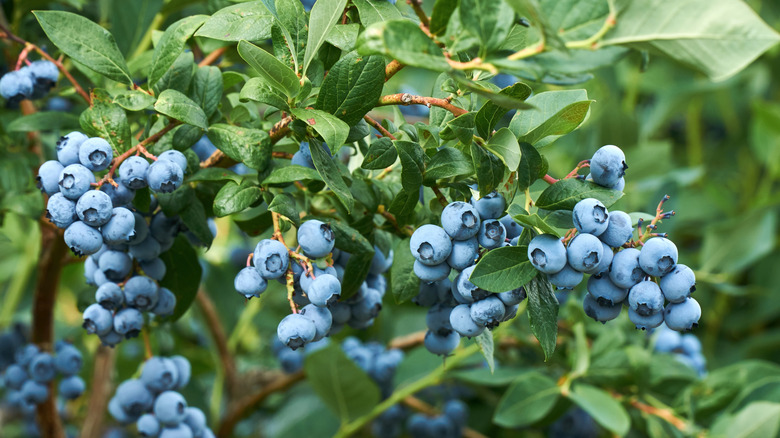
It's hard to ask for a more colorful shrub than the highbush blueberry (Vaccinium corymbosum). The foliage of this 6- to 12-foot shrub turns a variety of shades throughout the changing seasons, many times becoming brilliant hues of red and orange in the fall. The varying white or pink bell-shaped flowers grow in clusters, enticing hummingbirds, while the delicious dark berries offer so many yummy options for us humans. Blueberry muffins, anyone?
Lilac (Syringa vulgaris)
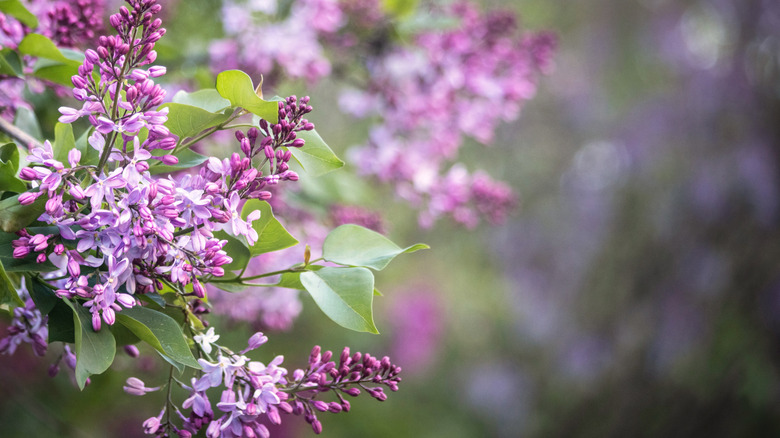
Regardless of the name, the common lilac (Syringa vulgaris) has many color variations, including white, magenta, and purple. While the scent and sight of this beautiful shrub delight both man and beast in the spring, it's best to let it blend into the background while companion plants shine throughout other seasons. Loved by pollinators, the common lilac has edible flowers that make for eye-catching and flavorful syrups, ice cream, candies, and a variety of sweets and baked goods.
Rosemary (Rosmarinus officinalis)
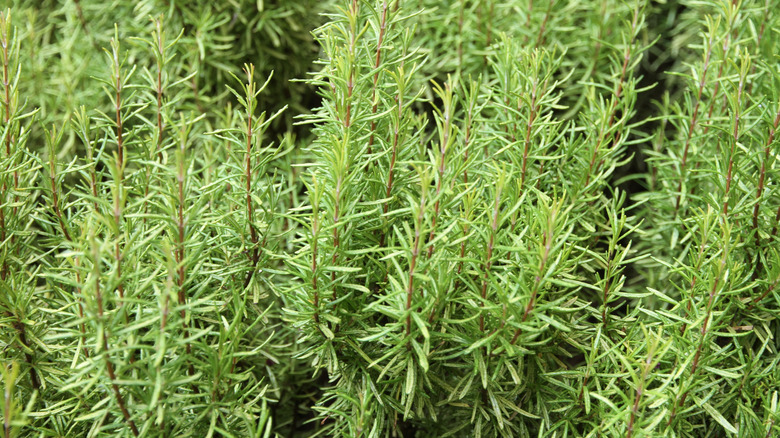
Whether ground cover or a shrub, all rosemary falls under the species Rosmarinus officinalis. As an upright shrub, rosemary can grow to 5-foot heights and 6-foot widths. It's powerful scent deters many unwanted pests from the garden, while the light blue flowers act as magnets for pollinators like hummingbirds. The herb can be used both medicinally and in cooking, pairing well with everything from herbed bread to hearty stews to infused oils.
American cranberry (Vaccinium macrocarpon)
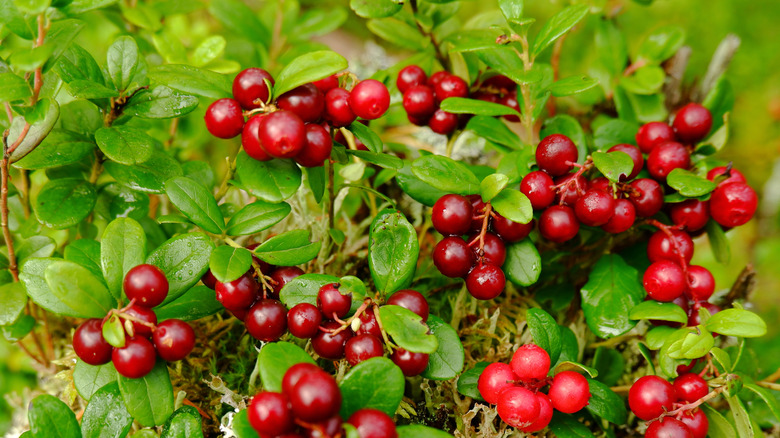
While generally grown in bogs, the American cranberry (Vaccinium macrocarpon) will actually thrive in many locations, including hanging baskets and containers. Showy fuchsia and white flowers that bloom from May through July and bright red edible fruit make this shrub the perfect addition to any pollinator or wildflower garden. Celebrated most often as cranberry sauce on the Thanksgiving table, these berries ripen in the fall and are said to taste even sweeter after the first frost.
Red Currant (Ribes rubrum)
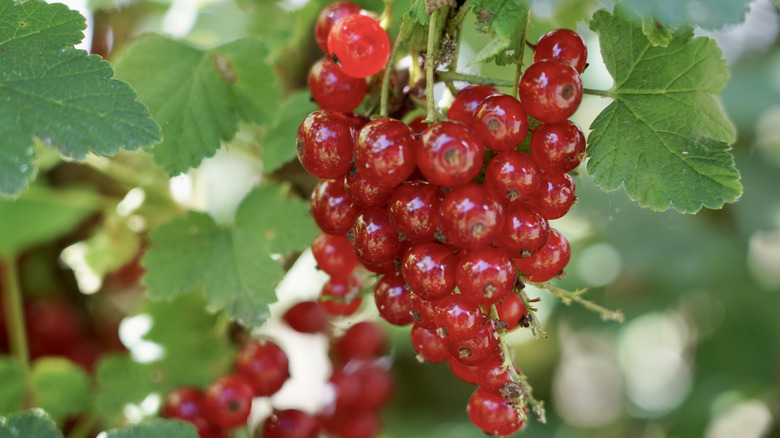
While native to North America, red currants (Ribes rubrum) are most often found in European foods and drinks. Perhaps you have heard of red currant jelly? The tart berries, which aren't generally eaten alone fresh from the plant, are popular additions to glazes, gravies, and sauces. The nectar in the multi-petaled red, white, burgundy, or pink flowers is what makes them so appealing to hummingbirds. And the sensational spring blooms and spicy fragrance make it an excellent garden showpiece.
American Elderberry (Sambucus canadensis)
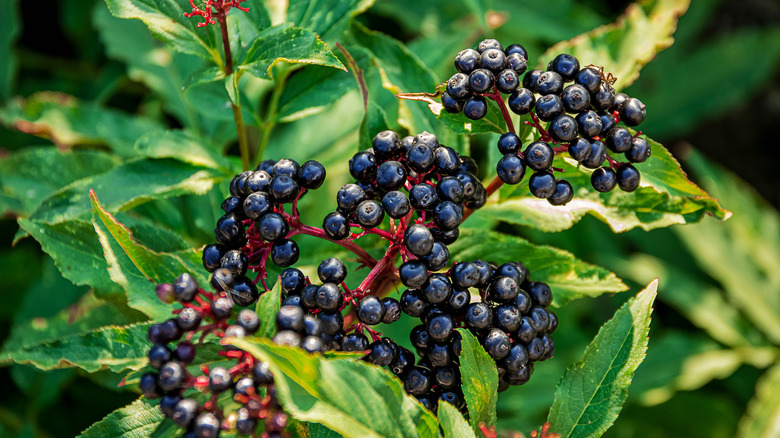
During the pandemic, the market saw a rise in elderberry (Sambucus canadensis) sales, and those numbers are predicted to keep climbing. The shrubs, which can stand as tall and wide as 12 feet, offer thick blooming clusters of fragrant white flowers through the spring and summer that attract hummingbirds. And the dark purple, almost black fruit, which is edible after cooking, can be harvested in late summer and fall for elderberry syrups, wines, jellies, baked goods, and medicinal purposes.
Flowering quince (Chaenomeles speciosa)
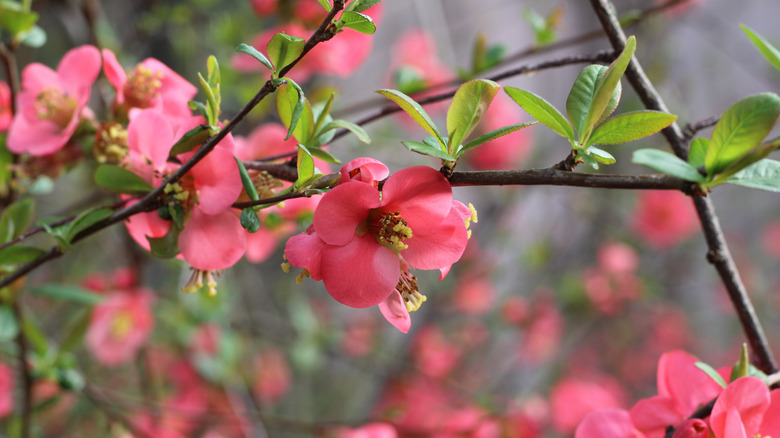
This showy, flowering quince shrub (Chaenomeles speciosa) produces an abundant amount of scarlet blooms (you can also get pink or white) in early spring. Yellowish-green, spotted, apple-shaped fruits are ready for harvest in the fall but shouldn't be eaten directly from the vine, as the taste can be rather bitter. Quince is most often seen in Southern gardens and is generally used for making jams, jellies, and preserves, and also for some medicinal uses.
Bee Balm (Monarda)
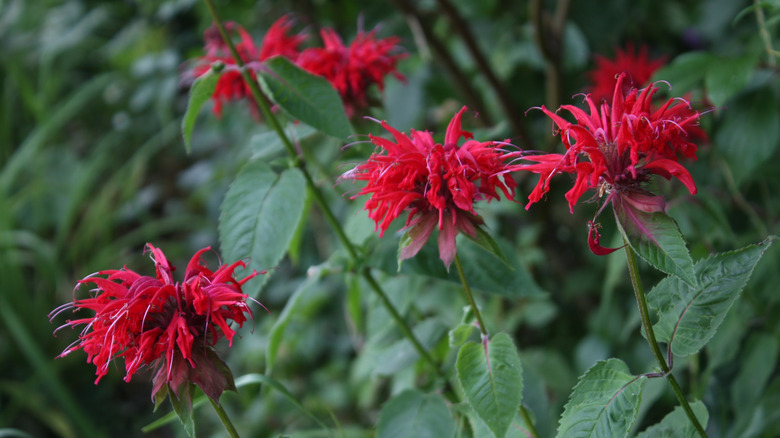
A member of the mint family, bee balm (Monarda) makes an excellent addition to any pollinator garden. This shrub offers fragrant, tubular flowers in the spring or summer, which are available in a variety of colors. Generally staying within a 4-foot height and 3-foot spread, the flowers are nearly impossible for hummingbirds to pass up. The leaves of bee balm are a great cooking herb or salad green. The flavor can resemble thyme and oregano but has the addition of a fruited berry. You can also use the dried flowers to make an excellent tea.
Cape Gooseberry, (Physalis peruviana)
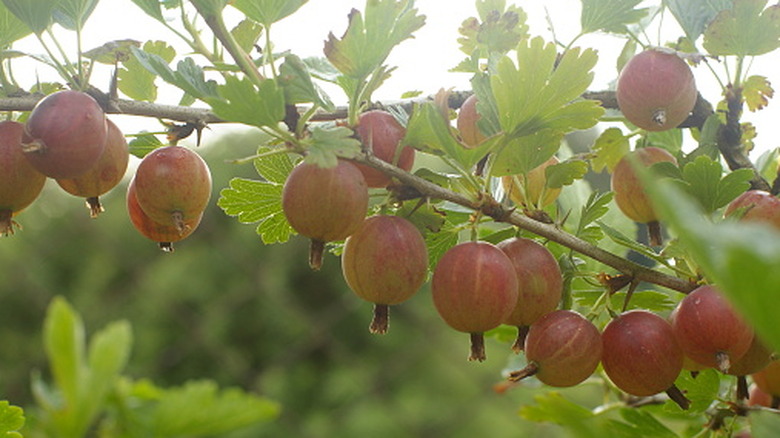
The Cape Gooseberry (Physalis peruviana) is known by quite a few different names — goldenberry, Peruvian ground cherry, poha, husk cherry, and more. The bell- and funnel-shaped flowers that range from cream to gold to copper attract hummingbirds and other pollinators. The fruit is packed with antioxidants; however, only the fully ripened fruit is edible. The Cape Gooseberry is commonly used in jams, jellies, sauces, and pies. You will know when the fruit is ripe as it will drop to the ground in its removable husk.
Nasturtium (Tropaeolum majus)
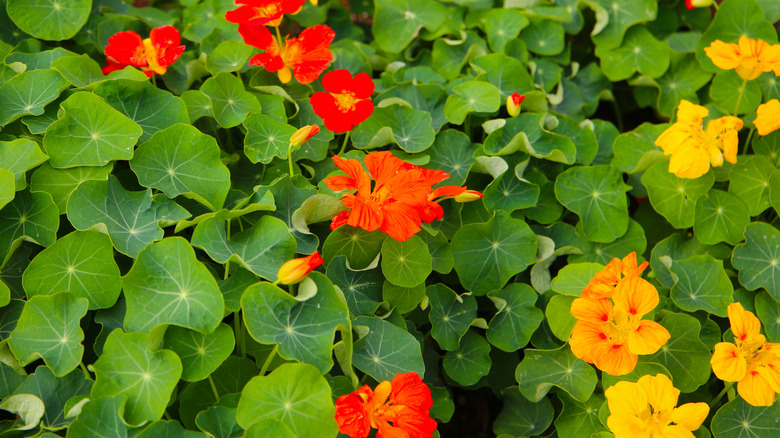
When vining, nasturtium (Tropaeolum majus) can grow to over 10 feet, but the bushy variety is much more compact and offers the same abundance of beautiful yellow to red flowers. Nasturtium can really to it all as every part, from flower to seed to stem, is edible. The seeds are also known as "poor man's capers," and the flowers are said to have a peppery flavor. With large blooms and super sweet nectar, hummingbirds love this beautiful plant. Adding the flowers and leaves to salads and sweets looks lovely and tastes just as good.
New Jersey Tea (Ceanothus americanus)
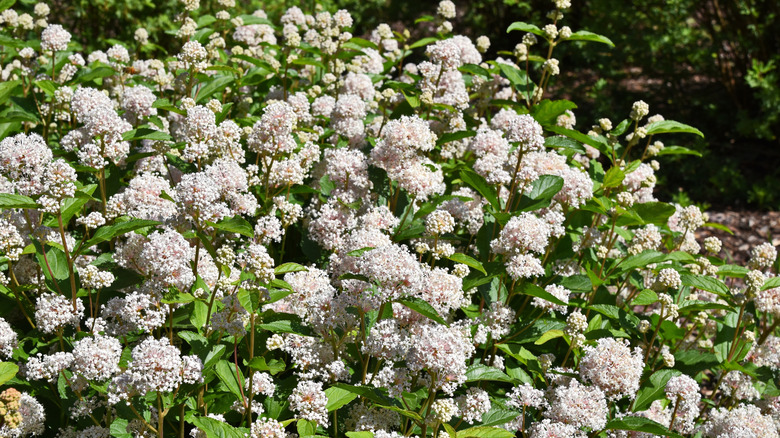
New Jersey Tea (Ceanothus americanus) is a mounding shrub that grows to about 3 feet in height and width. The summer brings about its clusters of creamy white flowers, although it's not the nectar in the blooms that hummingbirds enjoy, but the tiny insects often found inside them. This plant was in high demand during the Revolutionary War when its dried leaves were brewed as a decaf substitute for the once imported black tea. And it still makes a fine cuppa today.
Chokecherry (Prunus virginiana)
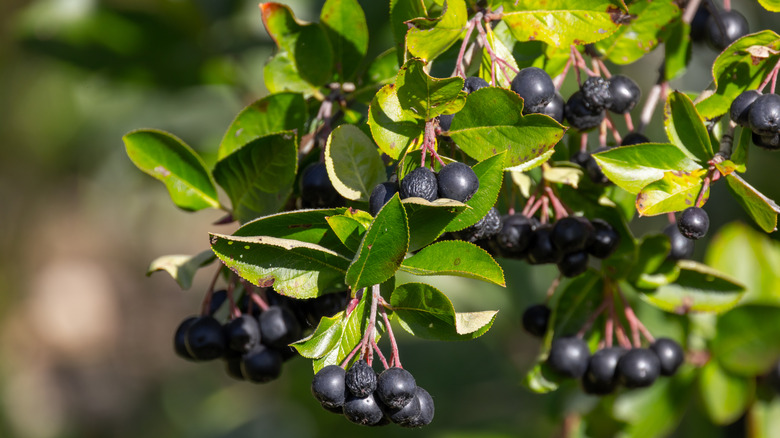
The chokecherry plant (Prunus virginiana) can grow to be as tall as 25 feet and is one of the most abundant shrubs growing in North America. Spring calls forth fragrant white flowers that draw in a variety of pollinators, including hummingbirds. The red fruit becomes black when fully ripened and ready to harvest. The berries can be made into a lovely colored, sweet and tart, cherry-flavored jelly, syrup, or wine. Together, the bark and cherries have been used medicinally for decades as well.
Honeyberry (Lonicera caerulea)
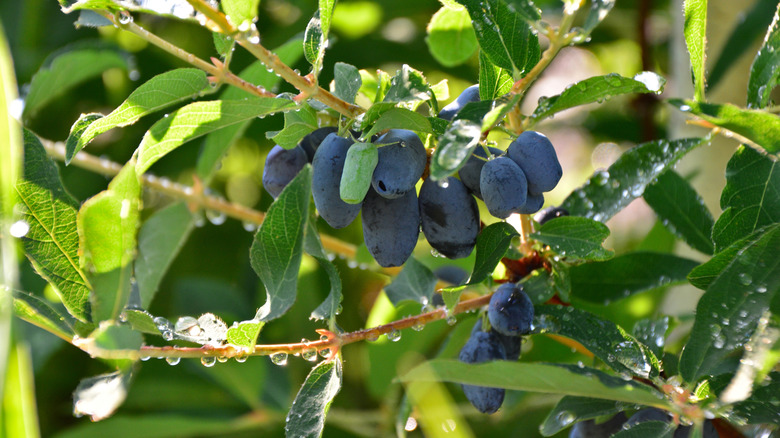
Honeyberry (Lonicera caerulea), also known as haskap, is a member of the honeysuckle family and produces oblong berries very similar in color to blueberries. The flavor has been described as having a mixture of multiple berries, probably due to the numerous varieties out there that generally grow to be about 5 feet in height and width. The creamy white flowers that bloom in spring before the fruit appears draw in hummingbirds and other pollinators. The blue fruit's peak season is in June, and the nutrient-rich berries are a great-tasting substitute in any recipe that uses blueberries.
Jostaberry (Ribes × nidigrolaria)
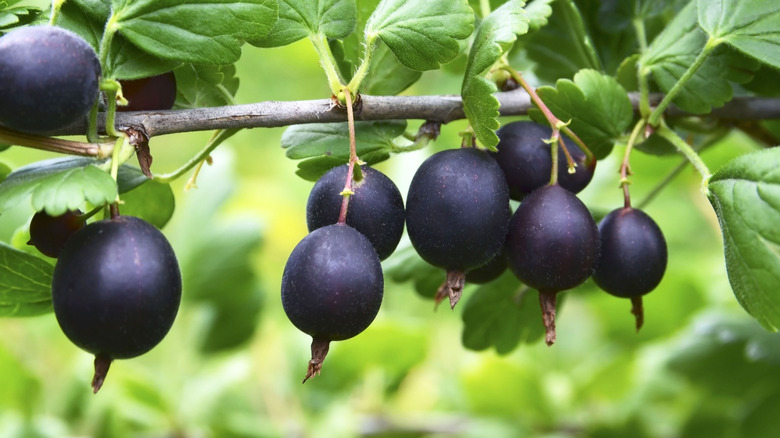
Jostaberry (Ribes × nidigrolaria) is a hybrid fruiting shrub that was created from multiple fruiting gooseberry and currant varieties in the 1970s by Dr. Rudolf Bauer. It grows to a height and width of around 6 feet. Spring blooms produce bell-shaped, bi-colored flowers of maroon-pink and creamy white, attracting bees, butterflies, and hummingbirds. The fruit, which first appears as green, turns to black by mid-summer when ready for harvesting. The ripe berries are generally used in much the same way as other berries, creating liqueur, juice, baked goods, or simply eaten fresh.
Serviceberry (Amelanchier)
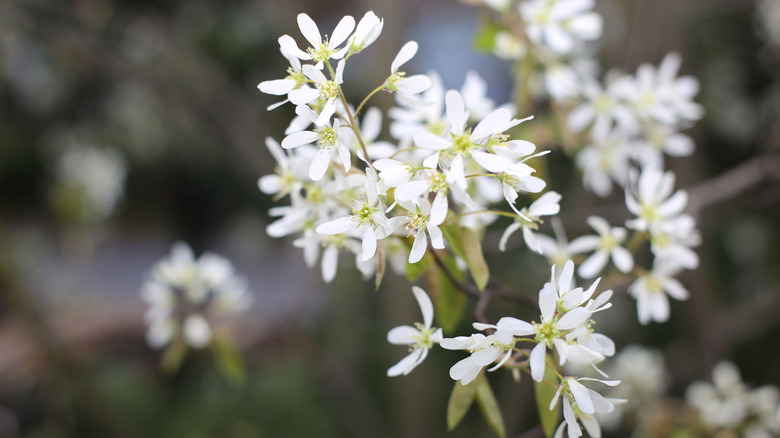
Also known as shadbrush or juneberry, serviceberry (Amelanchier) attracts a wide variety of birds and mammals with its fruit, and the flowers' sweet nectar tempts an assortment of pollinators, including hummingbirds. Serviceberry varieties range from large shrubs to small trees. Five-petaled white flowers appear in the spring, while the dark purple fruit is generally ripe by June. Sweet with a slight hint of almond, the berries are another to put on your "superfoods" list and are seen as another great addition to or substitute for blueberries.