

This Shatterproof Dishware Was Everywhere In The '60s (And It Still Holds Up Today)
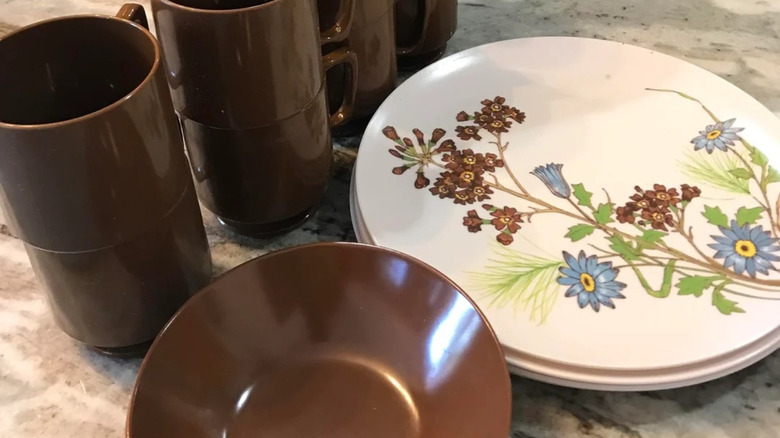
Manufacturers don't make dishes like they used to, as anyone whose parents (or grandparents) owned Melmac can attest. This colorful collection of smooth-lined plastic kitchenware appeared in the 1940s, and by the '60s, Melmac was everywhere from home catalogs to your great-aunt's cupboard. So, what was all the fuss about?
Melmac (the trade name) owes its popularity to melamine (the material), a powdered plastic resin distributed by chemical manufacturer American Cyanamid that was molded into dishware by upwards of 50 brands. These vibrant, sometimes patterned dishes weren't just visually appealing — though even in the realm of home goods, the eyes arguably eat first. Melmac was also an affordable, ultra-durable ceramic alternative, which was no doubt a major selling point for the families filling out American suburbia during the post-WWII baby boom. Melamine items fit right into convenience-focused midcentury kitchens, too — the material's dishwasher compatibility alone made these sets an enviable cabinet addition.
Though glazed ceramics regained popularity in later decades, many Melmac fans still praise these dishes online. As one fan described on Facebook, "[G]randma was breaking dishes on the [kitchen sink] divider wall all the time, so Mom bought some Melmac dishes ... Problem solved, she could hit those ... and they didn't break." Another commenter reported, "I still have several small bowls. They are great for small servings of things like fruit, nuts, M&Ms, etc."
Melmac dishes are common online, but are they safe?
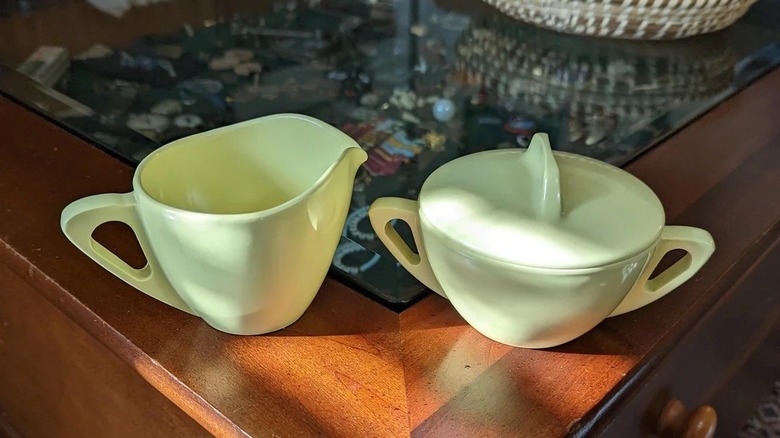
Melmac's legacy is more than just anecdotal; some specimens are historical and cultural touchpoints. Prominent melamine product designer Russell Wright, for example, received the Museum of Modern Art's 1953 Good Design Award for his sleek and simple Residential line. Unlike many Melmac dishes, though, Northern Industrial Chemical (not American Cyanamid) served as producer in this case.
Are these vintage dinner plates worth a fortune today? Well, no. Mass production made Melmac readily accessible throughout the mid-20th century, so there's no shortage of melamine plates, cups, sugar bowls, and serving dishes available through secondhand retailers online. For reference, a set of 15-plus Melmac dishes will set you back about $45, though full sets that are still in the box will bring you closer to triple digits.
Nostalgia aside, Melmac's reputation isn't all squeaky-clean. Today's critics claim melamine isn't microwave-safe, as the heat reportedly burns, warps, or even discolors the material and may cause the dishes to leach harmful chemical compounds into your food. Unlike 1930s Fiestaware, these dishes aren't radioactive, but the FDA does advise against microwaving melamine, as trace chemicals from the plastic can indeed migrate into food under extreme heat. Eating off of room-temperature Melmac, though, is fair game. So, if you plan to recreate a 1960s cooking trend and serve it up on era-appropriate dishes, just make sure it's not a microwave meal.