

These 9 Cooking Trends Ruled The 1960s
Just like clothing, food goes through trends that are usually shaped by the social and economic climate of the time. For example, in the 1930s, just as the Great Depression set in, the hems got longer, and people got creative on a budget, whipping up dishes like mock apple pie and Hoover stew in their home kitchens. Then, in the 1950s, as the U.S. bounced back from the war, adding extra sugar to everything was popular. By the time the Swinging Sixties arrived, people were ready to experiment with new and exciting cuisines. Here, we bring you dominant cooking trends that ruled the 1960s.
We won't give too many spoilers before we start, but at the beginning of this decade a certain Julia Child was relatively unknown, and by the end of it, she had reached worldwide fame, all thanks to one particular cuisine. As les Français say: Bon appétit, mes amis.
French cuisine
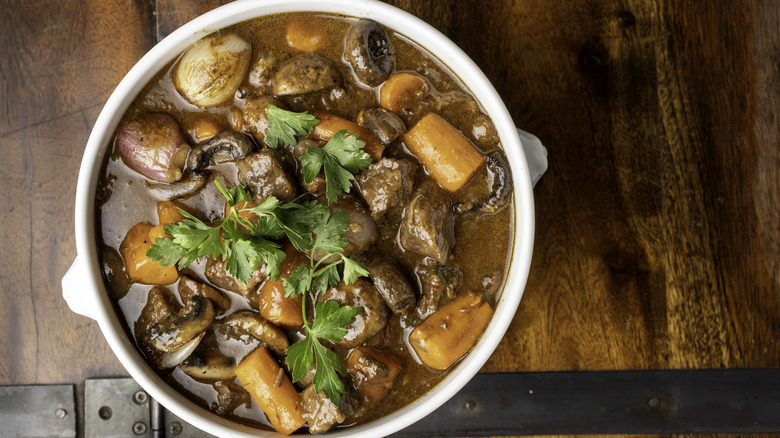
In 1963, Julia Child appeared on American television for the very first time. It was the beginning of a hugely successful career, but for many home cooks, it marked their very first foray into French cooking. Child's first dish? Beef bourguignon — a simple yet sophisticated beef stew made with a gravy that's infused with red wine.
Cooking along with TV programs in the 1960s wasn't that easy; at-home video recording wouldn't be widely available until the 1970s. So, what did people do? They went out and bought cookbooks. The viewers inspired by Child and her French cooking on TV could buy "Mastering the Art of French Cooking," which had been published by the TV chef together with Louisette Bertholle and Simone Beck in 1961. The book, which became a bestseller, featured more than 520 recipes, including beef bourguignon.
Thanks to Child, a boom in French cooking gripped American homes throughout the 1960s. As well as beef bourguignon, home cooks got to grips with everything from quiche Lorraine to salade Niçoise. Many people who grew up in the era remember watching Child with their parents religiously during this decade. Apparently, even those who weren't into cooking loved watching Child on TV.
Fondue
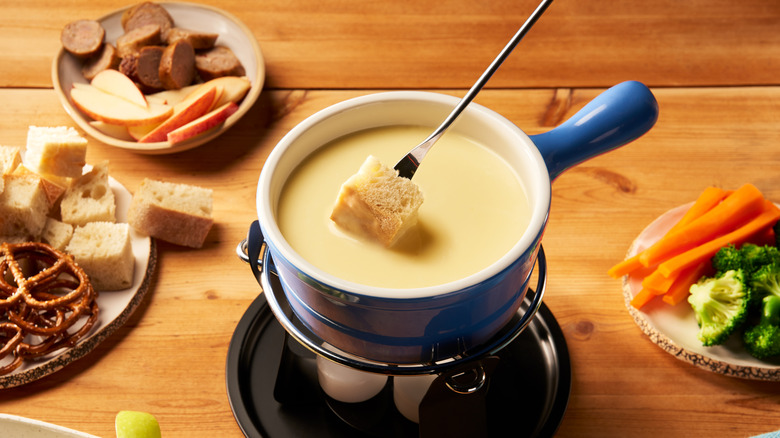
Fondue wasn't a 1960s invention. In fact, it wasn't even a 20th century invention. The tradition of sticking bread into large pots of sticky, gooey melted cheese first took off in the 19th century, although back then it was largely limited to the French and Swiss Alpine regions.
In the 1960s, fondue had its moment in the U.S. During this time, Americans were dabbling in different cuisines. They loved Julia Child and her French cooking, and many also loved sampling Chinese and Japanese food. Fondue had a similar pull for many households. It was fun, new, and interactive. People started hosting fondue parties with cheese, and many branched out into chocolate fondue, too. Some even started experimenting with bourguignon fondue that shares a similar concept to traditional fondue, but instead of bread, beef is skewered and dipped into a rich red wine broth.
Many people enjoyed fondue parties well into the late 1960s and 1970s. There were even silly rules that went with the dish. One of them mentioned that if a lady dropped her bread into the bubbling pot of cheese, she would have to kiss the closest man to her. Yes, really.
Frozen convenience foods
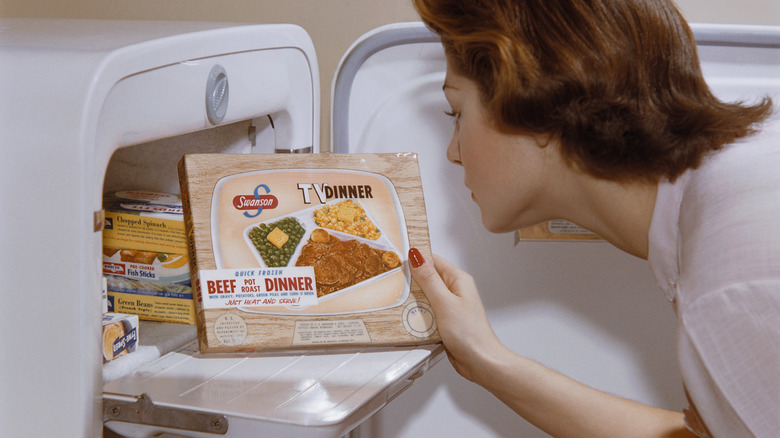
These days not everyone has the time to be a Julia Child-devoted, amateur whizz in the kitchen, and it was the same in the 1960s. More women started to enter the workforce during this decade, and they had far less time on their hands to prepare elaborate family meals throughout the week. Enter: Frozen food.
For the busy working mom, frozen convenience meals were a godsend. During the 1960s, the category soared, as people chose convenience over spending hours in the kitchen every evening. But it wasn't just the convenience of frozen meals that drew people in, it was the variety. Remember, this was an era when many people started to embrace new foods and cuisines, and the frozen category gave them an opportunity to try them with ease. Everything from chicken chop suey to beef enchiladas was available frozen, and all people had to do was heat them up.
Many people who grew up in the 1960s have fond memories of frozen dinners, which were usually produced by brands like Banquet or Swanson. In fact, many say that while they look pretty grim now, to many children back then, they were a real tasty treat that they would look forward to.
Scandinavian cooking
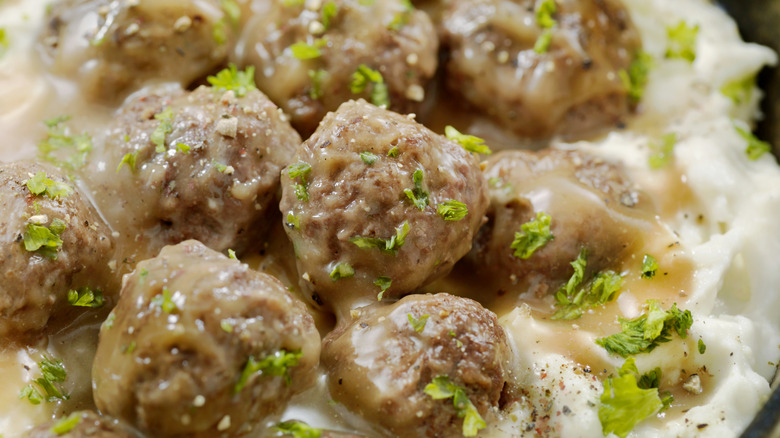
Have you spotted a running theme here? During the 1960s, Americans really wanted to eat foods that weren't, well, all that American. Besides French and Alpine cuisine and frozen international-inspired dinners, home cooks of this era were into Scandinavian foods.
One example? Swedish meatballs. Many people remember their moms and grandmas having signature recipes when they were growing up during this era. Some cooked them in an electric frying pan and served them with dollops of sour cream, while others opted for thick gravy and noodles or rice. If your parents had a copy of the "Campbell's Cooking with Soup" cookbook from the '60s, you might have even been treated to porcupine meatballs. These were basically Swedish meatballs made with condensed tomato soup with rice kernels mimicking thorns.
Another popular Scandinavian food tradition doing the rounds in the 1960s was smorgasbord. Traditionally, smorgasbord is a spread of Swedish dishes like sliced meat, herring, and boiled vegetables. In the U.S., though, 1960s smorgasbord wasn't really that authentic. It was more Swedish-inspired, if you will. One 1965 recipe published by Bon Appetit advises party hosts to offer dishes like herring with mayonnaise, herring with avocado, and Roquefort cheese with smoked ham, crushed pineapple, and more mayonnaise.
Savory gelatine salads
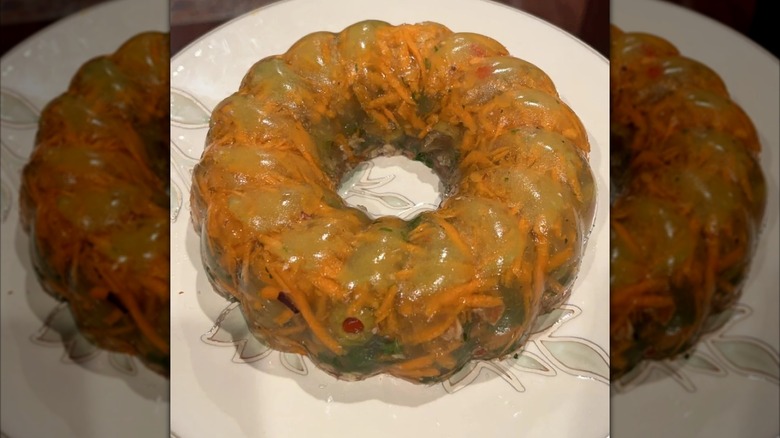
Jellied salads aren't unique to the 1960s. People had been eating them for years prior, largely because encasing ingredients in gelatine helped them get more out of the ingredients during the difficult years of the Great Depression and after World War II. But, arguably, the 1960s was the decade when this polarizing dish, which basically involved mixing anything and everything with gelatine, came into its own.
For example, the 1963 cookbook "Knox On-Camera Recipes: A Completely New Guide to Gel-Cookery," walked readers through combining Knox gelatine with mustard, egg yolks, lemon juice, celery, and tuna to make a fish-based main course. It also had recipes for tomato aspic, as well as gelatine salads made with deviled eggs and shrimp. The year before, Jell-O released "The Joys of Jell-O," which taught home cooks to combine ingredients like Jell-O Lemon, chopped veggies, and grated onion to make a vegetable salad.
Some people look back on the gelatine salads they ate during the 1960s with fond memories. "My favorite was shredded carrots [and] cabbage in lime [Jell-O]," says one Facebook user. Another added: "My Mom made a lime Jell-O salad with pineapple, cottage cheese, and pecans. It was so delicious!" Others, though, were scarred by the trend. In fact, some Redditors have compared them to stomach contents. True story.
Shrimp cocktails at parties
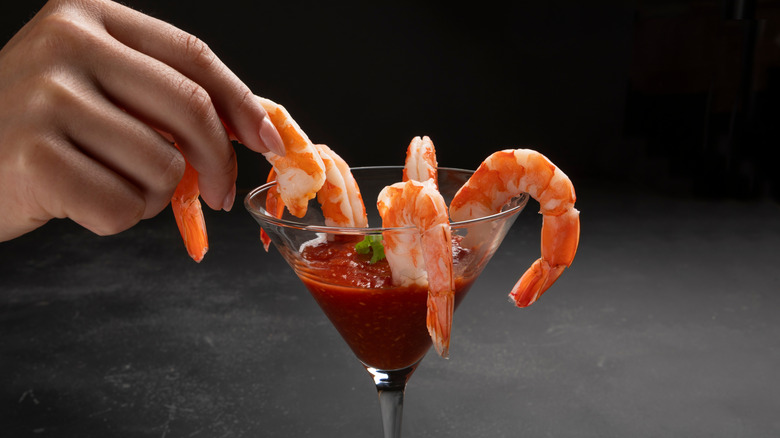
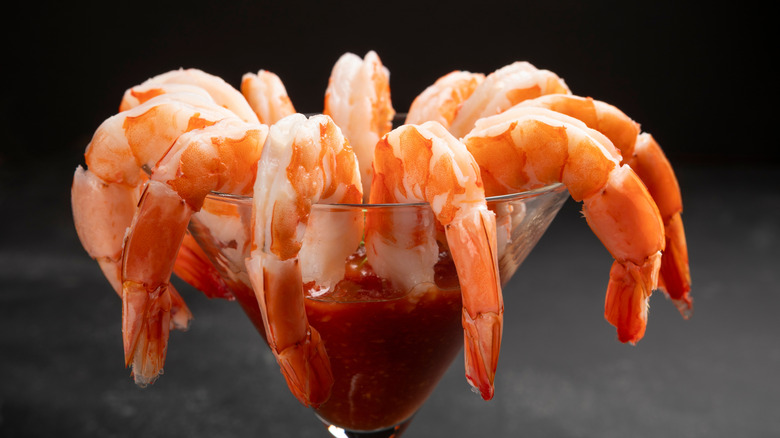
Today, shrimp cocktails are still widely beloved. Legendary chef Jacques Pépin makes his with shrimp poached in stock, while Ina Garten prefers to roast her shellfish for added flavor. The appetizer has stood the test of time there's no doubt, but its popularity actually started to boom in the 1960s.
During this decade, most dinner parties would begin with a shrimp cocktail. The shrimp would usually be slathered in ketchup-horseradish sauce, garnished with a few leaves of iceberg lettuce, and then served in a martini or coupe glass. In other words, it was the height of sophistication and one of the most stylish appetizers you could offer to your guests throughout the 1960s, though the tradition continued well into future decades.
Despite their popularity and reputation for being ultra-fashionable, shrimp cocktails weren't always made fresh. In fact, some people who grew up during this time remember eating Sau-Sea Shrimp Cocktails, which were basically ready-to-eat shrimp cocktails packaged in jars and sold with cheap yet fancy-looking glasses (for optimal presentation, of course).
Hippie food
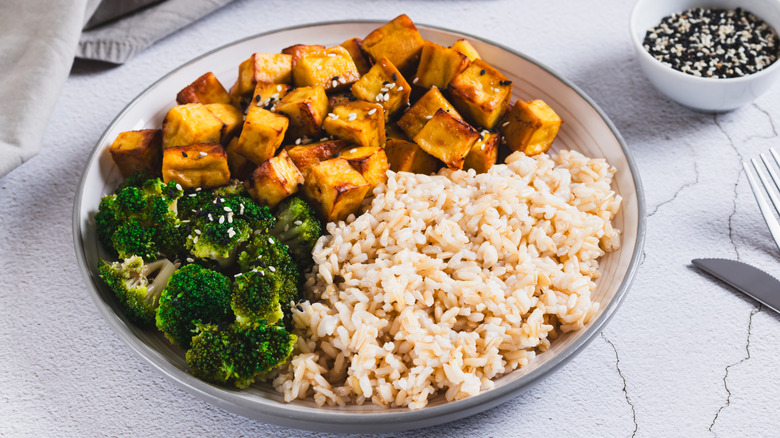
Today, foods like brown rice, avocado, and veggie burgers are pretty standard. There's nothing particularly unusual about whole wheat bread, tofu, or granola, either. In fact, they've become kind of cool, thanks to clean eating and plant-based trends on social media. But back in the 1960s, eating these foods regularly signaled you were part of the counterculture. They were examples of so-called hippie food and represented a rejection of the new attitude of convenience that was sprouting up. Remember those frozen meals we were talking about earlier? Well, hippie food was the total opposite.
This diet wasn't exactly mainstream (that was kind of the point), but people who grew up in this era say they were aware of it. In fact, some remember how hippies who lived near them created communes where they grew fruits and vegetables to cook with.
One particularly popular book that helped inspire the hippie food movement of the 1960s was "Zen Macrobiotics," which was written by Japanese author George Ohsawa. In the book, Ohsawa argued that natural foods, like whole grains and vegetables, were the cure for many ailments, including asthma, epilepsy, and leprosy. Please note that this is not proven by any modern research. Still, many loved Ohsawa's approach and subsequently changed their diets. Fun fact: Erewhon's founders, Aveline and Michio Kushi, were inspired by Ohsawa and the macrobiotic movement.
Making everything with Lipton Onion Soup Mix
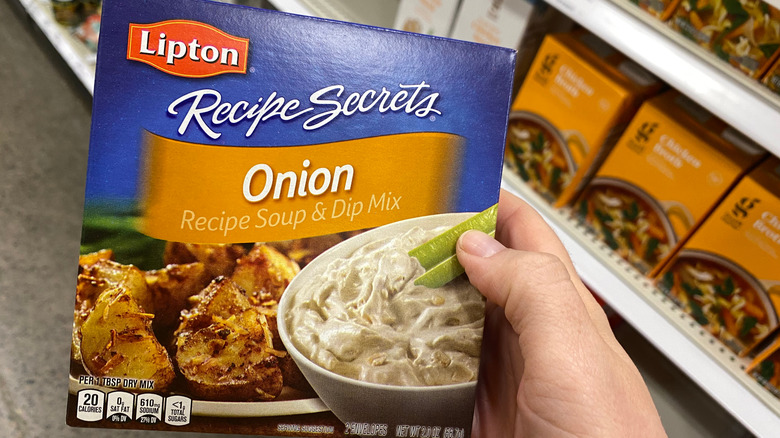
While the hippies were feasting on whole grains and tofu, many home cooks were enjoying the choices that pre-packaged foods offered them. Interestingly, one of the products that demonstrated a fair bit of versatility, therefore becoming incredibly popular, was Lipton's Onion Soup Mix.
Of course, you could just make onion soup with the mix, but many also used it to make California dip, which was basically a mix of the dehydrated soup mix and sour cream. Many remember eating this dip regularly throughout the 1960s, often with potato chips or veggie sticks. But when it came to Lipton's Onion Soup Mix, there were no limits.
Other recipes from the 1960s (promoted by Lipton) involved combining the soup mix with rice and butter to make a pilaf or mixing it with croutons and poultry seasoning to make holiday-worthy stuffing. You could also incorporate California dip with hard-boiled eggs to make a new twist on deviled eggs. Another option was to mix it with chicken and olives to make a sandwich spread.
Stuffing vegetables
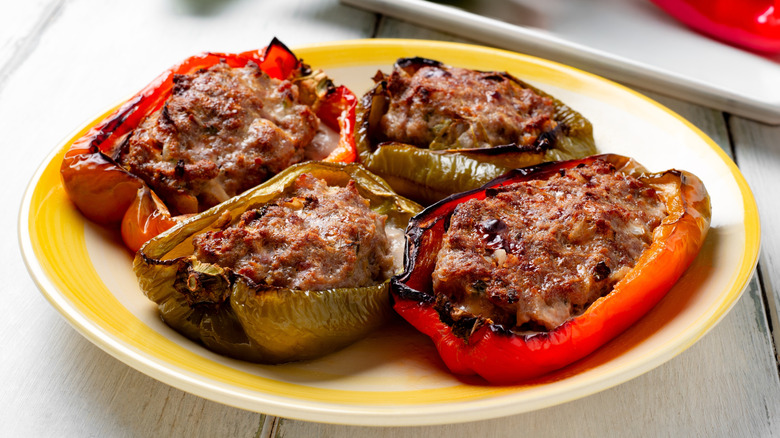
In the 1960s, the modern American diet was starting to take shape. Sugary soft drinks were becoming more popular and beef consumption surged. But people also ate healthy foods. Vegetables weren't just reserved for hippies. Many people who grew up in the 1960s remember eating them regularly, and one popular way to serve them? Stuffed.
For some, stuffed peppers, filled with rice and ground beef (of course) were a weekly staple. The mixture was flavored with ingredients like Worcestershire sauce, herbs, and condensed tomato soup, before it was crammed into peppers and baked. "My mother bought bell peppers every time they were on sale in order to make this dish when we were growing up," recalls one Redditor.
Peppers weren't the only vegetables getting stuffed in the 1960s. Stuffed tomatoes were another favorite — these were regularly filled with tuna or shrimp salad. Another popular dish (often served as an appetizer or fed to children as an after-school snack) was stuffed celery, usually filled with soft cheese or even peanut butter.