

What's The Actual Difference Between Tartar Sauce And Horseradish Sauce
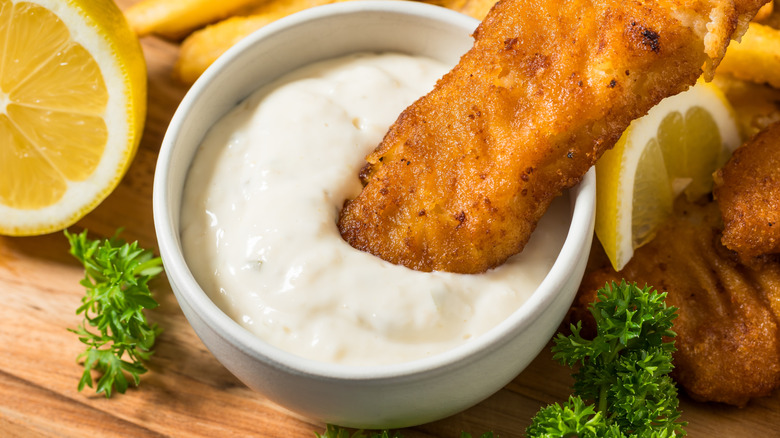
Tartar sauce and horseradish sauce are thick, white, and creamy — but that's about all these two distinctive, impactful condiments have in common. Subtly sweet tartar sauce is known for being used in tandem with seafood, while sharp, pungent horseradish sauce is commonly served with beef. But, this is just the tip of the proverbial iceberg for both of these versatile condiments which, despite their near-identical appearances, get very different jobs done in the kitchen.
Tartar sauce is a mayonnaise-based condiment loaded up with myriad flavorful ingredients to create a unique tasting profile. Exact recipes vary from one brand to the next, but generally include some combination of fresh dill, chopped pickles, lemon juice, granulated sugar (or sweet pickle relish), black pepper, mustard, tarragon, minced onion, shallots, and/or capers. This condiment is all about dimensionality. Those tangy pickles meet the acidity from the lemon juice, the aromatics, the herbs, and a touch of sweetness that makes tartar sauce greater than the sum of its parts (and much nicer than its craggy name might suggest). Some tartar sauces even whisk a squirt of horseradish sauce into the mix.
Like horseradish sauce, simple homemade tartar sauce benefits from an extended tenure in the fridge, as those flavors have a chance to meld together and intensify. Store-bought totally works, too. Here at Tasting Table, our all-time favorite store-bought brand is Legal Sea Foods House Tartar Sauce by Stonewall Kitchen. On the other hand, pungent, potent, and sharp horseradish sauce gets its name from its star ingredient.
Sweet and sharp condiments with diverging uses in the kitchen
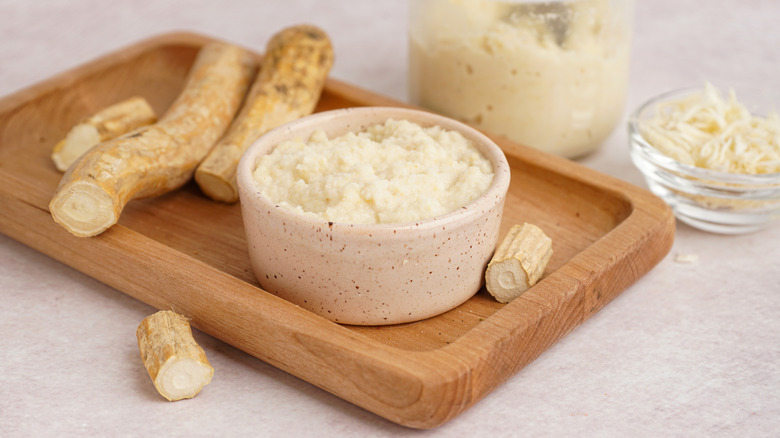
Horseradish is a long, thin, off-white root vegetable with a naturally intense flavor. It gets finely grated and mixed with vinegar and salt to become prepared horseradish, a product commonly found jarred in grocery stores. From there, that prepared, grated horseradish root can be transformed once more into horseradish cream sauce by blending in myriad ingredients that bring flavor balance and complexity.
Thick, white-hued horseradish cream sauce typically comprises prepared horseradish mixed with apple cider vinegar or red wine vinegar, tangy sour cream, mayonnaise, salt, pepper, and sometimes other flavoring agents like chives or Worcestershire sauce. These luscious add-ins transform the root's naturally grainy texture, and the addition of the vinegar quells its intense, nose-burning sharpness.
The difference between these condiments can perhaps best be observed in their culinary uses. Tartar sauce is commonly served alongside seafood such as fish and chips or crab cakes. Its subtle sweetness and refreshing tang make tartar sauce an ideal accouterment for cutting through the heavy richness of fried foods, which could even include fries or chicken tenders. It's a standard topping on McDonald's Filet-O-Fish sandwich. By contrast, horseradish sauce is commonly served as a steakhouse condiment. That sharpness can cut through rich meats like steak, prime rib, beef tenderloin, and pot roast. But, it could also elevate deviled eggs, roasted potatoes, and grilled vegetables (bacon-wrapped asparagus, anyone?). Top pickled beets with horseradish sauce as an hors d'oeuvre, or use it as a sandwich condiment for BLTs and Reubens. Unlike tartar sauce, you can even drink it — horseradish sauce is a foundational ingredient in many better Bloody Mary mixes.