

The Steak Cut That's Actually Better At Medium Than Medium Rare
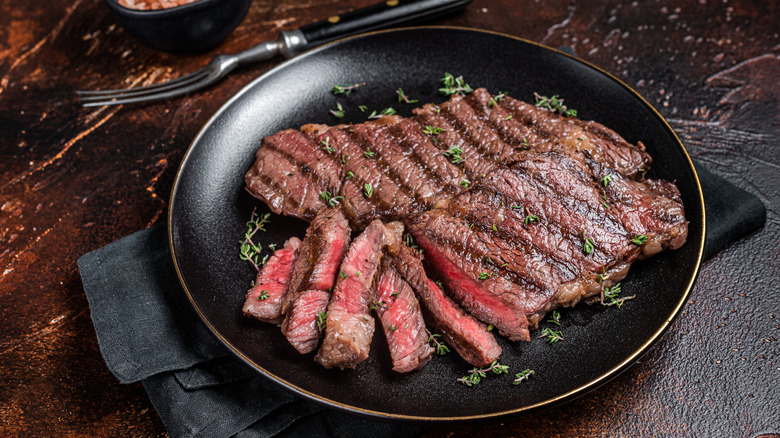
"How do you like your steak?" It's a question that folks who visit steakhouses often know all too well. There's nothing worse than an overcooked steak, surely, but you also don't want something that moos when you slice into it. Aside from personal preference, there are some cuts that you are better off ordering at a certain doneness due to their marbling and texture. Case in point? Denver steak.
We asked Chris DeLisle, the carnivore-cuisine advocate behind Chris Cooking Nashville, whose new cookbook debuts in October 2026, about which steak cuts are best ordered medium. While he says it would be easy to assume that Denver steak is ribeye, he explicitly calls it out as being the one that's better cooked medium. He praises this chuck-derived cut and says it's one of the most underrated steaks. "They have beautiful marbling, rich beef flavor, and a surprisingly tender texture. Cooking one to medium gives a little more time for that intramuscular fat to render, creating a steak that's richer, juicier, and more flavorful without sacrificing tenderness," he says. If you were to order this cut medium-rare, you wouldn't get the same texture and eating experience as if you cooked it slightly longer. Aim for an internal temperature of between 135 and 145 degrees Fahrenheit and be sure to let your steak rest.
Expert-approved tips for preparing Denver steak
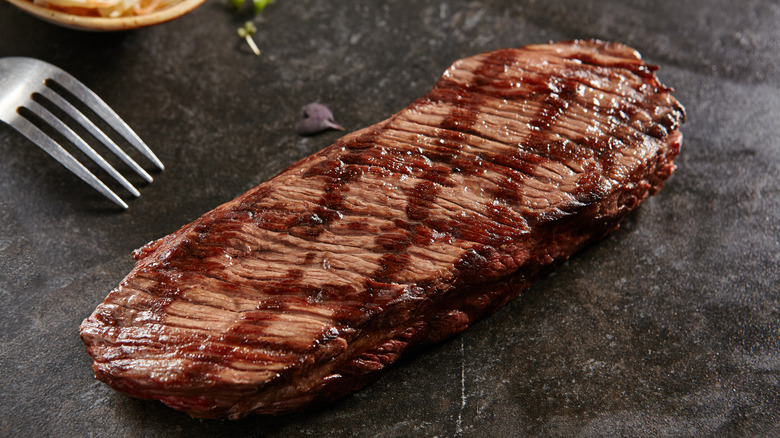
Like any good cut of steak, you'll want to treat your Denver steak with care. Meat expert Chris DeLisle shared some of his best tips for working with this tasty cut. First, he recommends salting it well ahead of time and potentially even dry-brining with salt overnight in the fridge to help promote the Maillard reaction once it hits the heat. "Because it's well marbled, it browns beautifully without needing much more than a lightly oiled hot pan or grill," he says. Searing Denver steak is critical to locking in the moisture, rendering a juicy interior and well-cooked exterior.
DeLisle's other tips come after the steak has been removed from the heat, but that doesn't mean they are any less important to follow. He suggests resting the steak for at least five minutes and also abiding by the grain when it comes time to slice it. "Like many cuts from the chuck, slicing thinly against the grain makes a dramatic difference in tenderness and gives you the best eating experience," he says.