

Say Goodbye To Garden Slugs With This Kitchen Scrap (Not Beer Or Coffee Grounds)
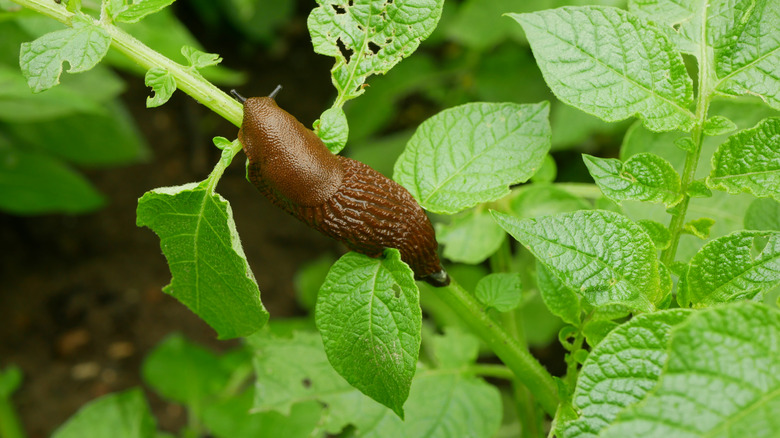
Slugs can wreak havoc on gardens, taking huge bites out of any plant with tender or moisture-rich leaves. Beans, peas, tomatoes, leafy greens, and certain herbs are particularly vulnerable to their destruction. If you want a non-toxic slug deterrent that is safe for plants, pets, and the environment, an unusual kitchen scrap may be the best solution for your garden. Coconut shells can be used to attract, trap, and relocate these pesky mollusks.
You can repel slugs with spent coffee grounds, but it can be a messy and unreliable process. An alternative is to banish garden slugs with a cheap and easy beer trap, but this will kill them, and some home gardeners prefer a friendlier solution. Empty, halved coconut shells are the perfect pet-safe, eco-friendly control method. During the day, slugs look for shelter in shady, damp, hidden spots. Place the shells upside down or on their sides in shadowy parts of your garden to attract slugs, keeping them away from plants until you can relocate them.
Check the traps each morning before it gets too hot. If slugs are clinging to the underside or hiding in the soil beneath the shell, transfer them to your compost pile, where they will get to work breaking down organic scraps, or safely transport them to an area far from your garden. Slug season peaks in the spring and fall, so be consistent about leaving shells out and checking them during these periods. Once you've gone days or weeks without finding slugs in your traps, you can use the coconut shells in your smoker.
Trapping and relocating slugs helps the environment
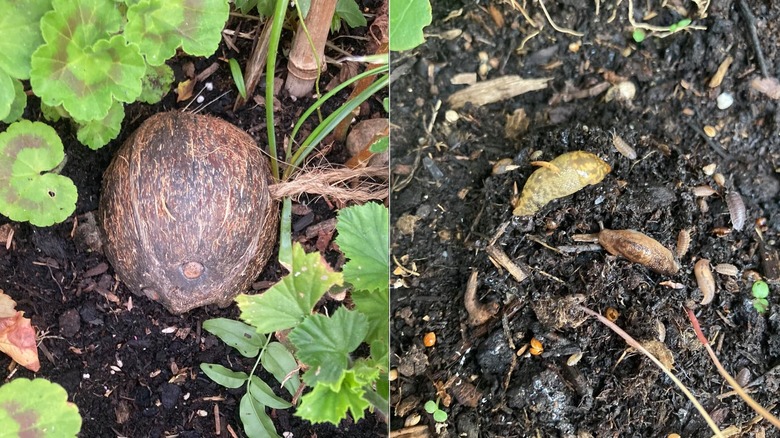
Slugs are essential decomposers that play a crucial role in transforming dead plant matter and organic material into nutrient-rich soil. They are also a food source for small reptiles, birds, and even some insects. Trapping and relocating slugs with shells is a creative way to use a whole coconut. It's also a low-maintenance, risk-free alternative to repelling slugs with toxic chemicals or salt barriers, which can have unintended yet devastating consequences on your backyard ecosystem.
Salt can degrade soil structure, damage plants, and kill earthworms and beneficial microbes. Slug pellets containing the chemical metaldehyde are lethal when ingested by pets and contaminate the soil, which may affect food and water sources. Metaldehyde can also harm insects, birds, and other wildlife that may eat poisoned slugs.
Safe, DIY slug traps, non-toxic barriers, and natural pesticides can protect your garden and keep plants healthy while also maintaining essential nutrient cycling, preserving natural food sources, and avoiding the need to kill these beneficial mollusks. The next time you use a coconut for cooking, baking, or your favorite tropical cocktail, hold onto the shell for later use in your garden. You can also buy natural coconut shell halves on Amazon in bulk.