

13 Best Natural Pesticides For Your Garden
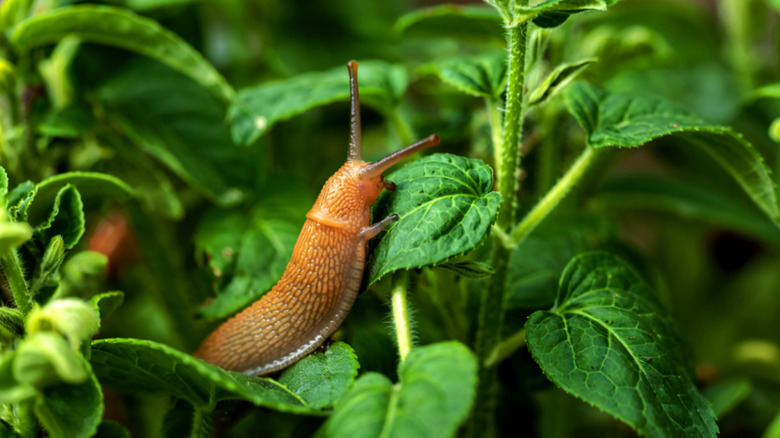
Every garden is going to have pests; they're just part of the natural ecosystem. Sometimes they're a minor nuisance, but they can also destroy your crops and make you want to give up on gardening. When I started my gardening adventure, pest control was something that took me a while to get right. Ultimately, I found that the best solution isn't to use a powerful chemical pesticide or stick to one occasional approach. Instead, it's better to utilize several natural methods, incorporating them into your gardening routine to protect your plants without ever needing to take drastic measures.
I've had years of hands-on gardening experience, which includes running my own gardening company. In this time, I've found the best way to control pests is to work with nature rather than trying to fight it. By using natural pesticides, you're protecting beneficial insects, keeping your soil healthy, and potentially saving money. Below is a roundup of 13 natural pesticides that have proven to be effective, but the right ones for you will depend on the specific issues you're facing. Whether you're dealing with aphids, slugs, or caterpillars, you'll find a solution here.
1. Natural soap and water
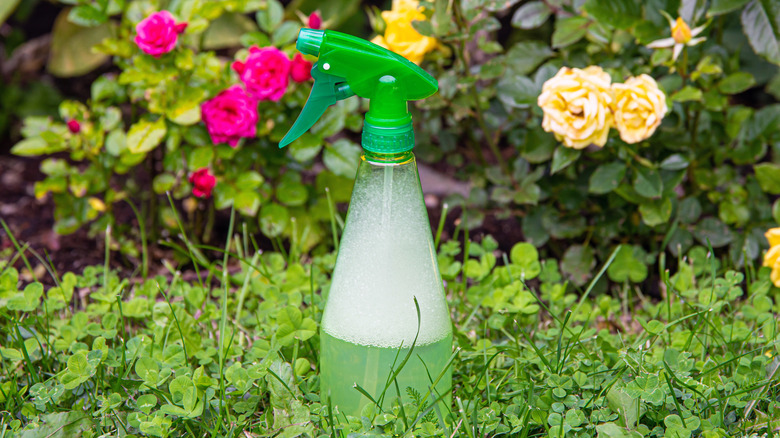
In my experience, the best starting point for a natural pesticide is to use soap and water. While you can buy insecticidal soaps, you can also make your own at home. Thankfully, you only need to use mild liquid dish soap, so you can avoid any harsh detergents. The only potential issue here is that not all soaps are natural, so this is something you'll want to double check when choosing one. It works as a natural pesticide that's most effective against soft-bodied insects, such as aphids and whiteflies. The soap breaks down their protective outer layer, meaning they quickly dry out, dehydrate, and die.
This approach is neither powerful enough nor suitable for large-scale infestations. However, it's ideal if you want to keep on top of early infestations and prevent small problems from becoming bigger issues. Simply add a few drops of eco-friendly dish soap to a spray bottle filled with water, shake it, and apply directly to the leaves. Just remember to check the underside of the leaves, too, as that's where many pests hide. While it's hard to make a mistake with this solution, it's easy to overdo it. You only need to use a very small amount of soap, and you can always add a few extra drops if you feel your spray is too weak.
2. Neem oil
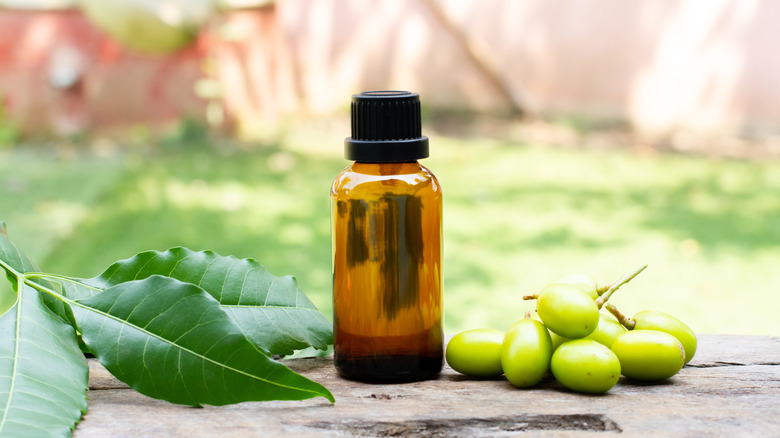
Neem oil is a versatile natural pesticide that every gardener should have on hand. The oil is extracted from the seeds of the neem tree, and it works brilliantly against soft-bodied pests. Besides aphids and whiteflies, it's also effective against smaller caterpillar larvae. Neem oil also works as a mild fungicide against the likes of powdery mildew, and can even be used to eliminate ants that are straying into your kitchen. You can buy ready-to-use neem oil sprays or create your own from concentrate.
Once an insect eats a part of a leaf covered in neem oil, its feeding cycle is disrupted. Neem oil doesn't kill pests on contact, but it still functions as an effective defense mechanism. However, it's important to know that neem oil can also be consumed by beneficial insects if you're not careful. Therefore, it's best to apply it at the beginning or end of the day when pests are most active, but ladybugs and bees aren't. Neem oil isn't a one-and-done fix, but when used regularly, it can be a reliable remedy for pests.
3. Garlic spray
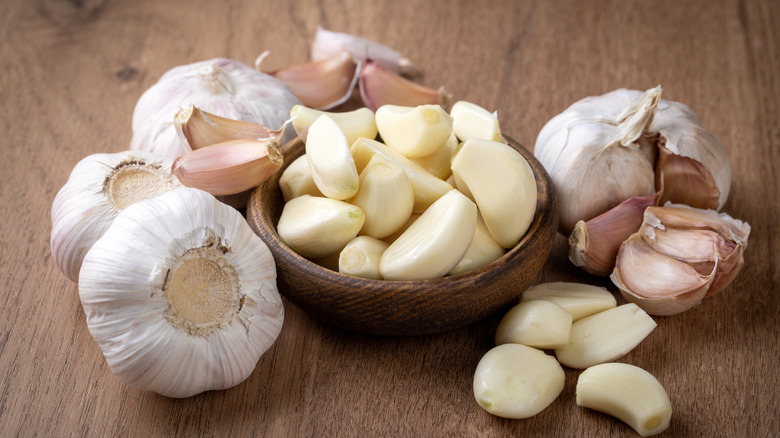
When it comes to natural, homemade pesticides, garlic spray is a brilliant option. Many pests rely on scent to find plants to eat, and garlic's notoriously pungent smell helps disrupt this. While garlic spray isn't a pest killer, it can help prevent infestations. The intense odor will confuse a wide range of insects, which are more likely to move on to an easier target — hopefully a plant you care less about.
There are a few ways you can make garlic spray, but it's best to use fresh garlic because the smell is much stronger than that of garlic powder, granules, or oil. That said, I've found that powder can still be somewhat effective. Just crush a few cloves of garlic and let them steep in water. You can do this directly in your spray bottle, but you risk getting bits of garlic stuck in the straw — it's best to use a separate container and then strain the solution into the spray bottle. You can also add a drop of liquid soap, not only for the reasons mentioned earlier, but because it makes the solution stickier when applied to leaves.
4. Chili pepper spray
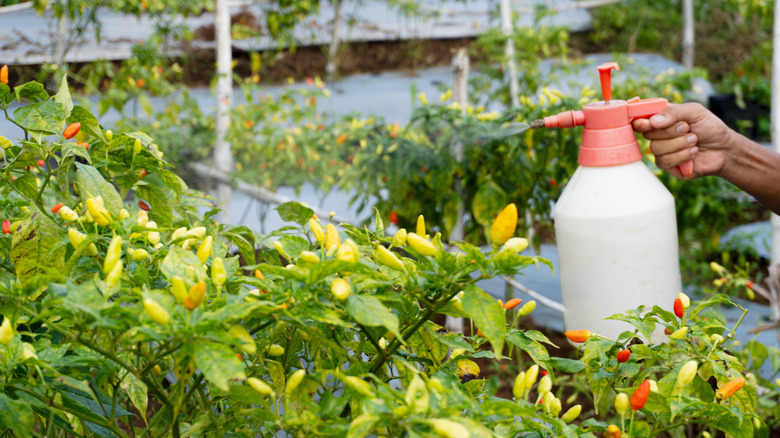
Chili pepper spray is another effective natural pesticide that you can make from household ingredients. Peppers are one of the most rewarding crops to grow, and you can use the excess to make one of these sprays. This spray works against pests for the same reason that some humans can't handle eating hot chilies: capsaicin. This is the compound that gives chili peppers their heat, so when pests consume it, they can be deterred from any further feeding.
A great feature of this solution is that it works on some mammals too, such as rabbits and squirrels. It doesn't harm larger animals in the long term, but it gives them enough of a reason not to revisit the sprayed plants again.
Unlike garlic, chili powder is just as effective as using fresh peppers, as it still contains that capsaicin kick. Again, steep the chilies in water before transferring the solution into a spray bottle, adding a drop of soap if you wish. I've found that you can even use a solution of both chilies and garlic, as they're effective against pests for different reasons and don't conflict with one another. You get the best of both worlds in a completely natural solution.
5. Diatomaceous earth
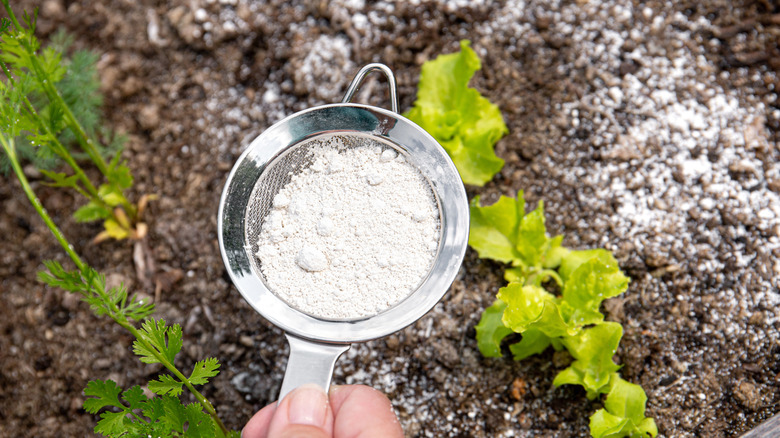
Diatomaceous earth is an intriguing pest control solution because of how it works. It's made up of fossilized microscopic organisms, and it's effective against pests due to its physical properties rather than its chemical composition. For humans, diatomaceous earth is soft to the touch. However, for insects at a microscopic level, it's a different story. What feels like a powder to us is incredibly abrasive to tiny pests such as aphids, ants, slugs, beetles, and fleas, and it will scratch their exoskeletons. When this happens, the insect will begin to lose moisture and gradually dehydrate. Rather than relying on a chemical reaction, it's purely mechanical.
To use diatomaceous earth, lightly dust any areas that require treatment — thin soil coverage typically works best. While it can be used on leaves, I tend to avoid this approach. There are better solutions for leaf application, and diatomaceous earth can also harm beneficial insects. It's more suitable for targeting crawling pests and improving your overall garden health. You should be aware that when diatomaceous earth gets wet, the particles clump together, reducing its effectiveness. You'll need to reapply it as and when needed, usually waiting until your garden is dry.
6. Bacillus thuringiensis (Bt)
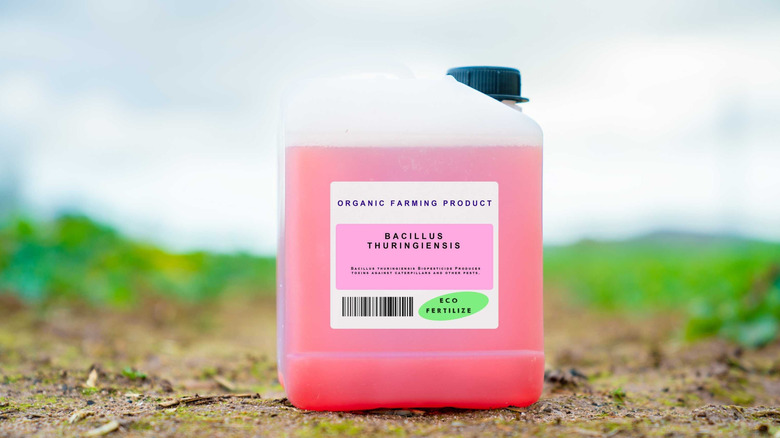
While diatomaceous earth works mechanically, Bacillus thuringiensis (Bt) is a biological countermeasure against pests. While other methods listed can tackle a range of different pests, this solution is specific to caterpillars. Bt is a naturally occurring bacterium, and when it's ingested by caterpillars, it releases toxins inside their bodies that stop them from feeding. This is quickly followed by death. Due to its extreme effectiveness, you may want to save using Bt until other attempts to control your caterpillar population have failed.
You can generally buy Bt as a ready-to-use spray or a concentrated solution. Either way, it needs to be sprayed onto your plants, covering all parts of the leaf. It will gradually break down in sun and rain, so you'll need to reapply it regularly until you've got a handle on the issue. The best part about using Bt is that it only affects caterpillars, so you don't need to worry about its interaction with humans, pets, or beneficial insects.
7. Nematodes
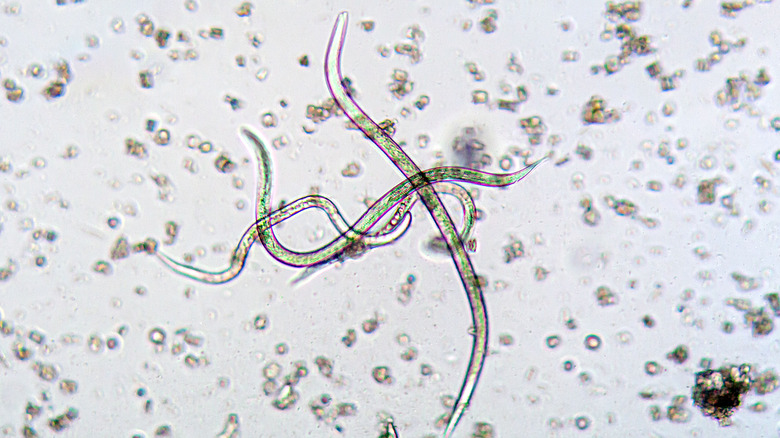
Of all the methods for dealing with pests, this is the one that sounds the most brutal. Nematodes are microscopic worms that work under the soil surface to attack larvae of pests that damage roots, as well as slugs and vine weevils. They are parasitic, killing soil-dwelling pests from the inside out. Regardless of the gruesome details, nematodes get the job done. They are fairly easy to buy, and you can just add them to your soil.
Nematodes are an effective solution if larvae are attacking your roots, or if you're having problems with whatever those larvae turn into when fully grown. For example, fungus gnats can be a nuisance, but their larvae feed on roots. Nematodes stop the issue at the source. If you're worried about buying live microscopic worms, it's not actually as gross as it sounds. They generally come in a powder and are only activated once mixed with water. You water them into the soil, and that's it. Everything happens at a scale that's too small for us to see. It takes time for the worms to work their magic, but they're a reliable fix and remain effective for around four weeks.
8. Companion planting
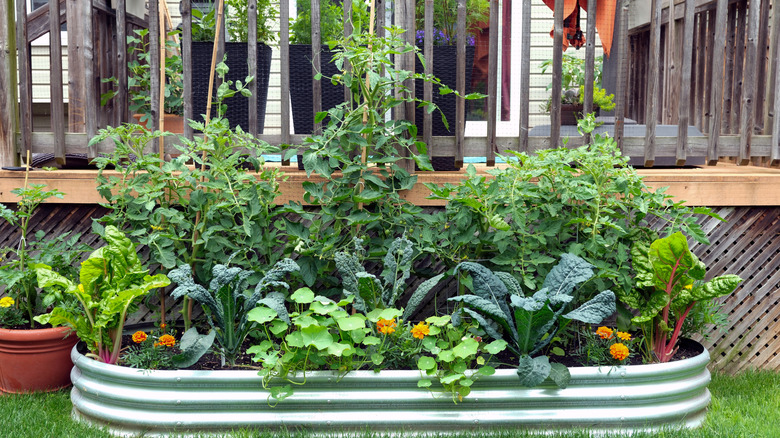
Companion planting is a great way to manage your garden for many reasons, as it attracts pollinators and can improve the flavor of edible crops. However, where companion planting really shines is as a natural pest control method. With the right plant combinations, your garden will essentially have its own defense system. One of the reasons this works is due to scent. Herbs such as basil, mint, and rosemary can all act to deter pests that rely on scent to lock onto their targets. Strong-smelling flowers, such as marigolds, can work extremely well.
You can also sacrifice certain plants for the greater good. For example, nasturtiums are a magnet for aphids, which can stop the bugs from being attracted to other plants that you want to protect. Meanwhile, you can grow lettuce in less than a month, and slugs and caterpillars love it, so it can be used to distract them from any plants you've put a lot more time and effort into. Of course, this isn't an instant fix, and it's easy to make mistakes with companion planting. Ultimately, it's a habit worth picking up, as it can create a healthier and more balanced garden.
9. Beer traps
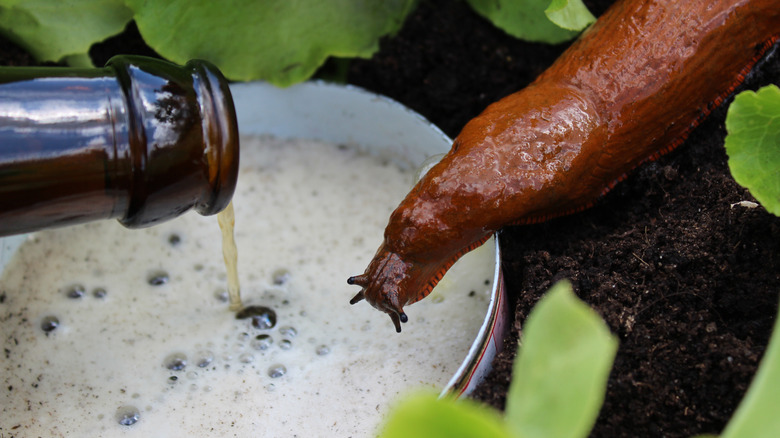
If you have a slug problem, beer traps are a must. They are a cheap and easy way to kill slugs and can draw their attention from other plants. Slugs can destroy a young plant in a very short space of time, and they don't bring many positives to your garden. The mechanism of beer traps is simple. Slugs are attracted to the yeast in the beer, so they'll crawl into the container you put out for them and drown. Emptying these containers may not be the most glamorous gardening job, but it's an undeniably effective pest control method.
All you need is a shallow, watertight container. I use containers with a lid to protect them from rain, but that's not strictly required if you keep emptying and topping them up. Place the container at ground level so slugs can easily crawl in and fill it with beer. I've not experimented with different types of beer, but any kind seems to work, so just use the cheapest you can find. It's best to position these traps strategically in front of or away from key plants, so the slugs don't have to travel past them to reach the beer. Personally, I just place one in each corner of my garden.
10. Essential oil sprays
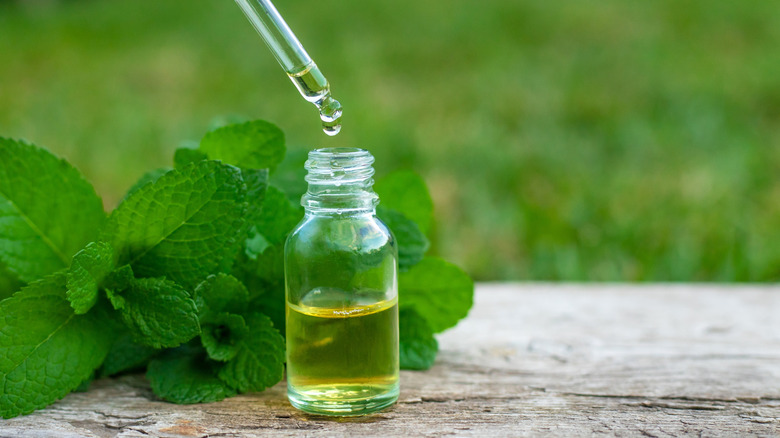
Essential oil sprays are another simple and natural way to deter pests. These work in a similar way to garlic spray — it's their scent that deters unwelcome guests. The benefit is that many of these sprays are much more appealing to the human nose than garlic. There are a wide variety of essential oils that can be used for pest control, including peppermint, lavender, and eucalyptus. I always use peppermint oil, as it seems to work against all the usual suspects. It's also an effective spider repellent, which is an added bonus for many people.
As with the garlic spray, essential oil won't kill pests, but it will make them avoid plants you want to protect. Again, you can buy pre-made essential oil sprays, but I find it much easier to add a few drops of peppermint oil and mild dish soap to a spray bottle full of water. You don't have to worry about applying it to every inch of the plant's surface, as you just need the aroma to be present. Avoid adding too much concentrated oil to your solution, as it can burn the leaves. You may need to respray your plants intermittently, especially after rainfall.
11. Pyrethrum
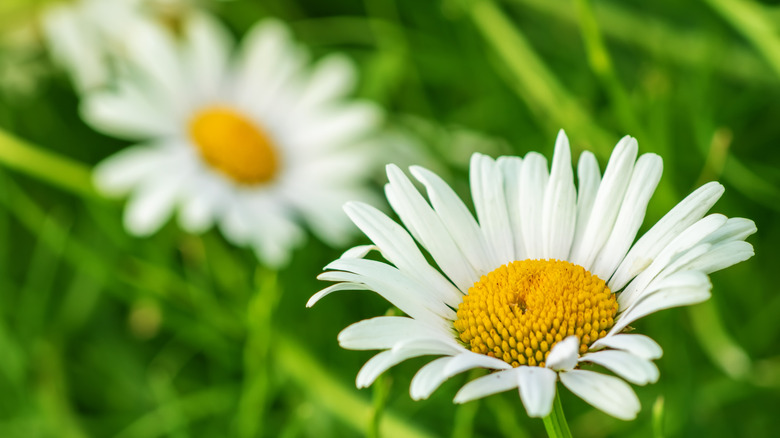
Natural pesticides often take a fairly gentle approach, but pyrethrum is one of the more powerful options. It's extracted from chrysanthemum flowers and works by targeting the nervous system of various insects. It acts quite quickly, especially compared to most of the other options listed here. Pyrethrum will paralyze the insect before eventually killing it. It's typically applied as a diluted spray and should be used in areas with an active infestation.
The downside of using pyrethrum is that it's a highly potent pesticide that kills indiscriminately, meaning it's also harmful to beneficial insects such as ladybugs, bees, and lacewings. As such, you want to use it sparingly, spraying your plants around sunrise or sunset. It does break down rapidly, so the area will quickly become safe once you've dealt with your pest problem. Pyrethrum works best as a last-ditch solution to keep problem areas under control, rather than a pesticide you use all the time.
12. Handpicking
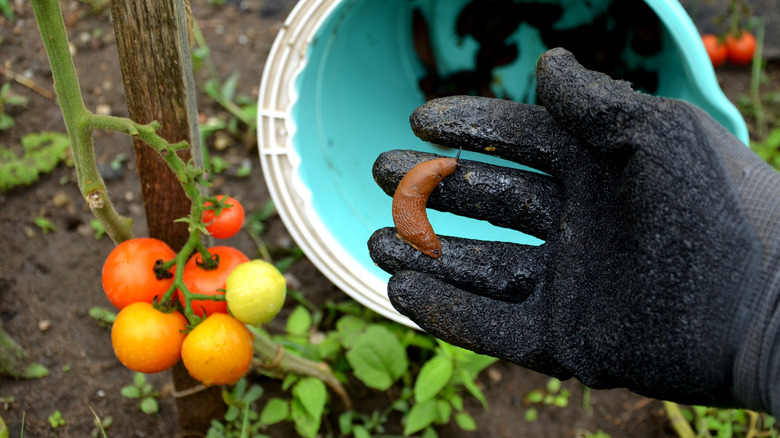
Handpicking pests is a solution that shouldn't be overlooked. Often the quickest way to deal with pests is to get directly involved and remove them yourself. Obviously, this approach works best for larger and more visible pests, such as slugs, snails, and caterpillars. They are easy to pick off your plants, and if you want to kill them, the simplest method is to drop them into a bucket of soapy water. If you're already on top of your pest control strategy and implementing companion planting and beer traps, handpicking can save you from needing stronger intervention further down the line.
As I've mentioned, these pests are usually the most active during the early morning and the evening — going out with a flashlight just after sunset is a surefire way to catch plenty of slugs. This approach can also give you a good indication of where the biggest pest problems are, which in turn allows you to refine your other strategies, such as trap placement. The drawback is that handpicking is too awkward for smaller pests, and you can end up damaging leaves and stems if you start trying to wipe them off. Regardless, it's a good habit to get into, and it has the added benefit of being an immediate fix compared to other solutions that may take more time to take effect.
13. Natural predators
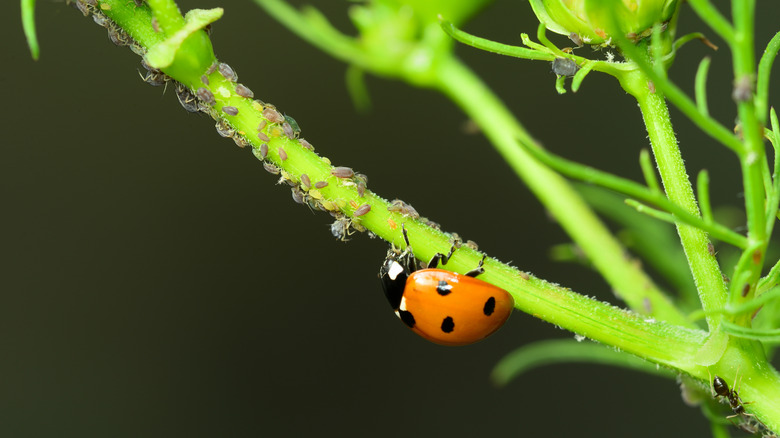
Perhaps the most natural pesticide of them all is nature itself. Soft-bodied pests — including slugs and caterpillars — can all be targeted by other creatures. The two predators I find most suitable for this are birds and ladybugs. Both bring natural beauty to your garden and boost the ecosystem, all the while doing a critical job of controlling pests. As you can imagine, this is a longer-term approach, but if you get it right, you can dramatically reduce your pest numbers with minimal effort.
An abundance of aphids will naturally attract ladybugs, but there are a few other approaches. Planting nectar and pollen sources is a good option, and ladybugs particularly enjoy flat, open plants such as dill and yarrow. You also want to provide a suitable place for them to live, such as a log pile — but you can even buy bug hotels. This can also attract other beneficial insects to your garden, such as hoverflies, lacewings, and beetles.
As for birds, you'll need to provide a water source, shelter, and nesting spots. Other great natural predators are frogs and hedgehogs, but they can be difficult to attract in closed gardens. As I've mentioned a few times, it's also important not to overuse natural pesticides, as you can end up harming these beneficial creatures. Once you've built the right ecosystem, you'll find yourself relying less on direct intervention against pests.