

Induction, Gas, Or Electric: The Stove That Cooks Food Fastest
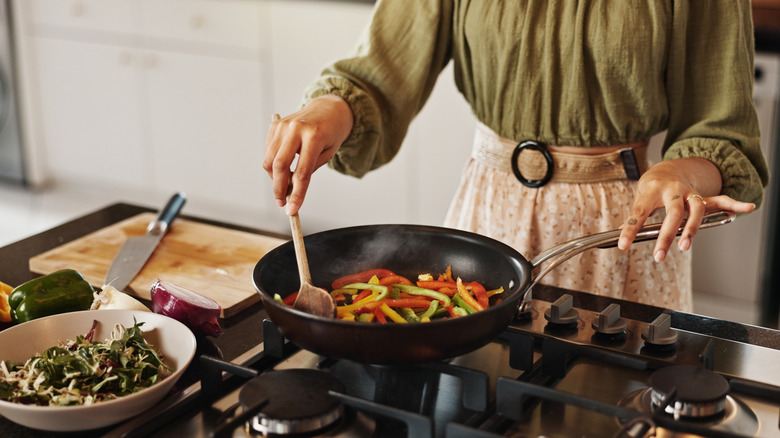
When you're test-driving a new stove, one question looms large: "How fast can this thing go?" Gas is effective and instinctive to use, while radiant electric stovetops are hardy and affordable. The induction stovetop, however, brings science to the kitchen. Consumer Reports put various stove types through their paces, and the speed test results were clear: "No other cooking technology we've tested is speedier than induction." Tests found that '6 quarts of water will approach a boil 2 to 4 minutes sooner than on a gas or electric stove.'
Induction stoves use coils to create an electromagnetic field under the glass, which interacts with cookware by inducing a current and rapidly heating any metal components. The downside is that some cookware isn't compatible with glass-top induction stoves — that's why it's important to find the best type of pan for a glass cooktop. Ceramic, aluminium, glass, or copper pots may stay cold and unreactive if they don't have a magnetic component, and induction's increased speed and responsiveness can also present a learning curve for first-time users used to gas or radiant electric. Gas is easy to control and intuitive to use — more fire, more heat. It can cook hot and fast, and can also downshift to lower temperatures quickly, much like induction cooking. Still, Consumer Reports' testing proved that induction is more effective at quick, powerful heating. If you're thinking of swapping to an induction stove, consider those important pros and cons.
Each stove type has pros and cons
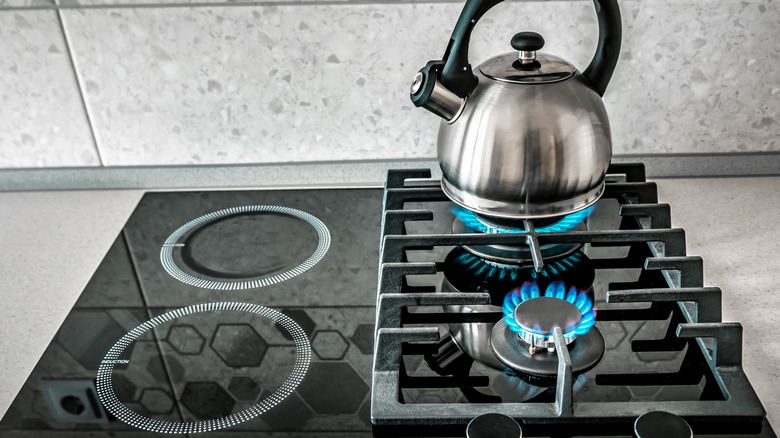
Induction stoves heat up faster than gas or electric, yet each stove type has distinct pros and cons. Gas is more versatile than induction, suiting any type of cookware, with flames that effectively reach around the sides of cookware like woks, skillets, or cast iron pots. On the flip side, induction and electric stoves apply direct energy to the base of cookware. If you cook with flair in the kitchen, you can char or flambé food on a gas range more easily, which is why professionals prefer gas stoves over electric. A downside is that these stoves are connected to a gas line which requires maintenance, and it's prudent to stay alert for fumes and pollutants in your home when you're burning gas.
Radiant electric cooktops, which either have a glass top or can be cooked on directly, are the slowest. With these, according to Consumer Reports, you need to 'wait for the intermediate step of heating up an element and then transferring the heat to a pot'. These stoves use conduction to run electricity through resistive metal which then becomes red hot, but is typically not as fast as a direct flame or electromagnetic currents. Similarly, when going from high-to-low heat, the hot stovetop needs time to gradually cool down.