

7 Forgotten Sodas From The '60s That Deserve A Revival
We may receive a commission on purchases made from links.
If you're a soda fan, you might have noticed that lately, the category has taken a turn into the world of functional ingredients and nutrition. Better-for-you products, many of which claim to promote gut health, dominate the modern soda category. But of course, there is always room for the classics, like Coca-Cola, Pepsi, and Fanta.
Just like most things, the soda industry is dominated by trends. But the reality is that not every drink will make it, and some will end up forgotten, unopened, and gathering dust in the basement. Maybe this will happen to some of the functional soda brands of the moment — it's too soon to say. If they do, they'll have company.
Here, we take a look at some of the forgotten sodas from the 1960s that many Boomers miss drinking and believe deserve a revival. Some believe this so wholeheartedly that they have even gotten tattoos of their most beloved sodas or go out of their way to buy the rights to their favorite drink.
Tab
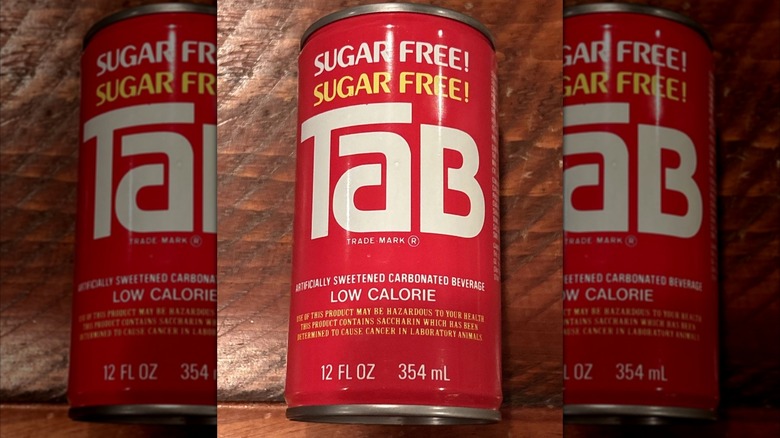
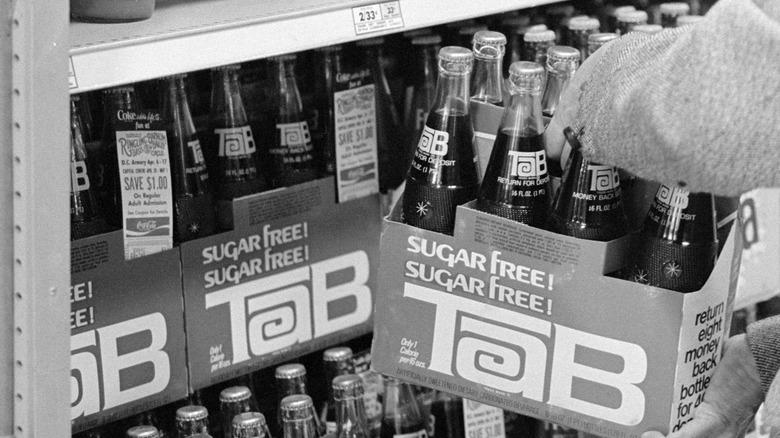
The diet soda industry is big business. According to Grand View Research, the market was valued at more than $4.8 billion in 2023. One of the most famous diet beverages on the market, of course, is Diet Coke, which became a runaway success story after it first hit the market in the 1980s. But for some, Diet Coke can never fill the gaping hole on their refrigerator shelf, left there by another diet cola: Tab.
Launched by Coca-Cola in 1963, Tab was the predecessor to Diet Coke. Instead of sugar, it was sweetened with cyclamates, a popular artificial sweetener that first hit the market in the 1950s, and saccharin, a zero-calorie sweetener that is up to 400 times sweeter than sugar. No wonder Tab (a nod to the phrase "keeping tabs on your weight"), which also had a slightly tart and citrusy flavor, was so popular. "Loved it! Had at least one a day," said one Facebook user in a group dedicated to 1960s memories. Another added, "That was the only pop I drank back then!"
Despite a few recipe changes (cyclamates were banned after animal studies showed a higher risk of bladder tumors), Tab remained popular and stuck around for decades. But in the end, it couldn't compete with other diet sodas, and it was eventually discontinued in 2020. Some are hoping it will make a return. In fact, a few people have even gotten Tab tattoos in honor of the diet beverage.
Teem
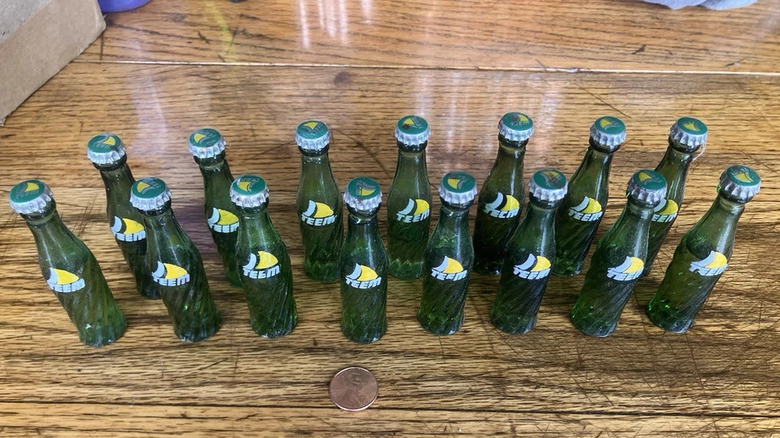
Back in the 1920s, a man named Charles Leiper Grigg changed the soda industry forever when he created a new drink called Bib-Label Lithiated Lemon-Lime Soda. For the uninitiated, that's 7Up — and don't worry, it's not lithiated (ahem, infused with lithium) anymore. But it is still undeniably popular, thanks to the fizz and the zesty lemon and lime flavor. In the 1950s, Pepsi-Cola could see how successful 7Up was becoming, and it wanted a piece of the pie. So, it created its own version, called Teem.
Many people truly loved Teem, and it was a certified hit throughout the 1960s. While some say it tasted like Sprite (which was also launched by Coca-Cola around the same time), others maintain it was in a league of its own. "I liked it better than Sprite or 7up, and the bottle was cool," said one Redditor in the r/vintageads subreddit. "We only got it on vacation, that's probably why I liked it."
Despite its fans, Teem didn't stand the test of time, and it started to fade away in the 1980s and 1990s. While it's no longer available in the U.S., dedicated Teem enthusiasts might still find the soda in a few countries, including Brazil, India, and South Africa. Time to book a flight?
Veep
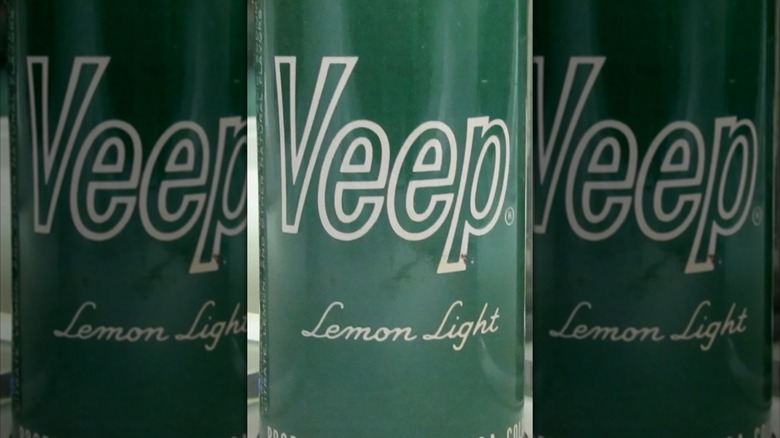
Teem and Sprite had some competition in the lemon-lime category from another soda called Veep. No, that's not a mouse hiding in your phone or computer; that's the actual name of the drink. Launched in the late 1950s by the Coca-Cola Bottling Company of New York (that's a Coca-Cola bottler, not the actual Coca-Cola Company), the drink was bubbly, refreshing, and zesty like its rivals, but a key selling point was that the flavor was subtler, and the sweetness was dialed down a little.
Veep isn't talked about that often anymore, probably because it was only sold in and around New York, New Jersey, and Connecticut, but some who do remember it say it was one of their favorites. There isn't much information about why it was discontinued, but some theorize that it was because Coca-Cola didn't want to create more competition for Sprite. We say there's always more room for lemon and lime, but that's just us.
Fanta Root Beer
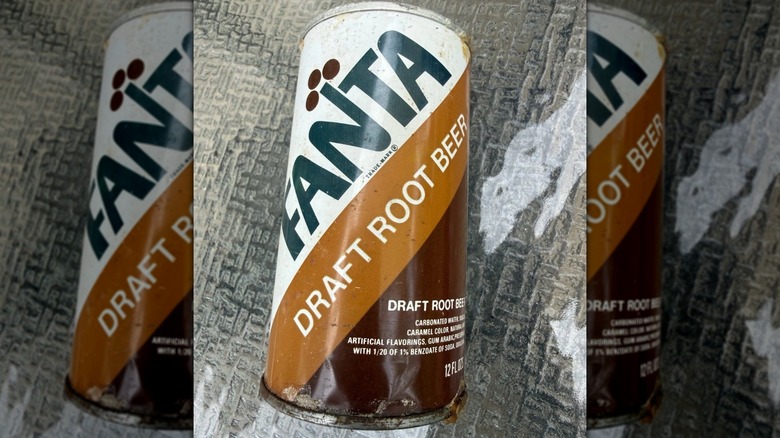
Invented by Coca-Cola (inside Nazi Germany) in 1940, Fanta made its American debut in 1958, and it was, as you likely already know given its ubiquity today, incredibly popular. It was bubbly, orange, and very sweet, and so the Americans lapped it up. Alongside the classic orange flavor, Coca-Cola also launched Fanta Root Beer, alongside several other flavors like ginger ale, grape, and lemon-lime.
Those who tried Fanta Root Beer remember it being incredibly sweet, with just a hint of fizz. "Fanta root beer used to be very good," said one Redditor in the r/Soda subreddit. The drink didn't stick around, though. Many believe it was replaced by Barq's root beer after Coca-Cola acquired the brand in 1995. "I do remember a pizzeria I went to when I was a kid had a tap on the soda fountain for Fanta root beer, but it actually dispensed Barq's," said another Redditor. "I guess they didn't want to change the label sticker."
Hires Root Beer
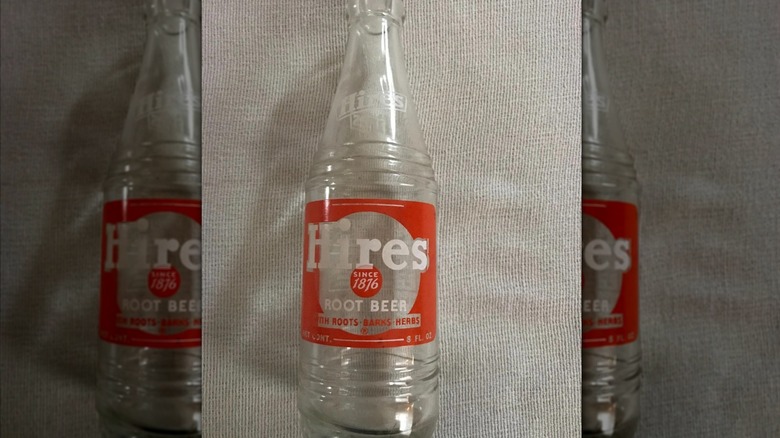
Coca-Cola's move into root beer was bold; the category was already dominated by another brand: Hire's Root Beer. This wasn't just any old root beer; it was one of the original commercial root beers,
made based on the 19th-century recipe that was created by pharmacist Charles Elmer Hires. Thanks in part to a popular campaign with jazz singer Blossom Dearie, Hire's Root Beer continued to fly off the shelves in the 1960s, and many people have fond memories of drinking it throughout the decade. "I remember Hires being top of the heap among root beers when I was a kid, give or take A&W," said one Facebook user in a group dedicated to midcentury memories and retro ads. Another added, "I grew up with Hires Root Beer! It was the best!"
Hires Root Beer ended up changing hands a few times throughout the 20th century, and in the end, faded away. But many are hoping for a return. In fact, one Reddit user claiming to be a descendant of Charles E. Hires once expressed interest in purchasing the rights to Hires Root Beer from Keurig Dr Pepper (which acquired the brand from Cadbury Schweppes). "I grew up on Hires and would love to see it come back," replied another user. Could it make a return? We shall see.
Grapette
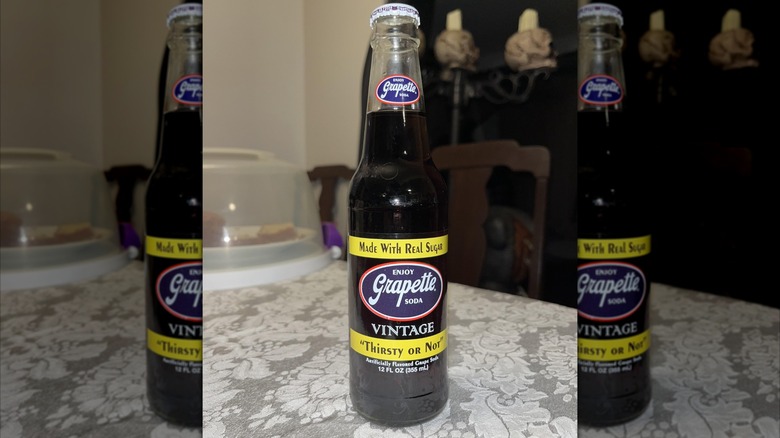
Grapette, a bright purple grape soda, hit the market in 1940, and it was immediately welcomed into American homes. It stayed as a firm favorite throughout the 1950s and 1960s, particularly in Arkansas, where Grapette (alongside an orange version called Orangette) was founded and produced. "When I was kid playing baseball they were our team sponsor and we had more grapette sodas than we could ever drink," said one Facebook user in an Arkansas group. "I did my best though. Definitely my favorite drink as a young boy."
After the 1960s, things got a little more tumultuous for Grapette, and the company was sold several times. In the end, Walmart ended up with the rights to Grapette's recipes and flavors, and in the early 2000s, it started selling Sam's Choice Grapette and Sam's Choice Orangette. In 2023, though, the store disappointed fans everywhere when it revealed it would no longer offer Grapette in stores. It quickly made a U-turn on that decision, but now, according to crestfallen shoppers, it seems to have vanished again.
Patio
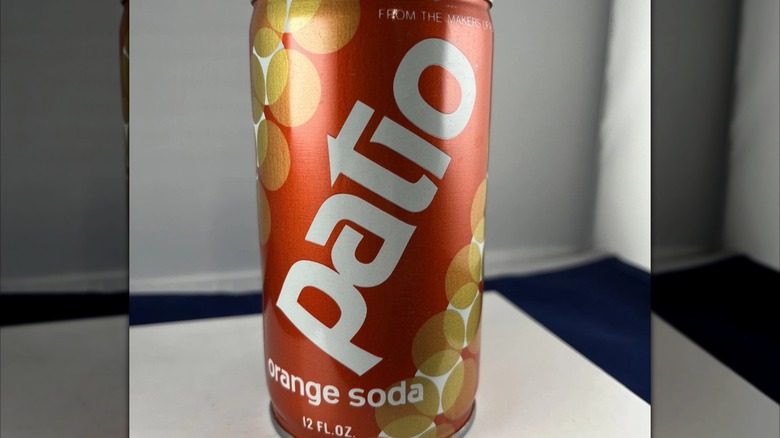
Before Diet Coke, there was Tab, and before Diet Pepsi, there was Patio. Like Coca-Cola, PepsiCo paid very close attention to the rising demand for diet sodas in the 1960s, and it knew it had to create its own. So, Patio, a cola-flavored, artificially sweetened soda was born (if you've ever seen "Mad Men," you might remember Sterling Cooper trying to pull together a commercial for the drink).
There were also other flavors besides cola, like Patio Orange Soda. Many people have fond memories of drinking Patio in the 1960s. "In the early 60s we [used] to get patio soda in bottles from a vending machine in a nearby warehouse all flavors 10 cents a bottle," said one Redditor in the r/mildlyinteresting subreddit.
Patio was eventually discontinued in the 1970s, and the diet cola was rebranded as Diet Pepsi, which, of course, is still widely available in the U.S. But some people think PepsiCo should bring back Patio, with its original design and branding. "I love that era of graphic design," said one Redditor. Another added, "Me too. The odd geometric shapes make it. That was so common throughout the 60's, it was everywhere."