

Lemon-Lime Soda Once Contained This Illicit Substance Before The US Banned It
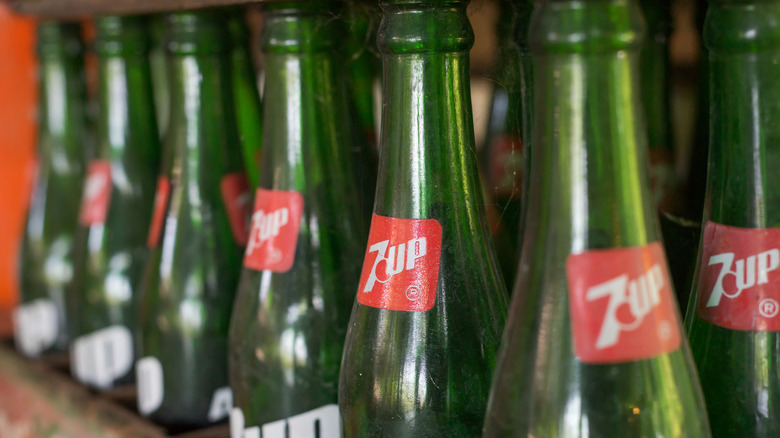
7Up, a familiar name in soda, used to be one of many lemon-lime sodas on the market. Unlike competitors, it had a not-so-secret ingredient that promised to add pep to drinkers' steps. Back in 1929, 7Up had a much more complicated name: Bib-Label Lithiated Lemon-Lime Soda. The bubbly refreshment was created by Charles Leiper Grigg, also behind two other sodas, Howdy and Whistle. Grigg's new invention, the precursor to 7Up, contained 5 milligrams of the chemical lithium citrate, explaining the "lithiated" part of the name. "Bib-Label" refers to the loose label that went around the bottle's neck rather than being stuck on.
From the late 1800s, lithium bromide was a go-to remedy for hot-topic psychiatric ailments of the day, such as mania, and as a hypnotic and anticonvulsant for patients with epilepsy. It continued on as a mood-enhancing remedy for other psychiatric or mental health conditions like depression, bipolar disorder, and psychosis, as well as for inflamed joints. The perceived benefit of lithium citrate's mood-enhancing effects was what Grigg sought to capture in soda form.
Lithiated beverages were banned in 1948
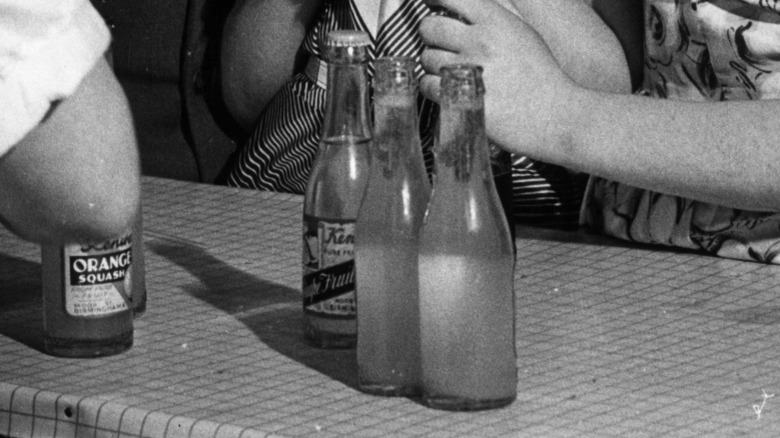
To simplify the name and remove the reference to lithium, Bib-Label Lithiated Lemon-Lime Soda was renamed 7Up in 1936. The market for lithiated sodas was certainly not limited to Grigg's products. Other notable options included B1, Wake Up, Heads Up, and Cheer Up, names that potentially shine a light on how the 7Up name came to be.
Alongside claims that lithinated sodas put some extra pep in your step, another primary claim was that they were effective hangover cures. This gave rise to the existence of lithiated beer, perhaps as a preventative promise of a clear head the next day. Lithiated mineral water was also available, providing an option for those who didn't drink alcohol or sodas. In 1948, lithiated soft drinks became illegal, and all lithiated drinks had to be reformulated. Today, lithium is only available as a prescription medication through a licensed healthcare provider and is used to treat bipolar disorder, major depressive disorder, as well as other mental health disorders.
Another famous example of a popular soda with medicinal origins is Coca-Cola, which, in early formulations, featured caffeine from the African kola nut and the stimulating effects of coca leaf, the plant source of cocaine. While Coca-Cola denies the beverage ever contained cocaine, the inclusion of coca leaf lives on in its name.