

Where Does Costco Get Its Lettuce From?
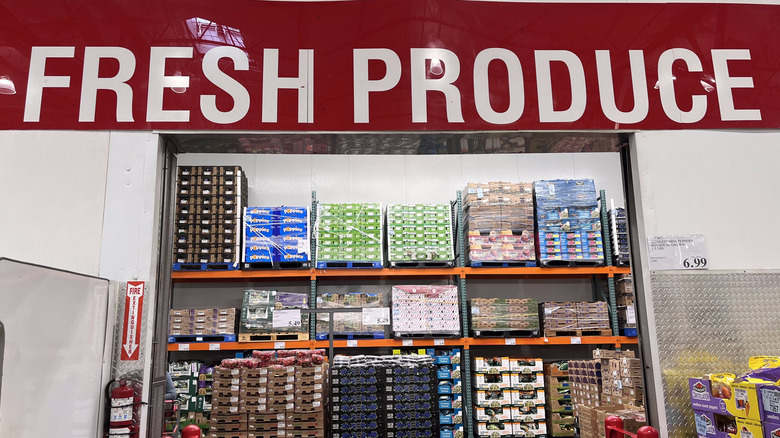
Costco is known for offering large quantities of its products at coveted low wholesale prices — and that includes fresh fruits, vegetables, and greens. It's no secret that Costco sells an enormous amount of fresh produce, but if you're hoping to trace it all to one source, the answer isn't so straightforward.
Unlike some grocery chains that rely heavily on one produce company, Costco sources its produce through a network of large national growers, as well as regional processors and local farms. That kind of flexible sourcing means Costco's shelves are always stocked, but it also means the origin of your Caesar salad kit may vary from one warehouse to the next.
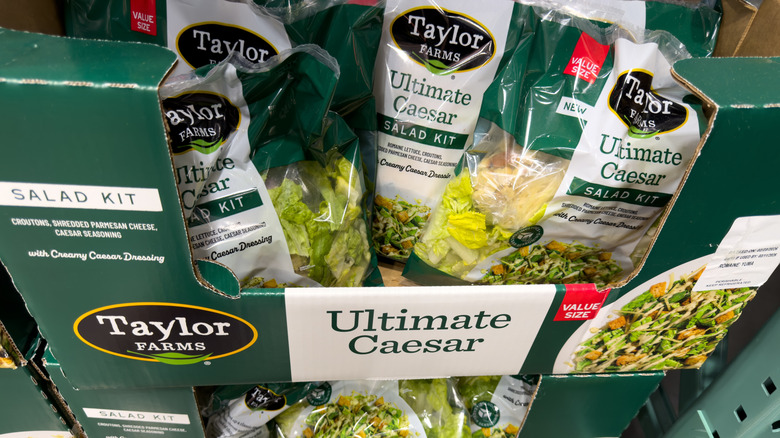
One of Costco's produce suppliers that might ring a bell is Taylor Farms, one of North America's largest growers and processors of salad greens. Taylor Farms is also the lettuce brand tied to the July 2026 cyclosporiasis outbreak, and it's also no stranger to controversies and recalls. In 2015, Costco had to recall its Rotisserie Chicken Salad as well. But Taylor Farms is just one piece of the puzzle.
Costco works with local and regional suppliers when possible
It would be impossible to ship every head of lettuce from one national warehouse, which is why Costco operates regional distribution centers that receive produce from suppliers who serve that geographic area. For more niche products, like microgreens, butter lettuce, or specialty greens, the company may purchase directly from regional growers. This has many advantages, including shorter transport times and maintained freshness. Of course, some produce may be fresher than others, which is why seasoned shoppers know which Costco produce to buy and which to skip.
Ultimately, Costco's sourcing model is designed around flexibility and freshness rather than exclusive partnerships. While Taylor Farms is certainly a major lettuce supplier for Costco, the retailer also publicly reports that it supports regional and local growers that practice regenerative agriculture. This diversified approach keeps shoppers supplied with lettuce year-round, even if the origin changes. The company also works closely with suppliers on farming practices and sustainability through its Responsible Agriculture program.
The best bet for tracing your leafy greens is often on the packaging itself. Most bagged lettuce and lettuce products include a Traceability Lot Code that names the company, grower, and production location. If the FDA announces a food recall, those lot numbers are absolutely essential for determining if your specific salad kit is affected.