

An 1814 Incident Caused Violent Waves Of Beer To Kill At Least 7 People In London
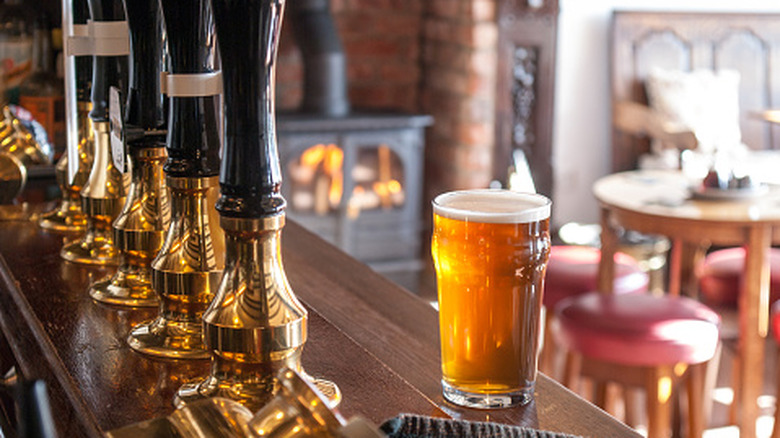
A rough morning after a night out can sometimes feel like you've been hit by a tidal wave of beer. But in London in 1814, a literal beer flood proved deadly. It's a bit like the notorious molasses flood in Boston a century later, when the otherwise routine production of a beloved product got catastrophically out of hand.
In the 1700s, the porter beer style was invented in England and immediately became a hit. Owned by Meux & Co., The Horse Shoe Brewery in the St. Giles district of London was one of the country's largest producers of the roasted, malty ale. To keep up with demand, the brewery installed a massive fermentation tank in 1810. It was 22 feet tall and held more than 3,500 barrels of beer — or 108,500 gallons. The tank was wooden with iron rings holding it together, but apparently those rings were not foolproof. On October 17, 1814, one burst, sending hot beer from the brewing process rushing out before it could be transferred into the fermenter. The force of the wave tore through the brewery's walls and destroyed other tanks in its path, sending roughly 320,000 gallons of beer flooding into the streets. The wave was a staggering 15 feet high and crashed through a crowded neighborhood inhabited by some of London's poorest residents, leaving death and destruction in its wake.
The aftermath of the London beer flood
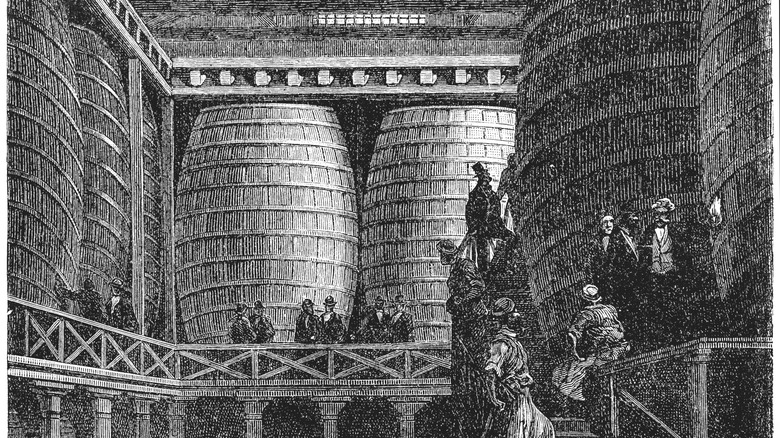
The tragedy of this beer flood was brutal. Porter flooded the basements of two homes, causing both to collapse. In one, mother and daughter Mary and Hannah Banfield were killed; in the other, four or five mourners (reports vary) died while attending a wake for a child. The flood also destroyed the Tavistock Arms pub, killing teenage barmaid Eleanor Cooper. Workers at the brewery escaped death, but many were injured.
With no street drainage, the beer wasn't quick to dissipate. There are rumors people filled vessels with the free beer, and that yet another death resulted from alcohol poisoning because of this, but those reports are unsubstantiated.
While the brewery lost thousands of gallons of beer, the true tragedy was the loss of life. Meux & Co. was held responsible in court, but the case was ruled an act of God. Given that brewery employee George Crick noticed the tank's iron ring had broken before and such incidents were reportedly common, it's worth wondering whether this disaster could have been avoided.
In the aftermath of the flood, the brewing industry took steps to prevent similar disasters. Breweries began switching from wooden to sturdier alternatives for their tanks. The Horse Shoe Brewery was eventually demolished in 1921, but the tragedy remained part of London's history. The Holborn Whippet, one of London's distinctive pubs, once honored the victims by serving a special porter on the flood's anniversary, though it has since closed.