

Looking To Buy White Fish? Read Up On These Red Flags Before Choosing Sea Bass
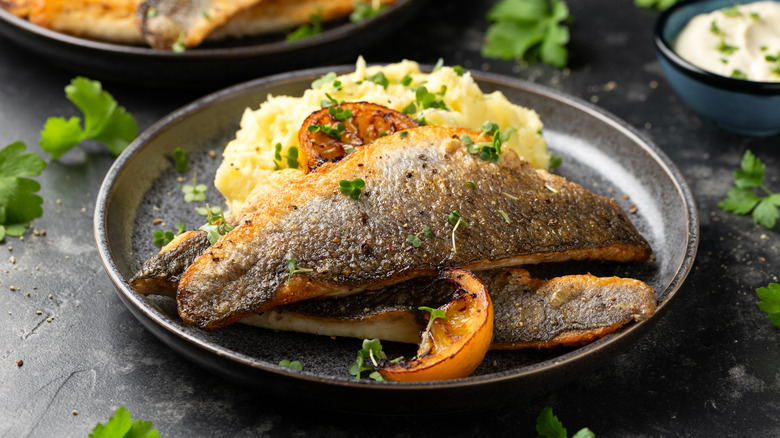
The fish market can be a confusing place since fish are often grouped by the characteristics of the meat as much or more than the species themselves. We see this in dishes that simply call for "white fish." Sea bass is an excellent type of white fish for such recipes, but it can be similarly confusing. Rather than referring to one fish or even one genus, "white fish" is a broad term used to designate several different species worldwide, some of which are much more sustainable than others.
To help us sort out the best sea bass for your kitchen — and what red flags shoppers should be aware of — we reached out to Dora Swan, founder of fin – your fishmonger. As she explains it, one of the biggest concerns for shoppers is choosing the right fish, as there are hundreds of different fish out there called sea bass. "Mediterranean Sea Bass is more commonly known as bronzini/bronzino/branzini in our country, or Loup de Mer if you're traveling abroad," Swan says. "Black Sea Bass is a kind of grouper, Barramundi is Asian Sea Bass. Most often, though, when people in the U.S. say 'sea bass,' they're referring to Chilean Sea Bass."
Knowing what type of sea bass you're buying is the first step toward determining whether it comes from a sustainable fishery. But even once you know the fish, another potential red flag is how it was caught. Some fishing techniques lead to much more bycatch and environmental damage than others.
Which sea bass are the best choices
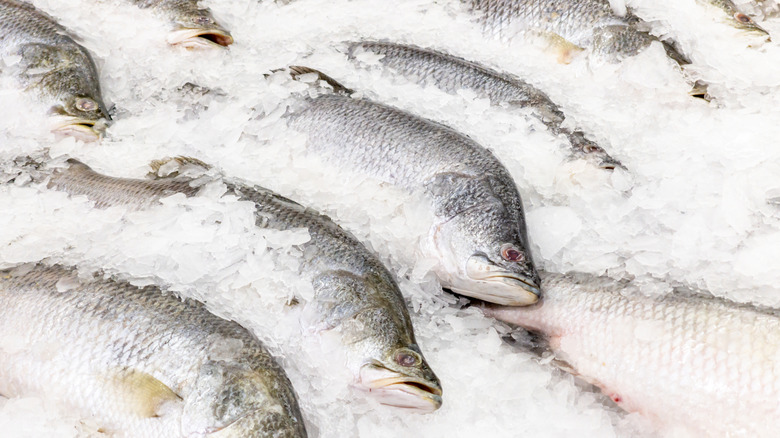
Given the vast number of different species out there, we can't give detailed instructions on all sea bass varieties. However, we can use a few different common species to explain what to look for in choosing a sustainable fish for your plate.
For instance, Chilean sea bass has been a menu favorite ever since it was rebranded in the 1970s. The fisheries, however, have not always been well cared for. "It's really overfished," Swan explains. "People just love its mild flavor, versatility in preparation and flaky texture. So, there's a ton of illegal, unregulated fishing in Antarctic waters." The first step is recognizing the actual species of sea bass you are buying and looking into the fishery that it comes from. Despite being overfished, though, you don't have to give up that favorite tender Chilean sea bass recipe entirely, as Swan says there are some well-managed fisheries for this species.
To illustrate the next sea bass red flag, look at the black sea bass. With this species, the fishing method used is the largest factor in determining the sustainability of the fishery. Black sea bass caught in pots, for example, are considered unsustainable. This method poses a significant risk to other overfished and endangered species. Bottom trawling, however, is considered to be an okay form of fishing for black sea bass, thanks to lower levels of bycatch and reduced impact on marine mammals.
If you want to shop for sustainable seafood, there is a lot of information to digest — far too much for the average shopper to keep track of. Thankfully, there are plenty of experts out there happy to do that work for you.
General rules for picking sustainable seafood
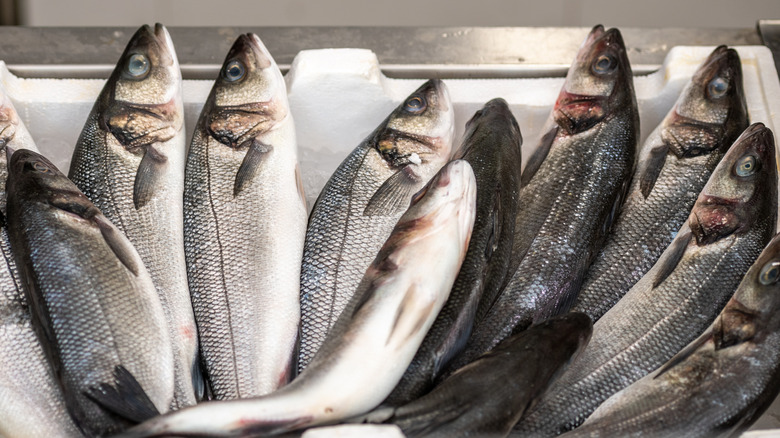
The simplest way to get advice on your seafood purchases is to stop in at your local fishmonger. Not only will they be able to explain the difference between sea bass and branzino, but they can also tell you which come from the most sustainable fisheries. "Our guiding principles were to offer only seafood that is caught or farmed in ways that consider the long-term vitality of harvested species and the well-being of the oceans," Swan says of her business. "Sustainability is a tricky, ever-evolving thing. We kept up on all the details so that our customers didn't have to."
For those without access to such a knowledgeable fishmonger, however, there are plenty of online resources accessible to everyone. When shopping for the most sustainable seafood, Swan suggests that a good place to start is with the Monterey Bay Aquarium Seafood Watch website and app, as well as sustainable seafood guides from the Marine Stewardship Council (MSC), the World Wildlife Federation (WWF), and the National Oceanic and Atmospheric Association (NOAA). Each of these organizations has extensive resources on the sustainability of different fisheries, enabling you to make an educated decision about your seafood purchases.
If you have neither a fishmonger to ask questions nor the time to read up on whether to buy or skip a particular white fish, the next best thing is to head to the freezer section of the store and look for packages with certifications on them. "Your fish can also actually have a label from the MSC (it's a blue fish) or Aquaculture Stewardship Council (it's a teal label with 3 fish) that indicates that it's safe to purchase," Swan adds. "Just remember to read the labels and look for the symbols because now you know!"