

How To Mix Light And Dark Cabinets In Your Kitchen To Give The Room Depth
We may receive a commission on purchases made from links.
This is your permission slip to opt out of matching kitchen cabinets. While same-style cabinetry is certainly the dominant choice, going for contrasting colors instead can be very visually rewarding. But there are plenty of ways to get it wrong when mixing and matching light cabinets with dark ones. So to find out how to pull off this unconventional pairing, we spoke to Cara Woodhouse — interior designer, founder of Cara Woodhouse Interiors, and the author of "It's a Mood."
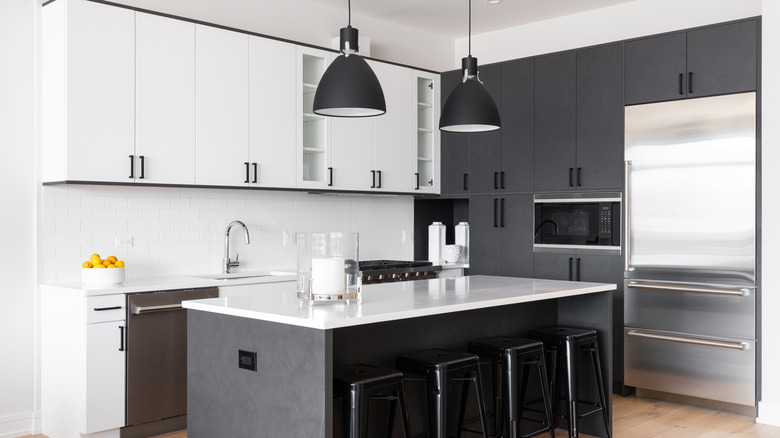
"The key is to make the contrast feel intentional," Woodhouse tells us. That's the difference between a kitchen that feels chaotic and one that feels harmonious. "I typically recommend choosing one dominant cabinet color and using the second as an accent, rather than dividing the kitchen evenly between the two," she says. In other words, think outside the box and consider your kitchen layout. The aim is to create a uniform look within the individual areas of your cooking space to avoid accidentally creating an eyesore. "For example, darker cabinetry can be used on an island, a pantry wall, or a bar area, while lighter cabinetry carries through the rest of the kitchen," suggests Woodhouse. This way, the color of each zone feels meticulously planned, rather than randomly put together.
Boldly pairing light and dark kitchen cabinets can benefit the space
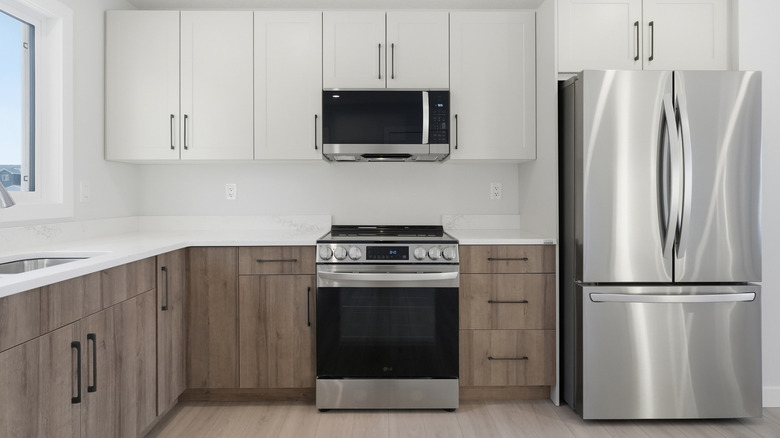
"Mixing light and dark cabinetry adds depth, dimension, and visual interest to a kitchen," says Woodhouse. In fact, painting a section of your cabinets a lighter tone is a good way to make a dark kitchen feel brighter without doing any other major changes. The opposing tones can "create a stronger focal point and prevent the room from feeling too flat or one dimensional. It is also a great way to introduce contrast while still keeping the overall design timeless and cohesive," notes Woodhouse.
If you're still on the fence about how a two-color combo could work with your kitchen cabinets, Woodhouse shared with us her preference of how to arrange the cupboards. "I prefer lighter cabinets on top and darker cabinets on the bottom," she says, continuing, "Lighter upper cabinetry helps the room feel brighter, more open, and less visually heavy, especially at eye level. Darker lower cabinets ground the space and are also more forgiving in high traffic areas." This avoids making the kitchen too visually cramped, especially if you're working with a smaller space — in which case you could also opt for paint colors that can make even the smallest kitchen feel larger.
Don't forget about other kitchen elements when designing a contrast-heavy space
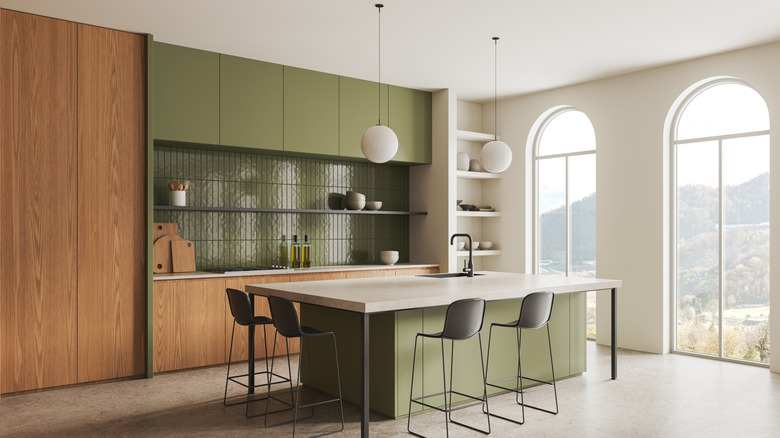
While kitchen cabinets may be the main focus of this conversation, they are certainly not the sole element in your cooking space that begs consideration. "It is also important to connect the two finishes through the countertops, backsplash, hardware, or flooring," says Woodhouse, adding, "Repeating tones throughout the space helps everything feel cohesive." Generally speaking, if you're aiming to create a bigger and brighter space, match the countertops to your lighter cabinetry, while the floor can match the darker tones. This way you're extending the contrast, rather than just keeping it limited to the cabinets.
But even in a light-and-dark kitchen, less is more. "I would also avoid mixing too many competing materials or colors, as the cabinetry should still feel like part of one complete design story," Woodhouse warns. Still, she makes sure to remind us that, "there are no absolute rules."
To showcase this point, she presented a contrasting example to her preferred light and dark styling that we mentioned earlier. "In a large kitchen with high ceilings and plenty of natural light, darker upper cabinetry can create a very dramatic and sophisticated effect," she says. It all depends on your individual space and its parameters. "The decision should ultimately be based on the size of the kitchen, the amount of natural light, and the overall mood you want to create," the expert concludes.