

What Setting Should A Refrigerator Be On In The Summer?
We may receive a commission on purchases made from links.
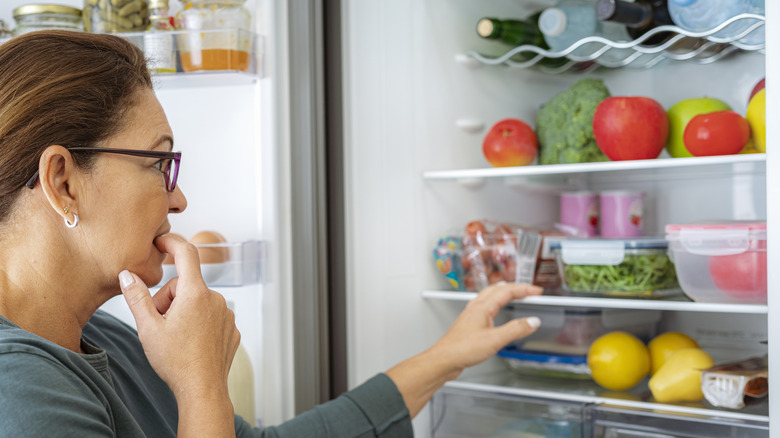
As temperatures rise in the dog days of summer, the refrigerator arguably becomes the most popular appliance in the house. Frequent trips to the fridge for cold food and chilled drinks result in a lot of opening and closing of refrigerator doors; so much so that the U.S. Environmental Protection Agency estimates that Americans open their refrigerators nearly three dozen times a day.
But all those trips add up to a lot of hard work for a fridge to maintain its internal temperature at an optimal level to keep food fresh. While the Food and Drug Administration recommends keeping your fridge at 40 degrees Fahrenheit or below, it's widely recommended to set it a little cooler in the 35 to 38-degrees Fahrenheit range during summer. This ensures that food stays cool but doesn't freeze and there's a buffer to account for higher temps outside. It also helps give some wiggle room for the frequent opening and closing of a refrigerator door, when a significant amount of cold air can escape quickly.
So how do you set the appropriate temperature for your refrigerator? Read the manufacturer's instructions for your specific model to see what's recommended. Those with digital displays should be easy to set, but on older models with dials, the middle number is often the sweet spot — that's 3 on a 1-to-5 scale — or a 4 or 5 on a 1-to-9 scale. Setting it higher means the motor has to work harder to keep contents cool and setting it too low runs the risk of freezing what's inside.
Other ways to ensure your fridge is at the optimal temperature
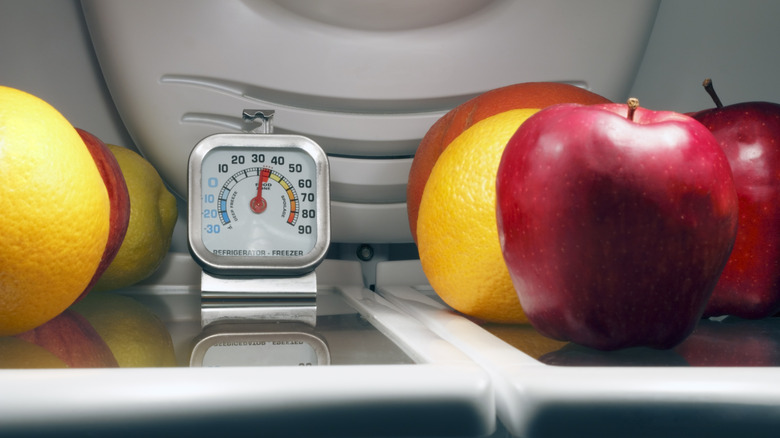
Your fridge's recommended settings can help maintain a good internal temperature. But a digital appliance thermometer — like this two-pack from Amazon for less than $10 — can tell you exactly how cold your food and drinks are. A freezer thermometer is also ideal for keeping an eye on your frozen foods. Placement of those thermometers is important as well. The U.S. Department of Agriculture recommends putting a fridge thermometer on the middle shelf in a glass of water and a freezer thermometer between frozen foods.
The temperature settings can also be a good indicator that a fridge might not be working properly during scorching heat. One of the early signs that a compressor may be failing is that the fridge feels warm on the outside or the contents don't feel cool inside. That's why the FDA also recommends monitoring your inventory and cleaning up spills as soon as you see them. Keeping an eye on expiring or close to expiring food and mopping up spills keeps harmful bacteria from multiplying or spreading and causing cross contamination, especially Listeria, which can still grow at refrigerated temperatures.
It might be tempting to stock the fridge full during heat waves, but less can be more. The FDA recommends not overcrowding your shelves, but keeping your fridge about three-quarters full can help maintain the temperature by ensuring there's enough air flow throughout the inside. So whether you're planning a big summer party or enjoying leftovers from the fridge, having the appliance running at an optimal temperature ensures you can focus on fun, even on the hottest days.