

Change The Way You Manage Leftover Food With The 4 Under 40 Rule
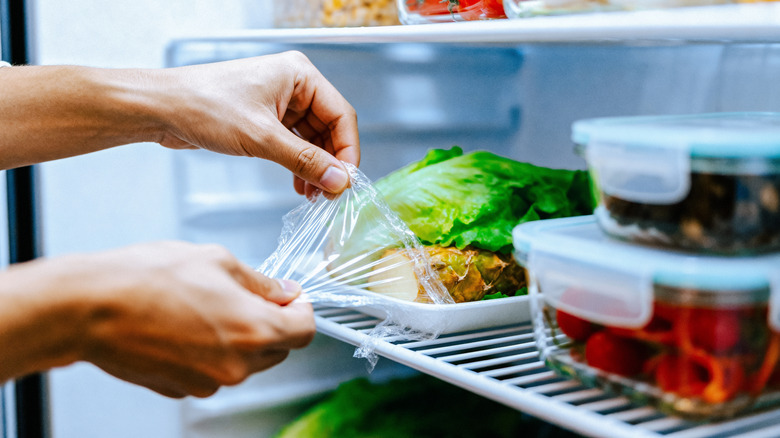
As long as you don't mind eating the same thing for days on end, meal-prepping allows you to rest soundly knowing your next dish just needs to be nuked in the microwave. However, the downside of this comes when you realize that, although there is always leftover food waiting for you, the desire to order takeout or something different hits. Your leftover food languishes in the fridge, making you question whether to throw it out or just eat it the next day. Luckily, there is a simple rule to help you decide whether to eat those leftovers or chuck them in the trash: the 4 Under 40 rule.
The 4 Under 40 rule posits that leftovers can be eaten within four days if kept below 40 degrees Fahrenheit. This 40-degree figure is important, as it keeps food out of the temperature "danger zone", which is the range at which foodborne bacteria and pathogens rapidly multiply. Therefore, if you're bringing all of that food out and leaving it on the counter, or reheating leftovers more than once (which is not recommended), you shouldn't eat it. It's also important not to blindly abide by this rule. A bad smell or visible signs of spoilage are signs that you should throw out your food.
How to maximize the life of your leftovers
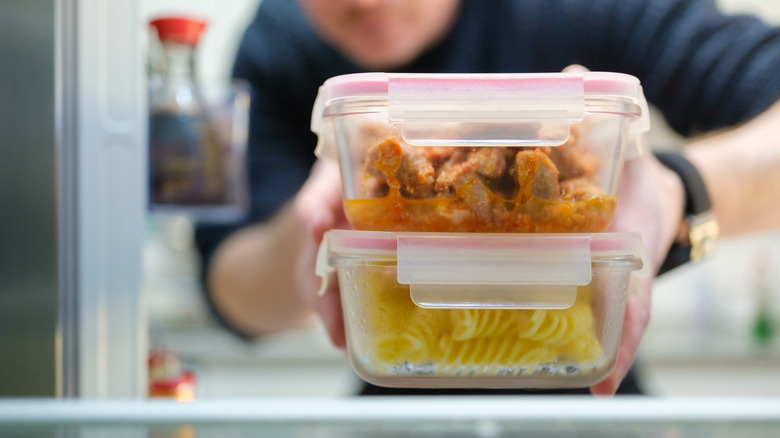
There are several things that you can do to extend how long your leftovers are good for. One common thing that people do before they even get to the refrigerator step is cooling the items on the counter or inadvertently leaving them out for too long. You'll want to minimize the time food is in the temperature danger zone, so quickly getting it into a storage container and into the fridge is paramount.
Some other mistakes that people commonly make with leftovers include storing them in huge portions rather than small ones. You'll want to avoid refrigerating large quantities of food, which is why storing smaller, lunch- or dinner-sized portions makes more sense. You should also always cover food in an airtight container, as this will prevent the odors from your fridge from tainting it. The location you store food in your fridge also matters.
You should really only be storing certain things in your fridge door, such as condiments or shelf-stable items, as the constant air flow from opening and closing the door can encourage spoilage. Store your leftovers towards the center of your fridge instead.