

5 Things Your Tomato Plants Need In July To Keep Producing All Summer
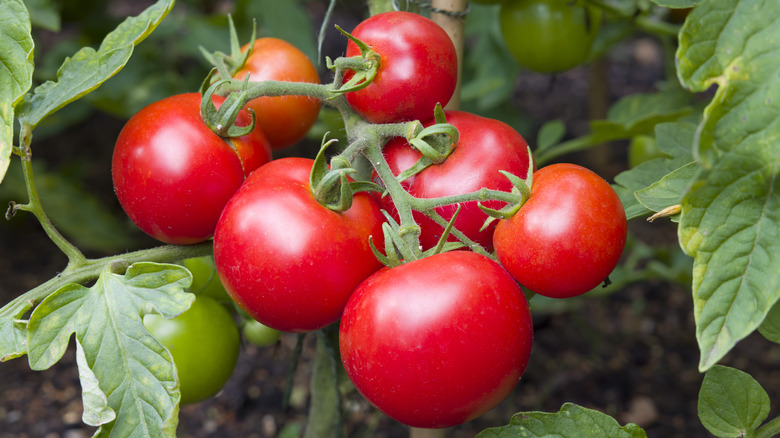
July brings us peak heat, and when daytime temps are over 85 to 90 degrees Fahrenheit (and nights don't dip below 70), our tomato plants need our help the most. It's during these scorching summer days when issues like cracks in your fruit, yellowing leaves, and common diseases can thrive. So, we have to take a little extra care of our favorite homegrown fruit during those blazing days — and honestly, that's fine. They give us so much back, between yummy sauces, burger toppings, and salad sweeteners. Since we're paying 40% more for them this year, we can't afford to waste them!
But by knowing and showing just a bit more TLC in the garden, there's no reason you can't successfully oversee your tomatoes through the summer heat. Depending on the type of plant, you can even keep them harvesting until frost. It doesn't even take that much time to truly ensure your plants are protected, root to tip, and have the best environment for producing flavorful fruit. Try to adhere to at least a few of these simple summer adaptations to keep your tomatoes at their best this July. If you do, you and your plants should make it to fall just fine.
Deep water first thing in the morning
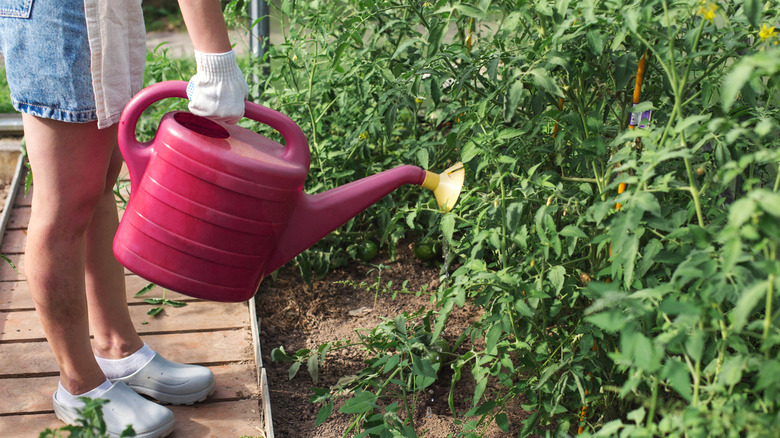
Over- or underwatering can kill a plant faster than anything else, so it's important to get it right. When it comes to your tomato plants, this means understanding how much and when you need to be watering. The best time to water is first thing in the morning. Deep water at the base for around 30 seconds. With the sun and temperature low, the morning allows the water to soak deep into the soil. If any water gets on the leaves, it has time to dry before the heat burns the foliage.
When it comes to tomatoes in hot climates, this deep watering needs to happen two to three times a week. You want the top 6 to 8 inches of the soil to stay consistently moist. Check this by sticking a trowel or screwdriver in the soil when you go to water — it will stop when you hit dry dirt. If you find it's too dry, add another 30 seconds to the deep watering until you find an amount that provides a consistently moist atmosphere. This will change with the season.
Cut off the suckers and lower limbs
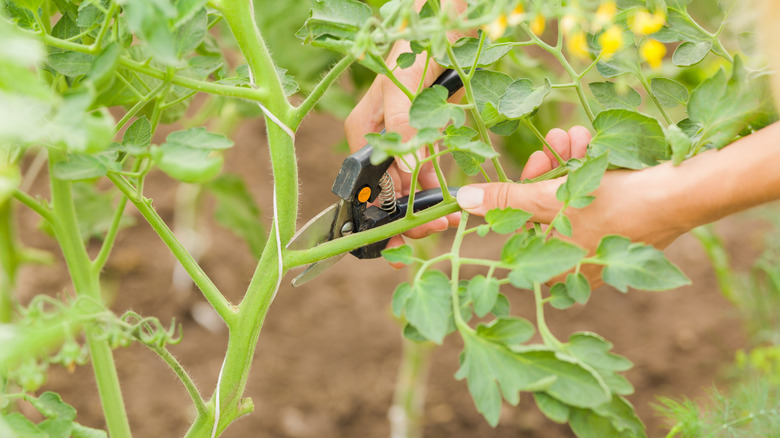
One of the biggest mistakes new gardeners make is not pruning their tomato plants properly. Removing excess flowers, lower leaves, and lower limbs can offer so many benefits to your tomato plant, especially during the hot summer months. Generally, we get excited when we see a new little flower pop out from our tomato plants. But when you're working with indeterminate tomatoes (the tall, vine-like kind), you want to pluck some of those suckers off during the hot months along with the lower leaves and some of the lower limbs. The first thing this does is improve the airflow. Good airflow reduces the risk of disease and fungal infections, and it keeps soil temperatures cooler.
Possibly more important is that this pruning allows your tomato plant to work smarter, not harder. The sucker, which grows in the hollow of two limbs instead of creating a 90-degree limb of its own, generally is where the flower we get so excited about is created. But during July, we don't want that. Trying to make an abundance of flowers is going to stress your plant out and slow down production. By removing excess suckers and lower limbs, your tomato plant can give everything it's got to the fruit that has already started on the vine and maintain the heart of the plant until cooler temperatures arrive.
Add a layer of mulch around the base
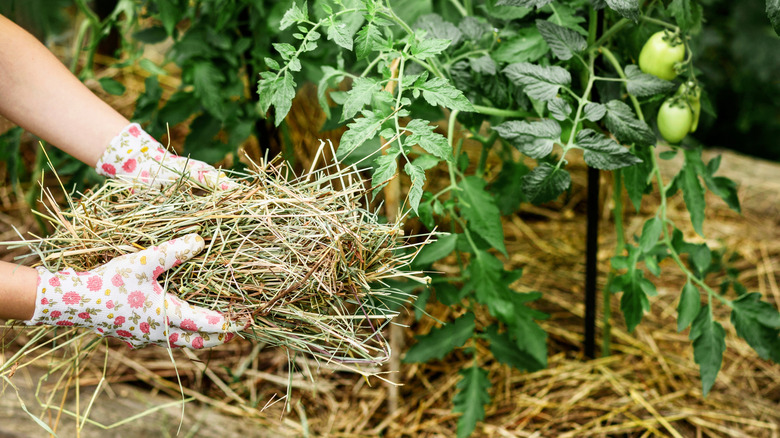
Another way to keep the harvest going through the sizzling days of summer is to incorporate a good amount of mulch into your garden. Take some organic mulch — straw, wood chips, or shredded leaves — and stuff it on the base. Adding 2 to 3 inches of mulch at the base of your plants will help the soil maintain that good moisture level you are working so hard to achieve. Additionally, it will help maintain cool temperatures and prevent moisture from evaporating out of the soil.
Organic mulch is the optimal choice when it comes to mulch because it offers added benefits on top of the ones already discussed. Whether you are using an organic mulch you get at your local garden center or simply applying your untreated grass clippings to the base of your plants, these materials will feed the plant as they decompose. In turn, this makes the soil richer and the plant more bountiful. So, by the time the cooler temperatures start to move back in, that plant is going to be in great shape for an end-of-season harvest.
Pick your tomatoes early and ripen inside
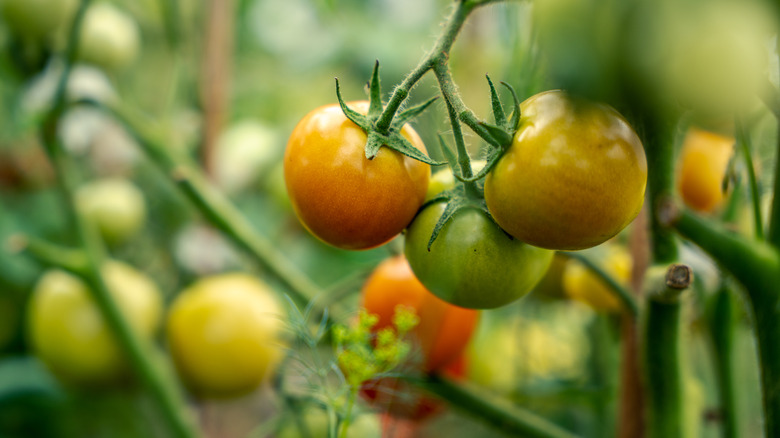
It is the best feeling in the world to walk out into the garden and see a perfectly ripened tomato just ready to be plucked, taken inside, and immediately enjoyed. However, during most of July, those dreams will need to be put to the side to enjoy during a different time of the season. What you are going to want to do instead is pick that fruit before you think it's ready. Of course, that is only under specific circumstances.
When temperatures are above 95 degrees, those tomatoes are going to stop creating that bright red pigment you look for to know it's ripe. That means an orange tomato can be fully ripe on the inside, and you just can't tell by looking. Secondly, when daytime is over 100 degrees and nights have temperatures over 80, the ripening of those tomatoes is going to slow to an almost full stop. So, when the temperatures start hitting these zones, if your fruit shows any signs of color, pull it off the vine and let it finish ripening inside. You'll be surprised at how easily you will keep fresh tomatoes in stock by following this schedule.
Use shade cloth
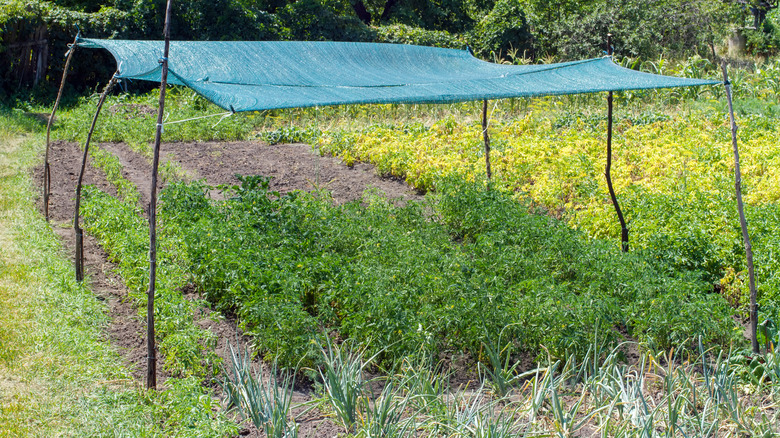
While tomatoes do enjoy (and call for) full sun, that isn't a one-size-fits-all description. In more temperate climates, the full sun is great. In places where the temperatures climb higher, and the sun beats hard enough to make the sidewalks dangerously hot enough to blister bare feet — not so much. During blazing summer days, your tomato plants may need to beat that heat with a little shade. While generally used as a last resort or during uncommon heat waves in much of the country, shade cloth is a common tool in the hotter states.
Shade cloth is generally something that can be draped over plants using simply built frames. It can provide up to a 50% reduction in direct sunlight and a 25% reduction in heat on your tomato plants, according to Bonnie Plants. Keep in mind that the early morning sun is the gentle sun your plants will need to thrive. So, take measures to allow the early a.m. beams to stream openly from the east while keeping plants shaded during the hours of harsh westerly heat.