

Keep Thriving Tomato Plants Alive During Summer Heat With One Watering Tip
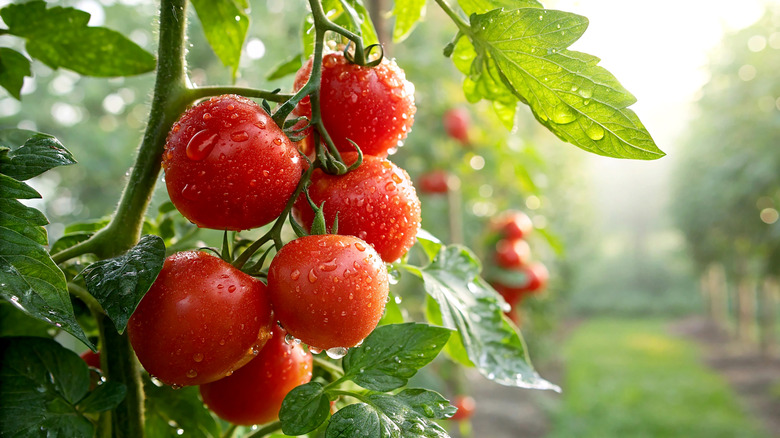
Tomatoes are one of the most popular plants for home gardeners, and for good reason: A ripe tomato, fresh from the garden, is a transcendent experience, nothing like what you buy at the grocery store. But growing the fruits for a perfect Southern-style tomato sandwich requires a bit of skill, and one of the biggest mistakes with tomato gardening, especially during the summer, is improper watering. Many factors go into giving your plants just the right amount of moisture, but it starts with watering at the right time of day — and that's first thing in the morning.
Watering your tomatoes — and the rest of your garden — early in the morning benefits the plants in several ways. First, because the sun is low in the sky and the air temperature is at its lowest point of the day, the water has plenty of time to soak into the soil before the afternoon heat sets in. By comparison, in the heat of the noontime summer sun, a significant portion of that water will be immediately lost to evaporation. The other major reason that morning watering is the best choice is that once your plants have a drink, they also have plenty of time to dry off.
It is possible to water your tomatoes in the evening, as that time of day has reduced evaporation thanks to cooler temps and low-angle sun, but later watering times increase the risk of disease. Wet foliage left overnight is an inviting place for mold, mildew, and bacteria, so if you do choose this time of day to water the garden, be sure to soak the soil at the base of the plants, rather than spraying water over the leaves and stems.
How to water tomato plants for the best harvest
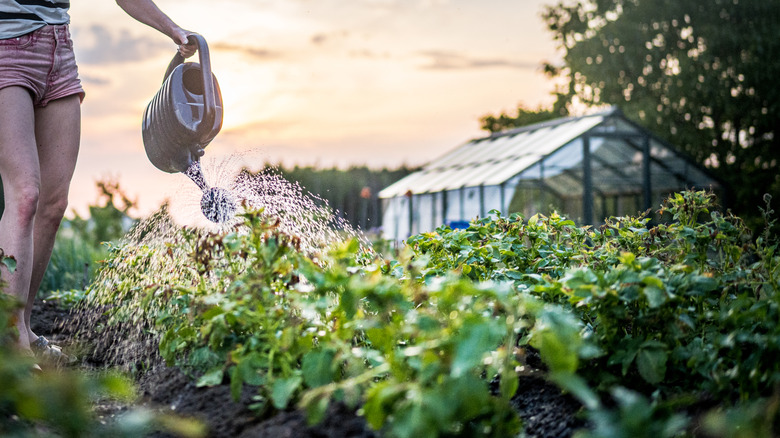
Beyond timing, the technique of watering is also very important for tomato plants all year round, and especially throughout the summer. In general, you want to water tomatoes deeply and infrequently. Really soaking the soil and letting it dry out in between waterings encourages the plants to dig deep root systems, making them hardy and resilient on those particularly scorching summer days. When the plants are younger, they will need more frequent watering, but overwatering can kill the plants and cause problems like drooping leaves, swollen stems, and cracked fruit.
There really is no one-size-fits-all solution for how to water tomato plants. The plants' needs vary not just by age, but also by the soil type that they are planted in, the stage of the season, and the local climate. The best general rule is simply to stick your finger in the ground and get a feel for what the plants are finding down there. If the first couple of inches of soil are dry to the touch, they are ready to be watered. If the soil is still damp, you can wait a little longer. This is particularly important if your tomatoes are planted in a container. Containers can dry out very quickly in the summer heat, so make sure that you are regularly checking that your tomatoes have plenty to drink.
As complicated as all of that may sound, finding the perfect technique for watering tomatoes is actually quite intuitive. All you have to do is check the soil, water deeply at the right time of day, and keep an eye on the plants to make sure that they're happy and healthy. Do all of that, and you'll have a bountiful harvest to explore tasty tomato recipes.