

Why Sauvignon Blanc Fans Swear By Mixing In This Spicy Ingredient

Dropping peppers into a bottle of Sauvignon Blanc sounds like the prelude to a ruined bottle of wine that was perfectly fine. But do a round on social media, and you'll find no shortage of people insisting the opposite: That a few slices of jalapeño turn a crisp white into something closer to a spicy margarita, and that once you try it, plain wine starts to feel a little boring by comparison.
People have been adding jalpeños to Sauvignon Blanc on TikTok for long enough that it can hardly be called a fad at this point. The reason it works comes down to a nifty class of compounds called pyrazines, which are found in both jalapeños and Sauvignon Blanc grapes. When you taste either and recognize grassy, herbaceous notes on your palate, that's the pyrazines at work.
When you combine the two, the jalapeño's pyrazines, which are found in a much higher concentration than the grape's, intensify those same grassy, herbaceous notes in the wine. The improvements are especially notable when you use this trick for citrusy, high-acid styles that are already "pyrazine-forward." Flavor aside, if you prefer a glass of wine that's nice and crisp, chill the pepper slices before adding them in. They'll help you cool down the glass without watering it down with ice cubes.
It's not a trick for everyone, and that's just fine
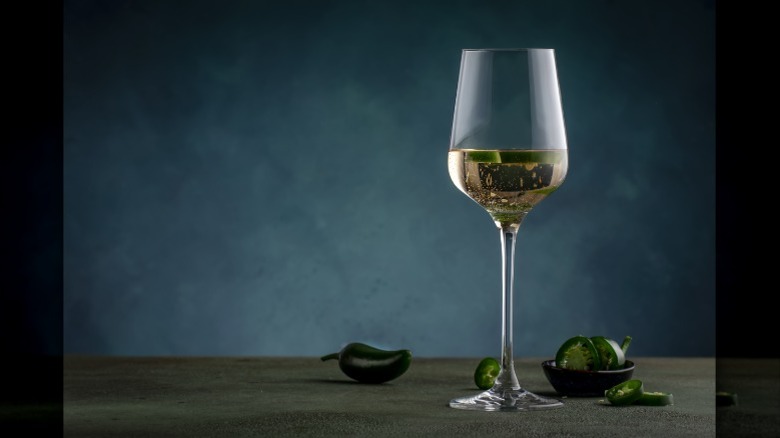
Not everyone's sold, however. On wine forums, purists have called the pairing "a desecration of the grape," and plenty of people draw the line at trying to trick with anything but the cheapest Sauvignon Blanc they can find. In one Reddit thread, a commenter practically pleaded with someone else to keep their serranos away from a freshly opened bottle of Sancerre. But they have a good reason for it: Serrano peppers are much hotter than jalapeños and would clash poorly with the gentler Sauvignon Blanc so you'd taste nothing but the burn. Even wine experts who, on the record, enjoy the combination, tend to draw a line at using any bottle with real complexity or oak influence, since the pepper can mute the subtler aromas a nicer bottle is built to show off.
If jalapeño wine isn't for you... fair enough. Just combine the wine and pepper flavors the normal way: through a food pairing. The spicier the food, the more the wine needs to work for it. Thai or Indian dishes with serious heat call for something sweet, and Riesling or Gewürztraminer both do the job. A jalapeño popper doesn't offer that much firepower, so just a glass of something bubbly to clear your palate between bites will do. And if you're having a Mediterranean meal? Try rosé. It comes down to one rule: Spicy food wants wines that are light on tannin and alcohol, but heavy on fruit and acid.