

How Long Is It Okay To Eat Potatoes After They've Sprouted?
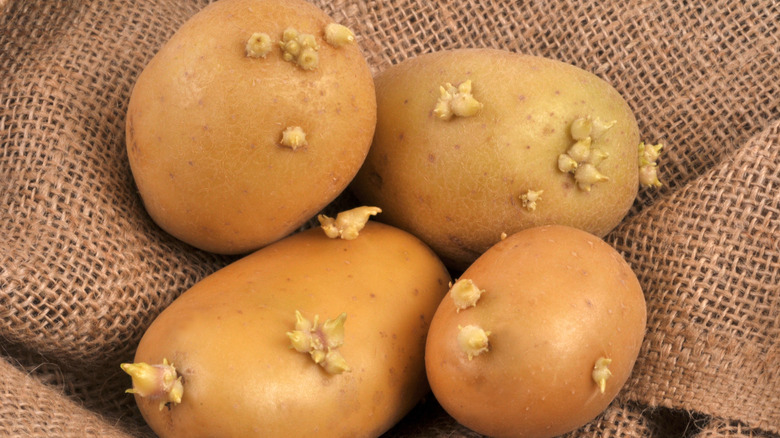
It's a common problem: You buy a bag of potatoes and a few days later, you notice the spuds are already growing sprouts. Rather than toss out a half-full bag, you might wonder if it's still safe to eat sprouted potatoes. The answer isn't completely straightforward, however. You can still eat sprouted potatoes in some cases, but there are times when it's inadvisable due to concerns of food safety.
There is no exact timeline for freshness or strict expiration date for potatoes, but ones that are stored properly can stay fresh for up to two months. Yet, store-bought potatoes aren't lasting as long as they used to, likely because they sit in a distribution facility, truck, or store bins for quite a while before sale. During that time, they are exposed to natural and unnatural light, which can trigger the production of chlorophyll. When this happens, the skin of the potato will turn green, which is sometimes an early indication it's going to sprout soon and may be nearing the end of its shelf life. Sprouts can also develop due to temperature changes, exposure to humidity, or simply because the potatoes have been stored for too long.
Take notice of how they look, feel, smell, and taste. Potatoes that have just begun to sprout may still be safe to eat if they feel firm, smell okay, the sprouts are small and easy to cut off, and there are no substantial green spots on the outside or inside of the tuber. If you start to peel the potato and notice that the skin or flesh is green, it may not be safe to eat. And if the potato is soft, mushy, and shriveled, smells acrid or rotten, or is covered in long sprouts, you should toss it.
Sprouted or green potatoes can pose serious health risks
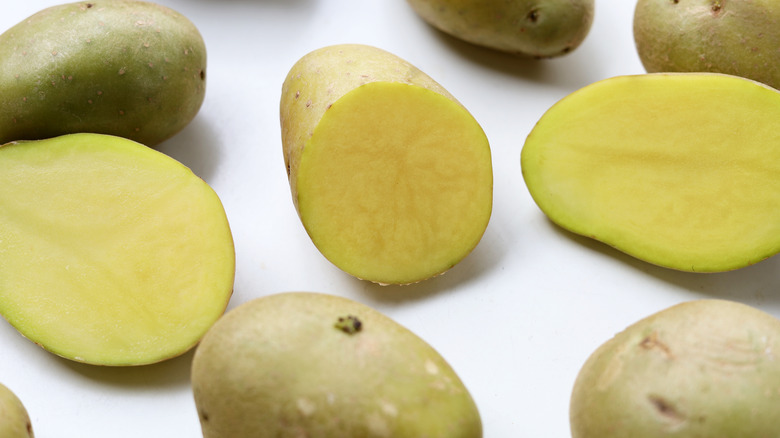
Old potatoes may not taste that good, and may also have an unpleasant texture. But the biggest risk of consuming this vegetable once it's past its prime is the potential for toxins. Certain conditions, such as exposure to light, results in high levels of glycoalkaloids in the potato, which are toxic compounds like solanine and chaconine. While small levels likely won't cause any health problems, high levels can be dangerous. Green spots and sprouts on the potato may contain high levels of glycoalkaloids, so removing the sprouts alone may not be enough.
Consuming large amounts of green or sprouted potatoes can cause food poisoning. While it may take a couple days for you to develop symptoms, you may experience fever, stomach pain, cramps, nausea, vomiting, diarrhea, and headaches. Exposure to these toxins can also cause troubling neurological symptoms like brain fog, disorientation, vision and hearing loss, tremors, hallucinations, and paralysis.
The best way to protect yourself is to inspect potatoes before buying them, and again before using them. Be aware of where to store potatoes so they last longer: dark, cool, dry places like a basement or cellar. If you're not sure how old your potatoes are and you notice green skin or major sprouting, your best bet is to not eat them. Toss them in your trash or compost heap, or if you don't want to throw them out, you can use sprouted potatoes to grow new ones in your backyard garden.
How to safely eat potatoes with small sprouts
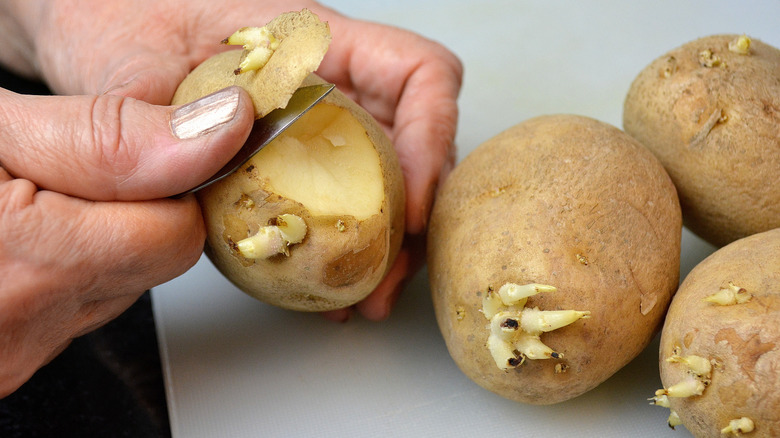
If a potato only has small sprouts, still feels firm and smells fresh, and doesn't have extensive green spots or streaks, it may be safe to eat. However, you should remove the sprouts first. The easiest way to do this is to use the pointed end of a vegetable peeler to cut out each sprout and scoop away any black or brown spots. If the potato has very small green spots, you can cut them off of the skin and flesh with a paring knife. If you have young children or sick or elderly people in your household, you should never serve them green or sprouted potatoes as they may be more vulnerable to solanine and chaconine poisoning.
Once you have peeled the potatoes well and inspected them carefully, you can bake, roast, boil, or fry them. Exposing them to prolonged heat, such as you do when making crispy-edged smashed potatoes, may reduce low levels of glycoalkaloids that might still be present. Before seasoning or serving the cooked potatoes, take a small bite. If they taste bitter or you sense some burning in your mouth, they aren't safe to eat, even if the sprouts and green spots are gone. If they taste normal, you can finish preparing them. All in all, you should use your best judgment when determining if any food in your home is safe to eat. If you have any doubts about whether sprouted or green potatoes are safe, you shouldn't eat them.