

Where Exactly To Store Potatoes So They Last Longer
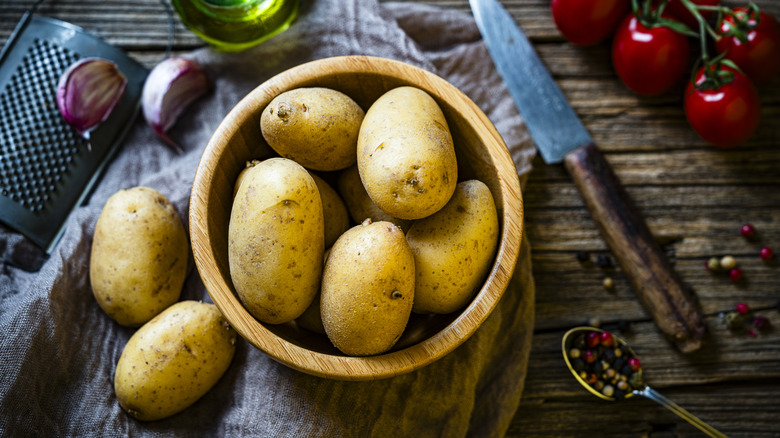
A pile of potatoes in the pantry is something that every kitchen ought to have. The versatility of this starchy vegetable means that it can become a perfect complement to just about any meal at any time of day. Without too much work, you can turn a potato or two into hash browns to go with a plate of eggs and bacon, fries or chips to accompany a tuna melt, or a creamy mash to pair with a roast chicken. These delicious sides often vie with the main course for the favorite part of the meal. The trouble with potatoes, of course, is that unlike, say, rice or pasta, this starchy side can turn on you. But if you know the best ways to keep potatoes fresh, they can actually last as long as a year.
To stretch the lifespan of your spuds out to these great lengths, you will need to create an environment that is dark, cool, well-ventilated, and neither too dry nor too moist. There is a balance to be found in each of these areas, and you only get that extreme longevity out of your potatoes if you strike it just right. Naturally, this can be a bit of a challenge in most modern homes, but if you follow a few simple guidelines, you can keep those spuds from sprouting or spoiling for quite some time. That way you won't have to experience the heartbreak of a sheet pan dinner of salmon and roast potatoes ruined by tubers that have turned wrinkly and green.
Ideal potato storage conditions
Because potatoes react to all sorts of different stimuli in the environment, the ideal storage conditions are meant to put them in a state of stasis. You see, the potato is a tuber, a part of the plant that stores energy and nutrients over the winter, allowing the plant to regrow in the spring when conditions improve. As such, your job is to keep the potato in an eternal winter. The first step is to keep them in the dark. Sure, you can store potatoes on the counter for a while, but before long they will begin to turn green and sprout, as the tuber produces chlorophyll as well as the toxin solanine.
While it is generally considered safe to eat green potatoes, it is suggested that you cut away the green portions and shoots — and no one likes wasting food. Next up is storage temperature. The ideal temperature at which to keep your potatoes is around 45 to 55 degrees Fahrenheit. If it gets too warm, the potatoes may think it's time to sprout. Too much colder (as in the refrigerator), and they begin to convert starches to sugars, which will change how they cook.
Potatoes should be stored with a little room to breathe, both to keep moisture levels stable and to prevent the potatoes from being exposed to ethylene gas. Too much moisture in the air can cause the potatoes to sprout or rot, while too little can cause them to dry out and shrink. As for ethylene gas, potatoes don't produce too much of it themselves, but they are sensitive to it. Never store potatoes with foods that produce ethylene, such as onions, apples, and bananas.
Best practice potato storage in a modern kitchen
Historically, the root cellar was the perfect place for potato storage. It was an underground space intended especially for storage of produce like tubers and root vegetables that was naturally dark, always cool (with a bit of moisture), and typically contained plenty of space for the vegetables to breathe. Unfortunately, as you likely know, these are not a common architectural detail in most modern homes. Fortunately, a pantry isn't a bad modern-day alternative.
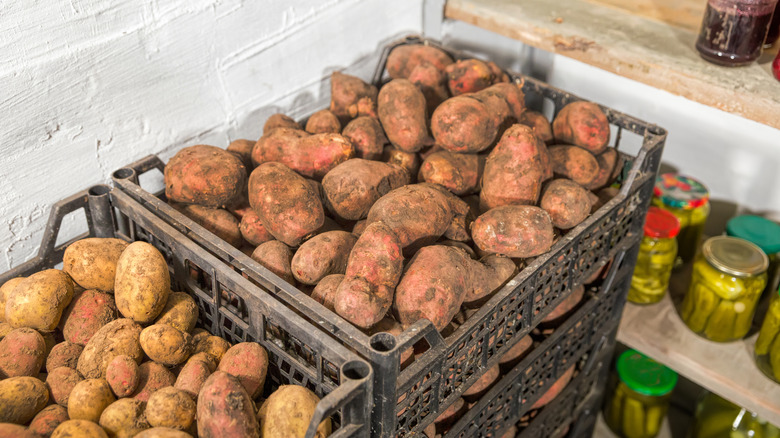
If you have a larger, walk-in-style pantry, it should fit most of the requirements for proper potato storage. The pantry is dark and relatively climate-controlled — if still a bit warmer than the ideal potato temperature — and so long as you open the door every once in a while, there should be a good amount of air movement. As for the best storage container, you have some options. If you are storing them in a dark pantry, a milk crate or similar open-air box is a perfect choice.
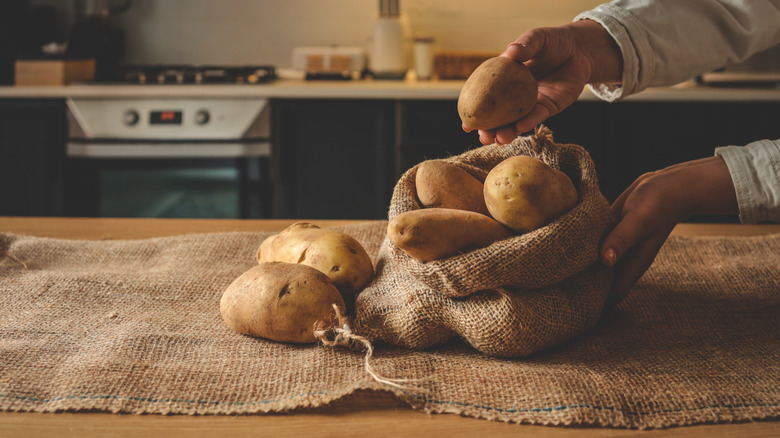
But if you need to store them somewhere that receives a bit more light, you can opt for the old-school method, a burlap sack, or you can pick up a tailor-made box, like these Dekosilave Kitchen Vegetable Storage Boxes. Both options allow airflow while also blocking out light. With all of this new tuber-storage knowledge, you are well equipped to explore the many different uses for a big bag of potatoes without fear of them spoiling before you reach the bottom.