

American Vs Australian BBQ: The Big Differences You Might Not Expect
Omnivores with a global palate know that barbecue is a regional art. From the sweet, sticky sauce of Kansas City to the aquarium-style smokers of Chicago, BBQ is as much a culinary craft as a cultural identity marker, colored by distinct approaches. For foodies in Australia, BBQ means more than just "throwing a few shrimp on the barbie" (which Aussies don't actually say, for the record). While it's arguably inaccurate to lump all of the regional BBQ styles into a single "American barbecue" catch-all, when compared to Australian BBQ, the two countries take markedly different approaches to cooking techniques, meat selection, sauces, and seasonings.
The chief difference between barbecue in the States versus Down Under is that American BBQ centers around slow and low cooking techniques, while Aussie BBQ is fast and hot, typically using a grill. American BBQ relies on indirect heat from charcoal or different types of wood, takes multiple hours, and places a greater emphasis on smoking. Pork, beef brisket, and chicken are king. Those meats get dressed in flavorful spice rubs, hours-long marinades, and an array of unique regional sauces from mustardy Carolina Gold sauce to Alabama White BBQ sauce and more.
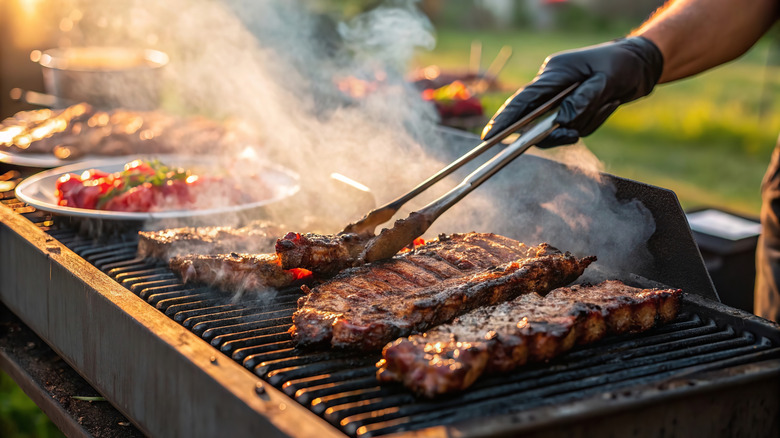
Australian BBQ utilizes direct heat for char-grilling, creating a mouthwatering sear on the meats rather than a tender, smoky profile. Due in part to its multicultural population, the country's barbecue style trades robust rubs and marinades for foreign culinary influences, like Greek souvlaki and Portuguese flame-grilled chicken. Steaks and sausages (known as "snags") are common items to throw on the grill, as are lamb chops and seafood like shrimp, fish, and calamari. If any rubs or marinades are used, they are applied sparingly and feature subtler flavors like lemon, garlic, and herbs.
The cultural roots of American and Australian barbecue
Beyond the food itself, BBQ occupies different roles in American and Australian culture. U.S. BBQ began centuries ago in the American South, influenced by the culinary styles of folks from Spain and the Caribbean. By comparison, BBQ is newer in the mainstream Australian food scene. Inspired by Australia's warm climate, outdoor cooking became increasingly popular among European settlers, drawing on Aboriginal methods of cooking over open coals. Modern Australian barbecue culture flourished in the 1950s, and it has been a cultural mainstay ever since.
Perhaps an extension of the quick cooking speed of the meats, Australian BBQs are more often regarded as casual, laid-back social events. They don't carry the same cultural weight as their American counterparts, which can take all day and carry points of pride like "pitmaster" status. Public barbecue grills found in parks and waterfronts in Australia also make the tradition highly accessible, reinforcing its role as an everyday pastime rather than a specialized cooking craft. These relaxed, community-focused outdoor gatherings make the most of the country's warm climate.