

12 Regional American Foods That Don't Get The Hype They Deserve, According To Redditors
Folks will travel for days on end just to get a taste of some regional American foods — fresh Maine lobster, Texas brisket, New York pizza — but the country has so much more to offer our palates. American cuisine is nearly impossible to define, and that's because it's basically a thick blanket woven from dozens of other cultures and communities. America was built by so many different people, and food is one of the most direct ways to carry that identity forward. Certain states and regions are often known for one signature dish, but if you were to ask locals who had been there for generations, they'd likely clue you in on something special – something that you may have never even heard of.
That's the thread running through all of the regional American foods on this list. These dishes aren't necessarily obscure, and they're certainly not inferior, but for one reason or another, they never really made it out of their hometown. As usual, Redditors have come together to share their love of these foods, often proud of the small town that helped build them, and curious folks are always seeking insider tips on where to find the best of these regional delicacies. Food-loving locals have been making the case for the dishes that deserve a far wider audience.
Persimmon pudding (Midwest)
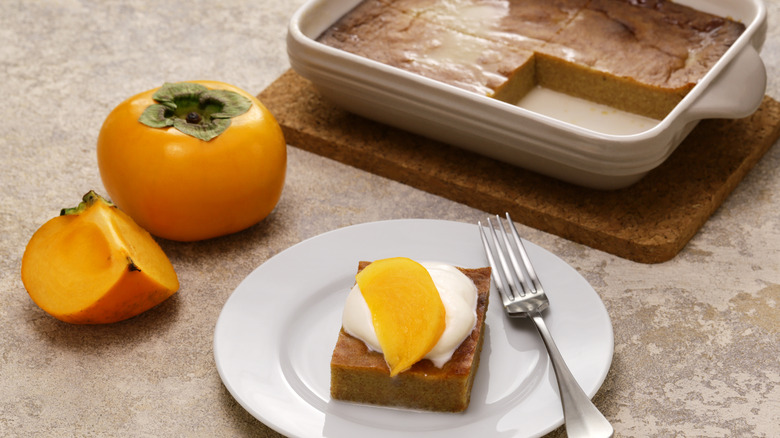
This isn't the pudding cup you used to find in your school lunch box. Persimmon pudding is a chewy, dense, spiced dessert that's somewhere between gingerbread and a gooey, custard pie filling. It's made from the pulp of the wild American persimmon, a small, sweet fruit native to the Midwest and American South that ripens in the fall. Most of the persimmons we come across in U.S. markets are native to China, and as delicious as they are, they're quite different from the American fruit grown in southern Indiana. "They are a completely different species than any of the Asian varieties," one Redditor explained. "I have never seen them in a store, only from farmers markets or my aunt and uncle's place."
There are so many ways to prepare the rare fruit, from pies to sweet breads, but persimmon pudding is apparently a Midwestern favorite that the rest of the world needs to get behind. Like one Redditor pointed out, persimmon pudding is "not a very well known dessert but it's an Indiana classic." Family recipes in Indiana stretch back centuries, and persimmon pudding eventually became so embedded in Hoosier holiday culture that it holds a permanent place at Thanksgiving tables alongside pumpkin and apple pies. "A perfectly ripe American persimmon is genuinely the most delicious thing I have ever tasted. Hard to find, and even harder to find perfectly ripe, but absolutely worth it," said one Redditor.
Apple cider donuts (New England)
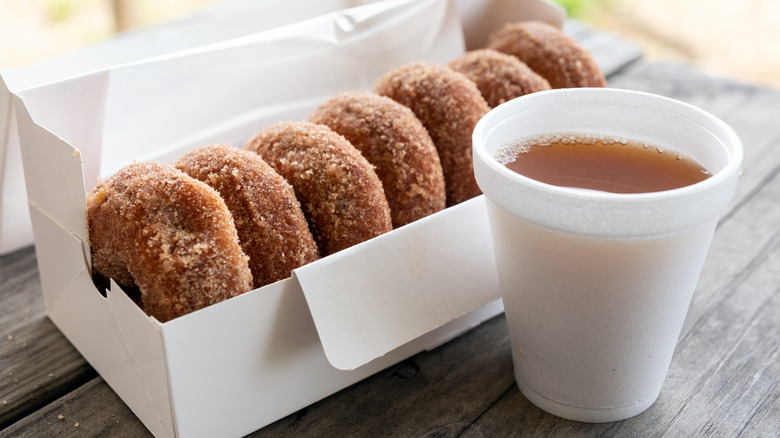
Growing up in New England, the arrival of autumn was akin to Christmas morning. Something about the lingering warm evening air paired with the rapidly changing leaves instantly evoked a coziness residents welcomed each year. And with that quick change in weather, apple cider suddenly arrived everywhere, including in donuts. All across Maine, New Hampshire, Vermont, Massachusetts, and even into New York, apple cider rules the region for those few months between the end of summer and the start of winter. Festivals and fairs serve fresh, still-steaming donuts rolled in cinnamon sugar and volunteers ladle hot cider into cups at local football games. As one New England Redditor said, "all apple cider donuts are not created equally." People outside New England just have no idea what they're missing.
Cider donuts were popularized broadly after 1951, when the Donut Corporation of America introduced the "Sweet Cider Doughnut" at its annual fall campaign. Each orchard typically has its own family recipe, and the best ones are made where the cider is pressed on-site, the donuts come off the fryer every hour, and the whole experience smells like October. One apple cider donut fan asked Redditors if the autumnal treat was just a Northeast thing, because "if they're not all over the country you all are missing out."
Fried cheese curds (Wisconsin)
Wisconsin certainly shows its cheese the proper amount of respect. Between the state's designated cheese museums and record-breaking cheese production, Wisconsin is undoubtedly the cheese capital of the country. It all started with German and Swiss immigrants back in the mid-1800s after they discovered how perfect the grasslands were for dairy farming. By 1922, Wisconsin had over 2,800 cheese factories operating across the state.
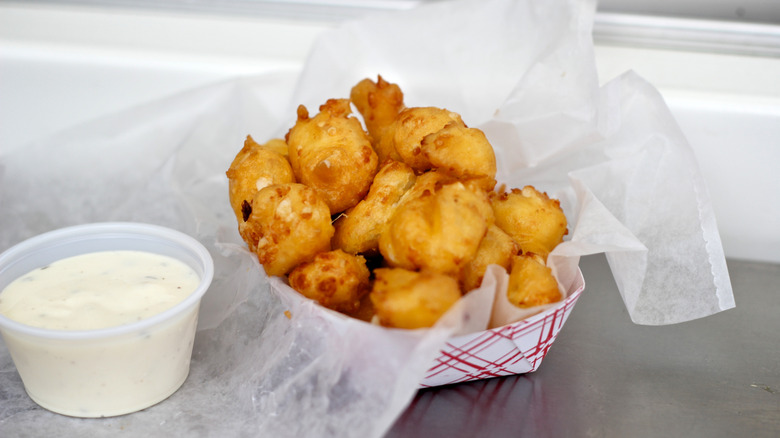
With the surplus of cheese Wisconsin produces, it makes sense that cheesemakers would get creative — and one cherished result was the fried cheese curd. It's battered, deep-fried, and golden on the outside and molten on the inside. Some are served with marinara, turning them into a better version of a mozzarella stick. One Redditor described the marinara and cheese curd pairing as "simple and delicious." A Wisconsinite made the bar-food case plainly: "They are delicious and should be bar food everywhere." Another Redditor cut straight to the point, "I mean, fried cheese. You can't really go wrong."
Tater tot hotdish (Upper Midwest)
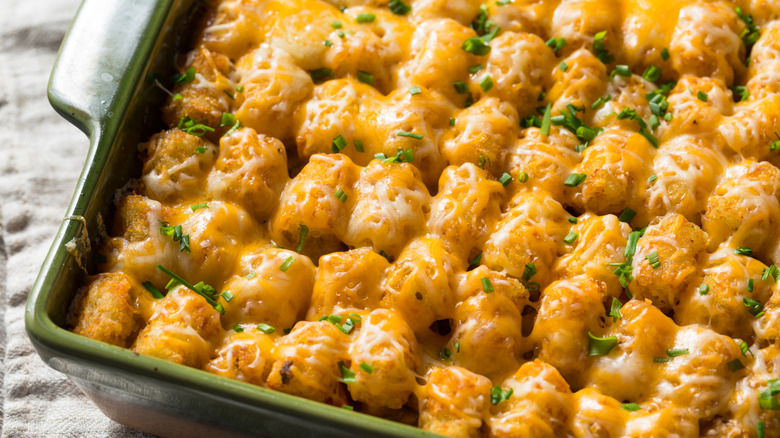
This Midwestern dish is a bit of a tongue twister, and if you're not from middle America, you might know it by a more familiar name: casserole. In the Upper Midwest, it's called a hotdish. It gets even more regional with tater tot hotdish, which has a devoted following across Minnesota, Wisconsin, and the Dakotas. Like one Midwestern Redditor said, "Maybe it's the Minnesotan in me, but honestly, there's [nothing] better on a cold winters night than coming home to [tater] tot hotdish."
The first published hotdish recipe seems to appear in a 1930 cookbook from Mankato, Minnesota. There aren't too many rules when it comes to hotdish, which is part of the appeal. The foundational recipe is usually ground beef, cream of mushroom soup, frozen vegetables, and a blanket of tater tots, which is baked until crispy. One Iowan local described their version, which is made with cream of chicken and cheddar cheese soups, sour cream, Worcestershire, corn, green beans, seasoned ground beef, and heavily seasoned tater tots.
Carne adovada (New Mexico)
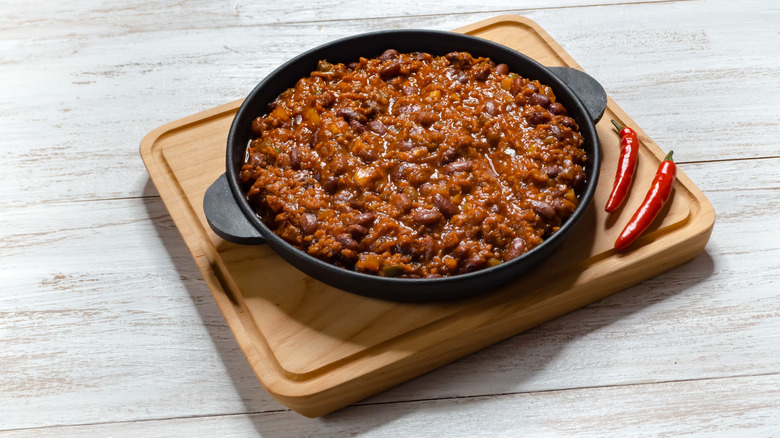
When people think of cuisine in the American Southwest, they usually picture Tex-Mex: the Americanized hybrid cuisine that gave us combo plates, yellow cheddar melted on everything, and jumbo flour tortillas. New Mexican cuisine is something else entirely, with Pueblo Indigenous ingredients and Spanish influence. Carne adovada is one of the region's most celebrated meals, with a history that locals love to commemorate. The dish, which consists of pork cooked in red chile sauce, merges different cooking and marinating techniques, and after hours of slow braising, the result is meat that collapses at the touch of a fork, saturated with smoky, earthy sauce that has no real equivalent in American cooking.
The dish was so memorable that one visitor to Albuquerque asked Reddit for recipes for it the moment they arrived home. "I cannot stop thinking about this pork," they said. Adovada is all about the New Mexican chiles, making it incredibly tied to this region. If you want to make "real New Mexico Carne Adovada," one Redditor recommends using "real New Mexico red chiles or high quality red chile powder (not Bueno)."
Mirliton and oyster dressing (southern Louisiana)
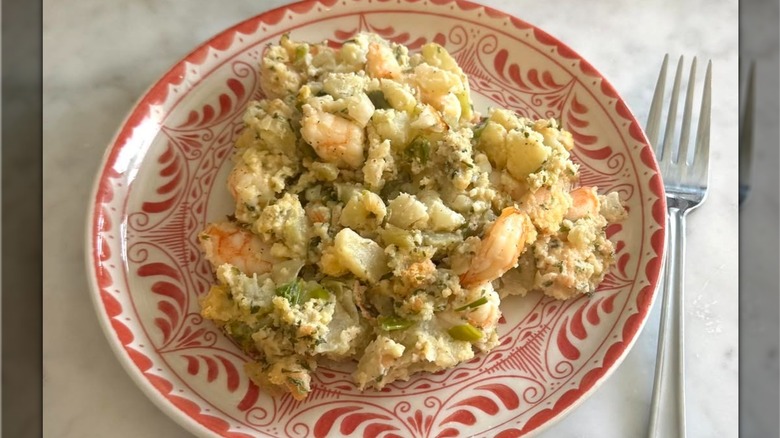
Outside Louisiana, many Americans have never heard of mirliton. Locals, however, know it as an essential part of holiday cooking. Mirliton, or chayote squash, is a pear-shaped vegetable that Louisiana kitchens often stuff with different seafood blends or bake into a rich casserole-like dish. The preparation is a great example of dedicated Creole cooking, starting with mirliton halved and par-cooked, then stuffed with a dressing of Gulf oysters, the Cajun trinity of onion, celery, and bell peppers, seasoned bread, and sausage, then baked until golden. The result is rich yet surprisingly delicate and combines briny seafood flavors with the mild sweetness of the squash. In response to one Redditor's request for underrated Cajun dishes, longtime residents responded with mirliton this and mirliton that — with a special nod to mirliton casseroles.
"Many folks know the classic Louisiana/New Orleans dishes," one Redditor said, but they highlighted how unfortunately mirliton and oyster dressing often isn't one of them. Recipes circulate in the New Orleans Reddit communities with the reverence of family heirlooms — one Redditor described making Poppy Tooker's version for Thanksgiving in a Dutch oven over a wood fire. "It all turned out pretty hecking good," they said. Outside the Gulf Coast, almost no one has heard of it. Inside Louisiana, it means it's an evening worth celebrating.
Garbage plates (Rochester, New York)
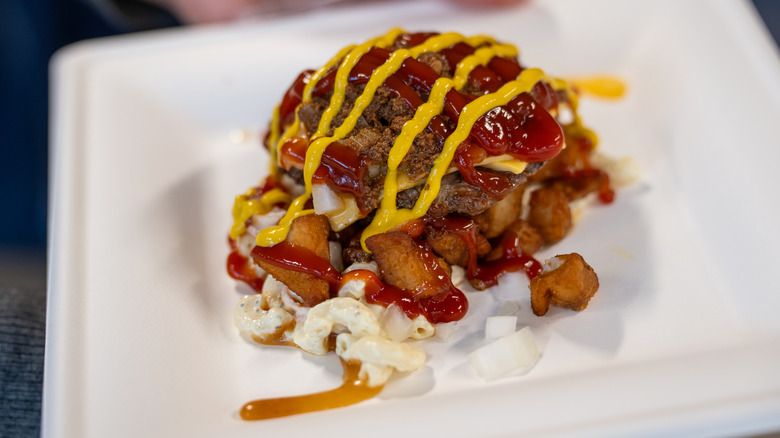
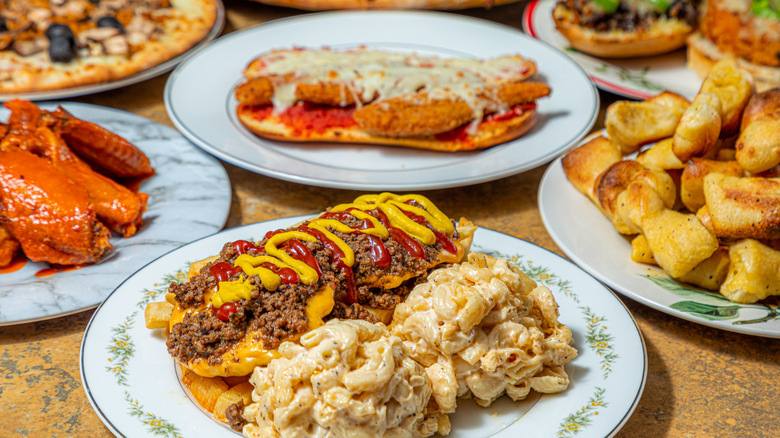
Garbage plates are kind of like Rochester's own personal hotdish — entirely personal to one's taste, built from whatever the kitchen has to offer, and defended with fierce local loyalty. Down in NYC, you'll find food trucks handing out hot dogs and gyros on every other corner, but in Rochester, the late night snack is a good ol' garbage plate. This delicious hot mess is made with a generous pile of french fries, home fries, or really any form of fried potato and includes some macaroni salad and beans. From there, it's a smorgasbord of barbecue and picnic-style sides piled onto one plate, including anything from Italian sausage to an entire cheeseburger.
What started as a budget-friendly meal back in 1918 is now a hometown favorite. It's such a Rochester standby that there's regular discourse among regulars regarding who serves the best plates in the area and locals share "garbage plate appreciation posts" on Reddit. The dish is so customizable and everyone has their own preference. As one Redditor said, "You might have to try several before figuring out which place and combination you prefer." One Rochester visitor went to Reddit asking what all the hype around garbage plates was about, and many excited responses celebrated the dish for being a prime beer food that is simply that good. "As you can see, this is an issue many of us feel passionate about," a commenter said.
Jambalaya (Louisiana)
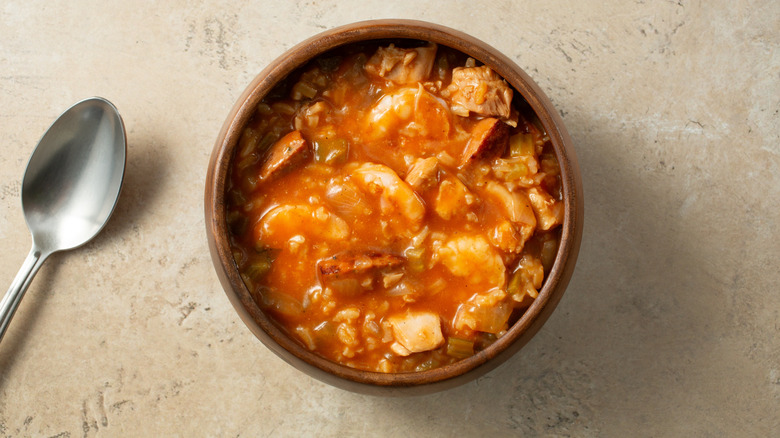
It's always gumbo this and gumbo that — but what about jambalaya? Gumbo caught the attention of neighboring regions and eventually the whole country, but jambalaya slipped under the radar. Outside of Louisiana, it's often considered nothing more than gumbo's second-rate cousin — but folks from Louisiana think otherwise. It's a simple one-pot meal that's essentially an everything-but-the-kitchen-sink situation, which means everyone you ask will have a slightly different family recipe. The protein can be anything from shrimp to rabbit, though andouille sausage and chicken are some of the most common ingredients. The holy trinity of onion, celery, and bell pepper is also a non-negotiable.
Jambalaya's roots are tangled in the same multicultural soil as all of Louisiana's great cooking. Spanish settlers contributed the foundational technique — jambalaya could be seen as a take on a traditional Spanish paella, adjusted for local ingredients and climate. West African and French Creole cooks shaped its evolution from there. "It's filling, creative ... and economical. It's a great dish, one I'm very fond of and it would fail miserably anywhere other than here," one Redditor shared.
Boiled peanuts (the South)
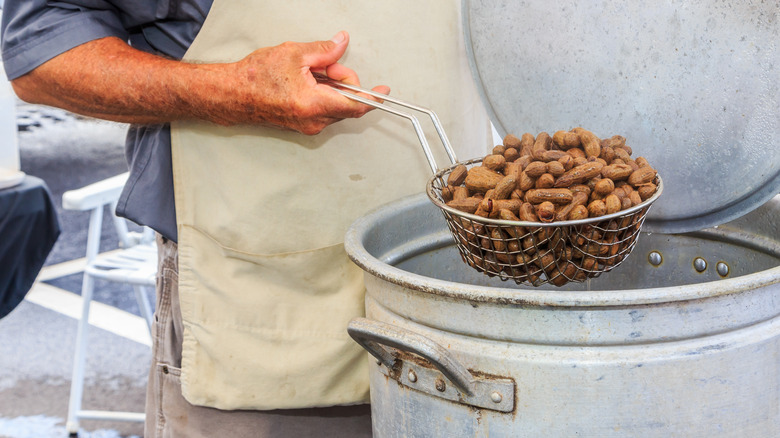
Peanuts are a popular snack that have been sold at baseball games and served on planes for eons, but in the South they're taken a little more seriously. Rather than cracked out of the shell and eaten as is, folks in Georgia and the Carolinas boil peanuts for hours, often with bold Cajun seasoning. They soften into a starchy, almost bean-like consistency with a deep, savory flavor locals can't imagine living without. "They're usually sold from a guy in a small food stand on the side of the road in the good parts like North Carolina ... Serve them in a cup with some of the flavorful cooking liquid and a ice cold beer," one Redditor shared. Another Canadian Redditor ordered 22 pounds of raw peanuts online so that they could make a batch at home.
The history runs deeper than the roadside stand suggests. Peanuts were brought to the American South by enslaved people from West Africa, where they had been introduced by the Portuguese. Cooks first boiled them (shell on) in heavily salted water — a preparation that Southerners didn't widely adopt until the 20th century, when boiled peanuts began appearing at festivals, fairs, and potlucks.
Fry bread (New Mexico and Arizona)
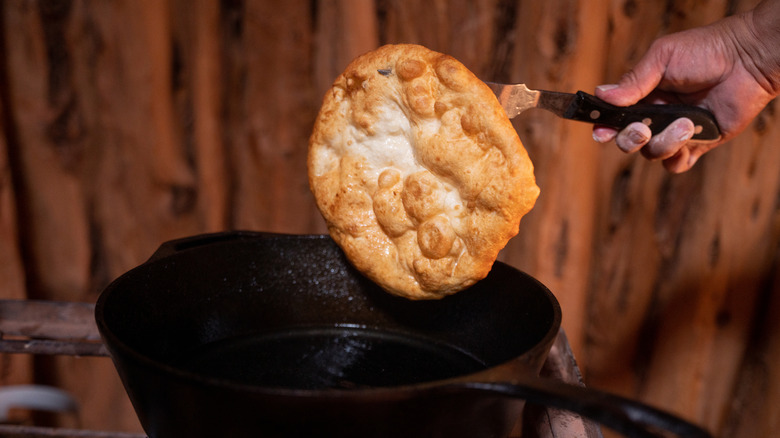
In New Mexico and Arizona, fry bread is everywhere. Despite its origin, as a food born from forced displacement, it's become a comfort food of the region and a symbol of survival in American food history. Today, it's a cherished cultural expression served at community gatherings and roadside stands across the Southwest. As one Redditor said, "I grew up in the same town as Haskell Indian Nations University and cannot tell you how much frybread I ate in my childhood."
It's made from a simple dough patted into rounds and fried in hot oil, which gives it a crisp outside and tender inside. One Redditor put it clearly. "It's simple, it's sweet, it's iconic and delicious," they said. It serves as the base of a Navajo taco or is eaten sweet with honey butter. "Dinner and dessert made out of the same thing," as one Redditor described it.
Crab pretzels (Maryland)
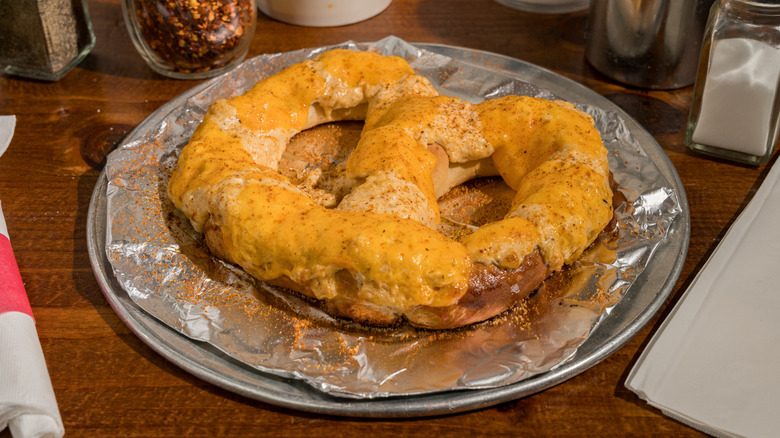
In Maryland, it's all about the blue crab and Old Bay seasoning — but there's one particular crab-focused appetizer that feels distinctly, irreducibly Maryland in a way that even the crab cake doesn't quite capture. A Maryland favorite is a warm, soft pretzel with a genuine bready chew, loaded with lump crab meat, blanketed in cheddar cheese, and baked until bubbling. As one Redditor put it, crab pretzels are "simply unknown not that far away." The same Redditor also made the broader case that Maryland is "almost on par with Louisiana for being a bespoke culinary thing but is not regarded as such."
One Maryland-homesick Los Angeles newcomer went to Reddit in search of a Maryland-style crab pretzel, but were willing to settle for just the crab dip. Another responded, "You read my mind, nothing hits like a crab pretzel." Marylanders are protective of anything involving their state's local crab. "I don't trust pretzel people who don't know how to make a Maryland crab pretzel to make crab dip," one commenter wrote.
The blue crab, with a Latin name meaning "beautiful savory swimmer," has been central to Chesapeake Bay food culture since long before European contact, but the crab pretzel is a more recent bar-food iteration popular in Baltimore and across the Eastern Shore. As another Redditor said, "You all can't even fathom all of the places crab meat can go."
Chislic (North and South Dakota)
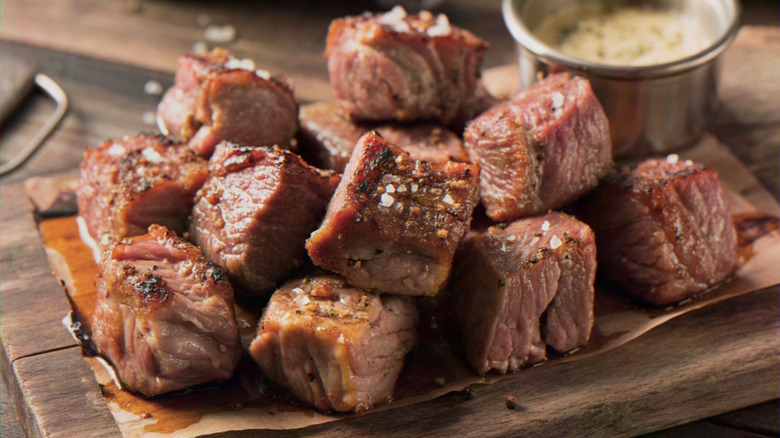
South Dakota's official state snack (designated as such in 2018) is practically unheard of outside the region. Aside from Mount Rushmore, chislic might be the first thing you'll hear out of a South Dakotan's mouth when asking for local recommendations. The dish is simply small cubes of lamb or mutton, deep-fried without batter or breading, seasoned generously, and eaten at a bar alongside a cold beer and a sleeve of Saltine crackers — sometimes speared with a toothpick rather than a fork. "Absolutely delicious and a great way to eat scraps of meat from carving a deer," one Redditor said.
The dish arrived in America with German-Russian immigrants in the 1870s, and South Dakota cooks adapted it over time, ultimately frying the cubes in sheep tallow and seasoning with garlic salt instead. Chislic spread in South Dakota within what locals call the Chislic Circle before eventually spreading statewide. These days, it can be prepared with either mutton or beef, but as one Redditor said, "Garlic salt is not optional." When chislic was spotted on a menu in Marshall, Minnesota, a Redditor expressed genuine surprise: "I thought it was a South Dakota gem."