

No Paint, No Problem — There's A Better Way To Update Your Cabinets, And The Styles Are Limitless
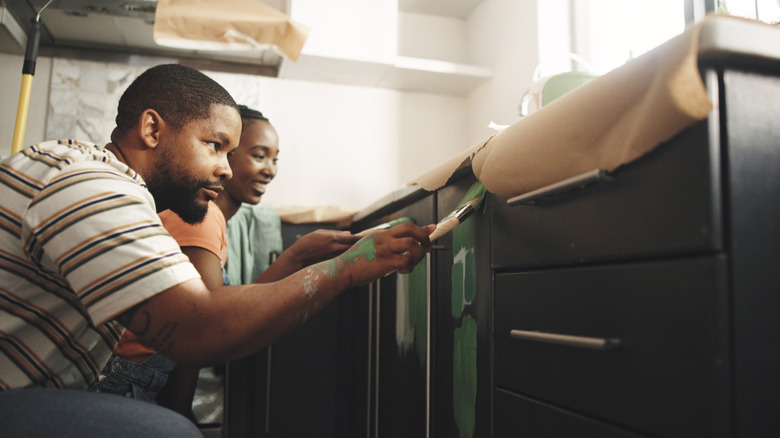
Cabinet transformations don't have to break your budget or eat up an entire weekend. Busy, aesthetically-minded home cooks don't have to paint outdated cabinets in order to give them a makeover. All it takes is a roll of peel-and-stick wallpaper (or contact paper), which can be applied to more than just the wall. Peel-and-stick wallpaper and contact paper are eye-catching alternatives to paint. The adhesive is strong enough to last the long haul, yet it can be easily removed without causing any permanent damage to the cabinet doors underneath. The material is stylish and cost-effective at typically under $15 per roll; measure your cabinets before you buy to purchase just enough to cover your cabinets and avoid leftover paper and excess spending.
Contact paper in solid colors offer a quicker remodel route than traditional paint. Cherry red would look terrific in a kitschy retro kitchen, while butter yellow would be on trend and inviting. Beyond solids, one of the chief appeals of going the peel-and-stick paper route over traditional sanding and painting is the possibility of patterns. Covering cabinets in peel-and-stick paper with a faux brick look, like this one by Hopeak on Amazon, would create an instant industrial feel, a bold design statement for smaller studios or lofts. It can also be a great way to refresh dated oak cabinets without paint. But, on the flip side, if you prefer the vintage look, a roll of wood grain contact paper, like this design by Cosnight, would warm up sleek laminate cabinetry — which is a commonplace fixture in newer apartment buildings. This marble-printed wallpaper by practicalWs would add modern dimensionality to DIY kitchen makeovers. Or, go cottagecore with this rustic yellow floral pattern by Dimoon. Contact paper makes myriad aesthetic visions both possible and convenient.
Contact paper or peel-and-stick wallpaper can upgrade cabinets on a budget
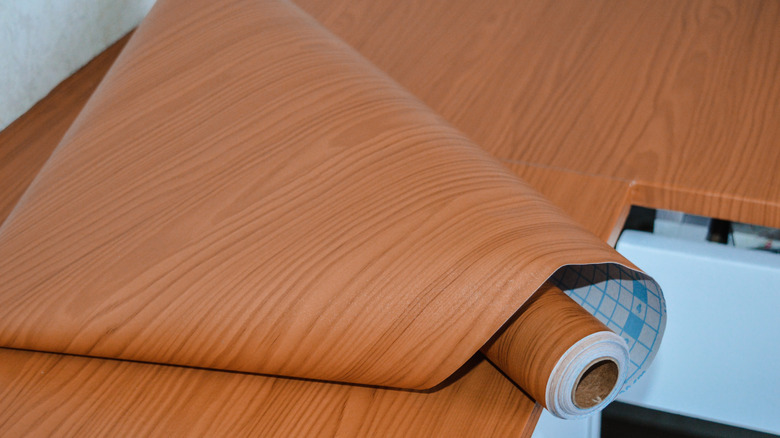
Installing peel-and-stick wallpaper or contact paper to last for a long time requires a slight element of prep work on the front end. To do it well, take your cabinet doors off their hinges if you can, then thoroughly clean them and allow to dry. If possible, lightly sanding those doors can promote stronger adhesion, but isn't absolutely necessary. From there, simply measure the exact dimensions you'll need per door, cut the paper to size, then carefully smooth it across the door's surface. Using an X-Acto knife can be helpful to trim the excess paper with clean lines. A hard plastic dish scraper can also be useful for smoothing out any accidental creases.
Word to the wise: There are some precautions to take in order to avoid cabinet damage, especially for renters who plan to remove the paper in a year or two. Those who've tried this say in a Reddit thread on r/ApartmentDesign that the efficacy of contact paper and peel-and-stick wallpaper removal seems to depend on the existing material of the cabinets. Commenters note positive experiences installing and removing contact paper from laminate cabinets, while others mention that the glue can pull the varnish off of wooden cabinets in sheets (yikes). If you decide to take the plunge, when removal time comes, other commenters recommend heating the paper with a hairdryer to loosen the glue. Rubbing alcohol or Goo Gone can remove any leftover adhesive. For non-renters who don't have to worry as much about the removal aspect of this design hack, contact paper and peel-and-stick wallpaper can offer an aesthetically impactful remodel route that minimizes effort compared to painting – a small change that makes tired cabinets feel new again.