

If Your Pans Have This Material On Them, Do Not Put Them In The Oven
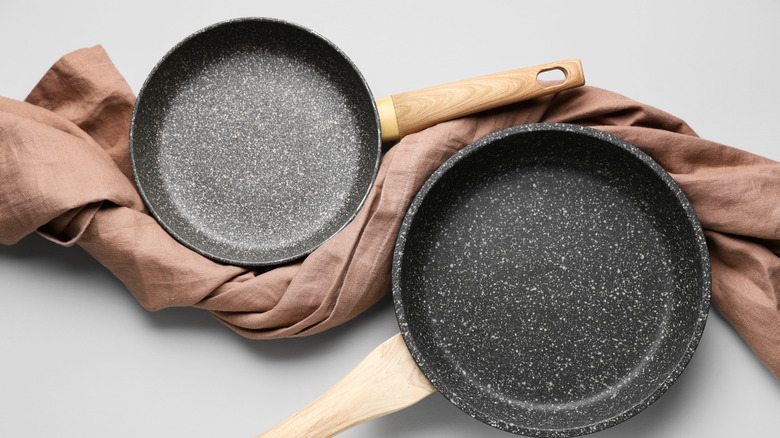
One of the things that no home cook should ever take for granted is the ability to put a pan directly from the stove into the oven. It's a must for reverse seared steaks or any recipe that requires something to be started on the stove and finished in the oven (or vice versa). However, if you fail to carefully read the label on your pan before you slide it into the oven, you could end up with a melty — and potentially dangerous — situation on your hands.
Plastic of any sort should not go in your oven. Certain kinds of nonstick pans that are not rated for high heat, for example, can release toxic fumes as the coating on the cookware starts to melt. They can also become a fire hazard, ruin your cookware permanently, and render the food that's cooking in them unsafe to eat. Some handles and lids are made to withstand moderate oven temperatures, but may not be suitable for temperatures higher than around 400 degrees Fahrenheit. So even if the material isn't outright plastic, you may want to reconsider putting it into your oven.
How to prevent a plastic disaster
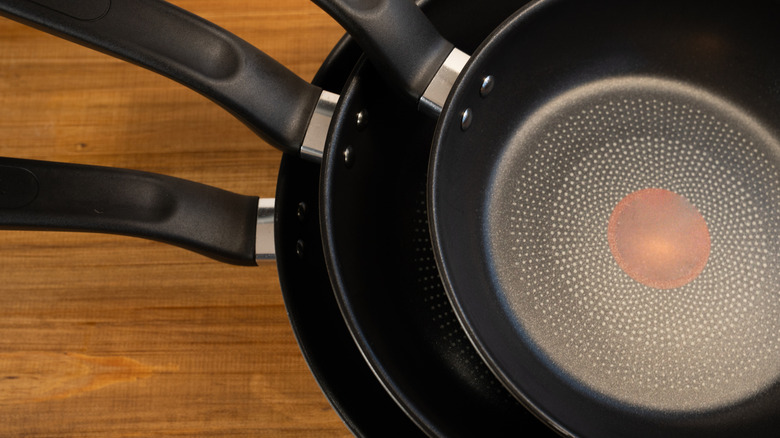
The best way to check and see if your cookware is oven-safe is to look at the label. Companies will usually specify what temperature the product is able to withstand, as well as any related care instructions, including if it's dishwasher-safe.
If you know you're going to be doing a lot of high-heat cooking, we recommend investing in cast iron or ceramic — just pay attention to the coating on the cookware, as it isn't always nonstick. Though not all stainless steel pots and pans are ideal for oven use, most are also rated as being oven-safe. That said, it's still important to note if there are any parts of the cookware that aren't, like plastic handles, lids, or gaskets. You may not be able to see all of the plastic components, either, so be sure to give your product a thorough inspection and consult the manufacturer's guide before tossing your pan in the oven.