

This Controversial Vegetable Oil Was Only Recently Banned In The US

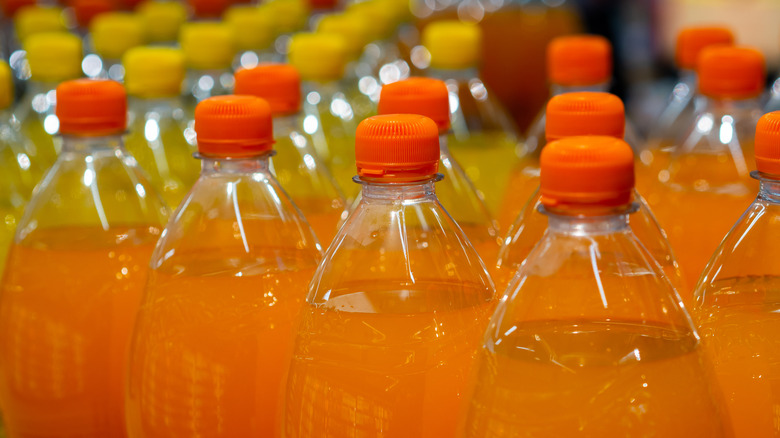
Reading the ingredients of commonplace products like snacks and sodas can be a brain-wrinkling task. Among many new ingredients and additives being deemed illegal in the U.S., a vegetable oil was banned, and only recently at the federal level. Brominated vegetable oil, or BVO, might sound like something you'd use in a stir-fry, but it has classically been used as an ingredient in citrus-flavored sodas as a stabilizer to prevent flavoring oils from separating — that is, until July 3, 2024, when the FDA deemed it unsafe for consumption and revoked its regulation.
BVO has been used in food since the 1920s, but from 1970, was removed from the Generally Recognized as Safe (GRAS) list following unfavorable toxicity studies conducted in Canada. Rather than outlaw BVO altogether, it was allowed only as a stabilizer in fruit-flavored beverages in amounts not exceeding 15 parts per million. After further studies failed to conclude that these amounts were dangerous to humans, BVO stayed in play, but renewed interest and progressive information brought attention to its potential dangers again in 2014. Methods of measuring BVO improved, and several subsequent years of studies, including a 2022 study published by Food and Chemical Toxicology, indicated that oral exposure to brominated vegetable oil had potential negative health effects in the thyroid glands of rats. From August 2, 2024, manufacturers had one year to become compliant, reformulating and relabeling their products without any BVO.
The dangers of brominated vegetable oil
The tests carried out on rats revealed that BVO was toxic, having a measurably negative impact on the thyroid, which is a vital endocrine gland in releasing important hormones for controlling metabolism. Disruption of the thyroid's function leads to hypothyroidism (an underactive thyroid), possibly resulting in depression or anxiety, as well as weight gain. Other symptoms of exposure to brominated vegetable oil also include nausea and headaches as a result of damage to the central nervous system.
The deadline to remove brominated vegetable oil has come and gone and any new soft drinks added onto shelves should now be compliant with the FDA's deregulation of BVO, but any that were manufactured prior to August 2, 2025 could still potentially contain trace amounts of BVO. While most large soda brands began phasing BVO out much earlier, some smaller brands maintained the vegetable oil in their formulas until recently. Keurig Dr. Pepper's Sun Drop was one example, along with Walmart's Great Value Orangette and Giant's Orange Soda. When looking for brominated vegetable oil, keep an eye open for anything listed as "brominated," as bromine is the active element that makes these ingredients harmful.