

One Risky Kitchen Staple Stains Granite, And It's Probably Already On Your Countertop

We may receive a commission on purchases made from links.
Regardless of how new your kitchen installation is, stains on the countertop inevitably give it an aged and messy look. If you opted for granite countertops, you might have weighed the cost against the granite's lifespan and durability, but hard-wearing doesn't necessarily mean impervious to stains.
Even if you're at the ready to wipe up spills as they happen, granite is a natural stone with porous characteristics, so oil gets quickly absorbed into the tiny holes in its surface. At this point, you might've realized the mistake you've been making with granite: storing oil bottles on the counter. Any residual drops on the bottom can easily result in a ring-shaped stain on the counter.
Simply wiping the stain won't remove the oil that's made its way down into the granite. The good news is that the stain isn't necessarily permanent, but the quicker you can get to it, the better chance you have of removing it.
For freshly spilled oil or grease, blot it immediately with a paper towel, but avoid wiping because you don't want to spread it to the clean areas and embed it deeper into the stone. Once you've soaked up as much as you can, you can wash away any residue with warm soapy water and a soft cloth. For stains that have already sunken in, you'll need to mix up a paste of water and baking soda. Spread it over the stain, and cover with plastic wrap so the paste has more time to draw out the oil before it dries. Let it sit for at least 24 hours before scraping off the dried paste and washing and drying the counter.
Other mistakes you can make with granite
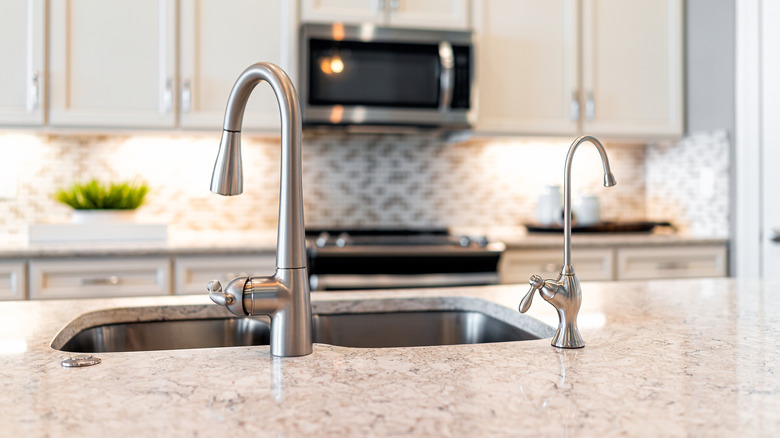
While oil is one of the harder stains to remove, it's certainly not the only substance that can mark a granite countertop. Anything acidic, such as vinegar or even lemons, should be kept off granite counters. Unlike oil or food spills, the acid in these foods won't cause a stain; they will instead damage the protective sealant or the granite itself.
You'll need to take this into account when cleaning your countertop too. While vinegar is often reached for as a natural cleaning alternative to harsher chemicals, it's a mistake to use it on granite. The best option is a mild dish soap or a cleaner made for granite.
If you have light etching from acids coming into contact with the surface, it can sometimes be repaired by neutralizing with a baking soda paste or buffing with a specialized granite polishing powder. For more serious damage, however, you'll need to enlist the help of a professional to reseal or resurface the counter.
None of this means that you can't keep all of your cooking supplies within easy reach. If having bottles of oil or vinegar on the counter is the most convenient option, simply place them on a tray like this Wudkey organizer. The silicone tray will protect the counter from drips as well as keep your bottles tidy.